


Overview of Nanda Gaura Yojana
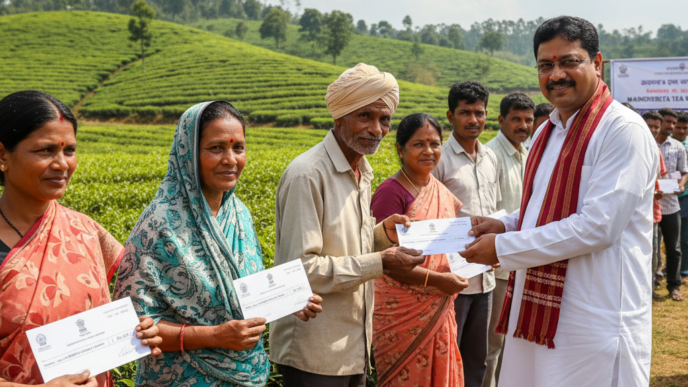
The Uttarakhand government launched the Nanda Gaura Yojana in 2019 with the explicit aim of uplifting women from economically vulnerable households. The programme specifically targets families that fall below the poverty line (BPL) and are headed by a female member, providing an annual cash transfer that seeks to enhance financial autonomy, improve access to education for girl children, and encourage proactive health‑seeking behaviours. Initial pilots were rolled out in selected districts such as Chamoli and Rudraprayag, where beneficiary identification combined socio‑economic surveys with Aadhaar verification. The successful pilot phase led to a statewide expansion, and today the scheme covers millions of households across all 13 districts of Uttarakhand. The initiative is overseen by the Women and Child Development Department and incorporates a grievance redressal portal that allows beneficiaries to report irregularities online, ensuring prompt resolution of discrepancies.
- Annual cash assistance of Rs 5,000 per eligible woman (amount may vary with state budget).
- Target group: BPL families with a female head of household.
- Implementation partners: State Finance Department, Women and Child Development Department, and local panchayats.
Objective and Benefits
The primary objective of the Nanda Gaura Yojana is to empower women by strengthening their economic independence and decision‑making capacity within the household. Beyond the basic stipend, the scheme encourages investment in education, health, and small‑scale livelihood activities. Families can utilise the funds for purchasing household essentials, paying school fees, covering medical expenses, or supporting income‑generating ventures such as handicraft production or dairy farming. A special education incentive offers bonus instalments for families that keep girl children enrolled through secondary school, directly contributing to reduced dropout rates. The programme also links beneficiaries to government‑run counseling services that promote financial literacy, budgeting, and savings habits. Poverty alleviation strategies often cite this cash‑transfer model as a pragmatic tool for inclusive growth.
- Financial autonomy: Direct cash to women reduces dependency on male family members.
- Education boost: Incentives for secondary schooling of girls.
- Health awareness: Encourages routine health check‑ups and medical expenditure.
- Livelihood support: Enables small enterprises like handicrafts or dairy.
DBT Mechanism and Recent Transfer
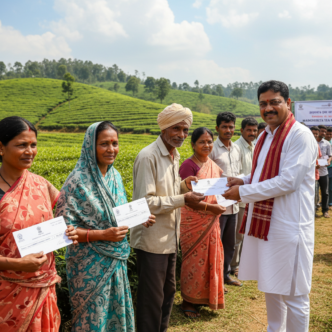
Under the Direct Benefit Transfer (DBT) architecture, the state’s Finance Department initiates fund transfers directly into the bank accounts linked to each beneficiary’s Aadhaar‑verified details. Eligibility is verified through the Socio‑Economic Caste Census and cross‑checked against the state’s welfare database. Once verified, the amount is uploaded to the core banking system and scheduled for release on a predetermined date—typically at the beginning of each quarter. Beneficiaries receive SMS and email notifications confirming the credit, eliminating the need for physical vouchers or manual cheque processing. The system integrates with the National Payments Corporation of India (NPCI) for real‑time monitoring, enabling auditors to detect anomalies instantly and maintain fiscal discipline. In the latest disbursement, Chief Minister Trivendra Singh Rawat announced a transfer of ₹145.93 crore to approximately 2.9 lakh beneficiaries, executed on 28 February 2026. The transfer included a supplemental bonus for families that had successfully enrolled their daughters in secondary education, reinforcing the scheme’s focus on schooling. 
- Quarterly disbursements via Aadhaar‑linked bank accounts.
- Real‑time transaction tracking through NPCI integration.
- Automated SMS/email alerts for beneficiaries.
- Recent release: ₹145.93 crore to 2.9 lakh women (28 Feb 2026).
Impact on Beneficiaries and Expert Opinions
Field officers report that the recent DBT transfer has produced measurable improvements in household welfare. Recipients have used the funds to purchase groceries, repair homes, and invest in micro‑enterprises such as handicraft stalls and dairy units, thereby reducing reliance on informal money‑lenders. Social workers have observed a noticeable decline in school dropout rates among girl children, attributing the trend to the scheme’s education‑linked incentives. Nevertheless, challenges persist in reaching remote and tribal communities where internet connectivity is limited; to address this, the state has deployed mobile banking vans equipped with biometric devices to assist beneficiaries in completing KYC formalities and opening bank accounts. Economists specializing in rural development have praised the scheme’s tech‑driven delivery. Dr. Anjali Mehta, Professor at the Indian Institute of Public Administration, remarked that “the integration of DBT has enhanced the efficiency of welfare delivery and minimized corruption, setting a benchmark for other states.” Analysts also recommend expanding coverage to include widows and single‑mother households to further broaden the impact.
- Use of funds for essential groceries and home repairs.
- Investment in micro‑enterprises reduces poverty traps.
- Decline in school dropout rates for girls.
- Mobile banking outreach for remote areas.
Experts suggest that incorporating machine‑learning models to predict beneficiary attrition could further refine targeting and resource allocation, ensuring that assistance reaches those who need it most over the long term.
Future Outlook and Enhancements
The Uttarakhand government has outlined a three‑year roadmap to strengthen the Nanda Gaura Yojana. Key initiatives include expanding the beneficiary base using data from the latest Socio‑Economic Caste Census, strengthening the grievance redressal system with a 24‑hour helpline, and introducing a conditional component that links additional cash incentives to health check‑ups and vaccination milestones for children. The state also plans to integrate the scheme with other welfare programmes such as the Pradhan Mantri Kisan Samman Nidhi (PM‑Kisan), creating a holistic support ecosystem for low‑income families. A digital dashboard is slated for launch, aggregating real‑time data on disbursements, demographic statistics, and outcome metrics to facilitate evidence‑based policymaking. By leveraging these synergies, the government aims to amplify poverty alleviation and gender empowerment outcomes, positioning the scheme as a replicable model for other Indian states.
- Expansion via updated SECC data.
- 24‑hour grievance helpline.
- Health‑linked conditional incentives.
- Integration with PM‑Kisan for comprehensive welfare.
- Digital dashboard for real‑time monitoring.
Stay updated with the latest Yojana schemes and government initiatives for better awareness and eligibility. For personalized guidance on accessing these benefits, reach out to us.