


Overview of Investment Surge
Uttar Pradesh has emerged as one of India’s fastest‑growing investment destinations, recording a 35 percent surge in capital inflow during the fiscal year 2023‑24, according to the state’s Department of Industrial Development. The total investment amount rose to an estimated ₹ 12.8 lakh crore (about $155 billion), surpassing the previous year’s figure by over ₹ 3 lakh crore. This boost is attributed to a suite of policy reforms championed by Chief Minister Yogi Adityanath, including the streamlining of the single‑window clearance system, reduction of compliance burdens, and the introduction of a dedicated “Investor Friendly” regulatory framework that has lifted the state’s ease‑of‑doing‑business ranking from 15th to 7th among Indian states in the latest Doing Business survey. The government has also announced targeted incentives for high‑growth sectors such as electronics manufacturing, logistics, and renewable energy, offering capital subsidies up to 25 percent, concessional land rates, and a five‑year tax holiday for companies that commit to creating at least 500 direct jobs. In the 2024‑25 budget, the administration earmarked ₹ 2,500 crore for the development of new industrial parks, a move that analysts link to the anticipated arrival of global firms like Foxconn, Samsung, and several European renewable‑energy conglomerates. Moreover, the state’s strategic location, abundant labor pool, and connectivity through the upcoming Ganga Expressway and the expansion of the Delhi‑Katra rail corridor have reinforced its appeal to both domestic and foreign investors seeking cost‑effective expansion bases. Analysts at the Confederation of Indian Industry (CII) note that the surge is not merely a statistical uptick but reflects a structural shift: firms are now viewing Uttar Pradesh as a viable alternative to traditional hubs such as Maharashtra and Gujarat, especially for labour‑intensive manufacturing and export‑oriented projects. This investment momentum has also spurred ancillary growth in ancillary services, with a reported 12 percent rise in ancillary SME activity in the automotive and agro‑processing clusters across the state’s western districts.
Key Investment Initiatives
- Industrial Corridors Development: The state is constructing three major corridors — Greater Noida‑Agra, Kanpur‑Lucknow, and Bundelkhand — spanning over 1,200 kilometres of dedicated industrial land, with infrastructure packages that include dedicated power supply, water‑recycling plants, and logistics hubs. These corridors are projected to attract $5 billion of private investment by 2027.
- MSME Technology Adoption and Export Promotion Package: Valued at ₹ 1,200 crore, this scheme provides interest‑subvented loans up to ₹ 10 crore, digital‑payment incentives, and export‑market linkage through the “Uttar Pradesh Export Gateway” portal, targeting 10,000 micro‑enterprises in textiles, handicrafts, and food processing.
- Renewable Energy Partnerships: In partnership with global investors, the state aims to commission 5 GW of solar and wind capacity by 2027 under the “Uttar Pradesh Green Power Initiative”. The first phase, a 1 GW solar park in Bundelkhand, is already under construction and expected to generate 2,000 jobs.
Each initiative is backed by a robust monitoring dashboard that publishes real‑time data on capital deployment, job creation, and compliance metrics, ensuring transparency and enabling rapid course correction. The state’s Investment Promotion Board (IPB) has also launched a “Investor Handbook” that outlines step‑by‑step procedures for setting up operations, facilitating quicker ground‑breaking ceremonies and reducing the average project approval timeline from 18 months to under 9 months.
Social Welfare Programs Complementing Growth
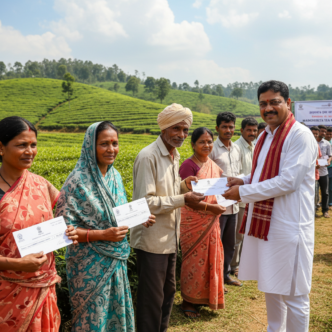
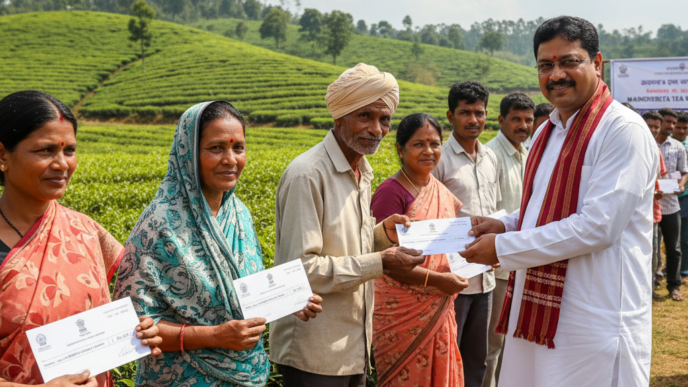
The Yogi Adityanath government has intertwined its investment narrative with a suite of citizen‑centric welfare schemes designed to ensure inclusive growth. In the health sector, the state‑extended Ayushman Bharat Yojana now covers over 10 million families, providing a health‑insurance cover of up to ₹ 5 lakh per family per year. This expansion has contributed to a 12 percent decline in infant mortality rates in high‑burden districts such as Mirzapur and Jhansi, as per the National Family Health Survey‑5 (2023‑24). Complementing this, the Swachh Bharat Abhiyan’s state‑specific “Swasth Bharat” drive has installed over 1.2 million household toilets and conducted weekly sanitation awareness campaigns, resulting in a 15 percent reduction in water‑borne disease incidence in rural blocks. 
Education and skill development receive equal emphasis. The Uttar Pradesh Skill Development Mission has established more than 150 vocational training centres across the state, delivering courses in digital services, construction, and renewable‑energy installation. These centres report a 30 percent placement rate for graduates within six months of certification. For women and girl children, scholarship programmes worth ₹ 500 crore have been introduced to support STEM studies, leading to an 18 percent rise in enrolment at state universities in 2023‑24. The Mahila Kisan Sashaktikaran Yojana offers a ₹ 10,000 annual assistance to women farmers owning up to 2 hectares of land, coupled with market‑linkage workshops that connect them to e‑commerce platforms such as “Kisan Store”, thereby increasing average farm income by an estimated 9 percent.
Women empowerment is further reinforced through the “Betiyan” scheme, which provides free secondary education, vocational training, and life‑skill workshops to adolescent girls aged 15‑18 from economically weaker sections. Since its launch in 2022, dropout rates among beneficiaries have fallen from 22 percent to 9 percent, according to the Department of Women Welfare. Parallelly, the “Mahila Samarthan” programme supplies micro‑credit and business‑development services to women entrepreneurs, resulting in the creation of over 8,000 new micro‑enterprises in the past year.
Rural development initiatives focus on water security and agricultural productivity. The state has rolled out micro‑irrigation projects covering 5,000 villages, installing drip and sprinkler systems that have increased average crop yields by 14 percent in districts like Badaun and Aligarh. The “Kisan Saathi” mobile application, developed in collaboration with the National e‑Governance Division, delivers real‑time market prices, weather alerts, and subsidy application guidance; it has been downloaded more than 3 million times and is credited with reducing price‑volatility losses for smallholder farmers.
Challenges and Future Roadmap
Despite the encouraging trajectory, Uttar Pradesh faces several structural challenges that could impede the equitable distribution of prosperity. Infrastructure gaps — particularly in last‑mile road connectivity and electricity reliability — remain acute in remote districts, potentially deterring investment in labour‑intensive sectors. Additionally, the disparity between urban and rural development outcomes raises concerns about inclusive growth, as affluent metropolitan areas such as Noida and Ghaziabad experience faster wage growth than hinterland villages.
To address these issues, the state government has outlined a multi‑pronged roadmap for the next five years. A key component is the proposed “Uttar Pradesh Small‑Enterprise Financing Facility” (SMEFF), which will offer low‑interest credit lines of up to ₹ 50 lakh to micro‑and small‑scale entrepreneurs, especially in agro‑processing and handicrafts. The SMEFF will be funded through a blend of state‑budget allocations and a dedicated green‑bond issuance slated for 2026. Parallel to financial inclusion, the administration plans to expand broadband connectivity to 90 percent of gram panchayats by 2028, building on the existing “Digital Uttar Pradesh” initiative that has already connected over 3,500 villages to high‑speed internet. Furthermore, a new “Green Corridor” policy is expected to attract additional renewable‑energy investors by offering enhanced land‑use incentives and streamlined permitting processes for solar farms on degraded lands, a strategy championed by the Ministry of New and Renewable Energy.
Conclusion
Stay updated with the latest Yojana schemes and government initiatives for better awareness and eligibility. For personalized guidance on accessing these benefits, reach out to us.