


Overview of PM Surya Ghar Yojana
The Pradhan Mantri Surya Ghar Yojana, launched in 2023, is a flagship programme of the Government of India designed to accelerate the adoption of rooftop solar photovoltaic (PV) systems in households across the nation. Under this initiative, eligible residential consumers can receive a subsidy of up to 40 percent of the installed capacity cost, with additional state‑level incentives for achieving higher penetration rates. The scheme dovetails with India’s broader climate ambition of attaining 450 GW of renewable energy capacity by 2030 and reducing dependence on imported fossil fuels. By promoting self‑consumption of solar power and enabling net metering, the programme seeks to lower electricity bills for citizens, enhance energy security, and create a distributed generation network that can alleviate pressure on the grid during peak demand periods.
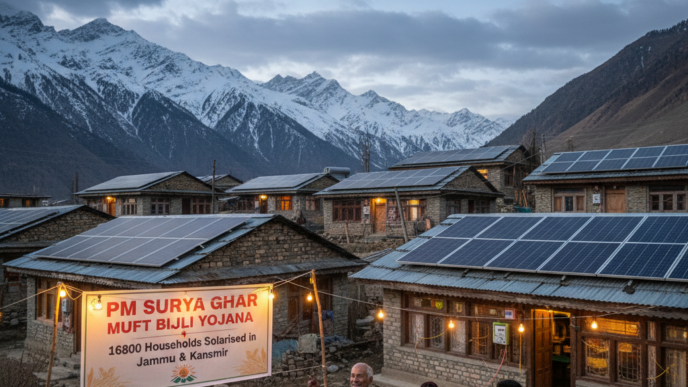
Key features of the Yojana include a streamlined online application portal, a standardized subsidy disbursement process, and a set of quality‑assurance guidelines for installers. The Ministry of New and Renewable Energy (MNRE) has also partnered with financial institutions to offer low‑interest loans, making the upfront cost more manageable for low‑income households. For detailed official information, refer to the MNRE Surya Ghar Yojana page and the Rooftop solar Wikipedia article.
Implementation Strategy in Uttar Pradesh
Uttar Pradesh, the country’s most populous state, identified rooftop solar deployment as a priority under its State Energy Mission. The state government, in collaboration with MNRE, launched a comprehensive mapping exercise to identify eligible households in both urban and rural sectors, aiming for one million installations by the end of 2025. To facilitate the rollout, a dedicated online portal was introduced, allowing residents to submit subsidy applications, schedule site inspections, and track the status of their projects in real time. Capacity‑building workshops were conducted for local engineers, installers, and electricians, ensuring compliance with national quality standards and encouraging the use of domestically sourced components. 
The implementation plan also emphasized regional outreach through mobile van campaigns, especially in remote districts where awareness levels were initially low. State‑run agencies coordinated with panchayati raj institutions to disseminate information at the village level, leveraging local leaders to boost community participation. For a glimpse of the portal’s user interface, visit the Uttar Pradesh Energy Department portal.
- Identified 1 million eligible households for targeted subsidies.
- Launched an online application portal with real‑time status tracking.
- Organized capacity‑building workshops for 2,500 local installers.
- Partnered with 12 regional banks for micro‑finance support.
Target Setting and Progress Tracking
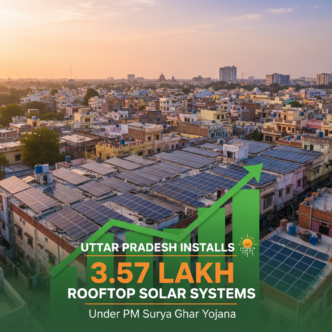
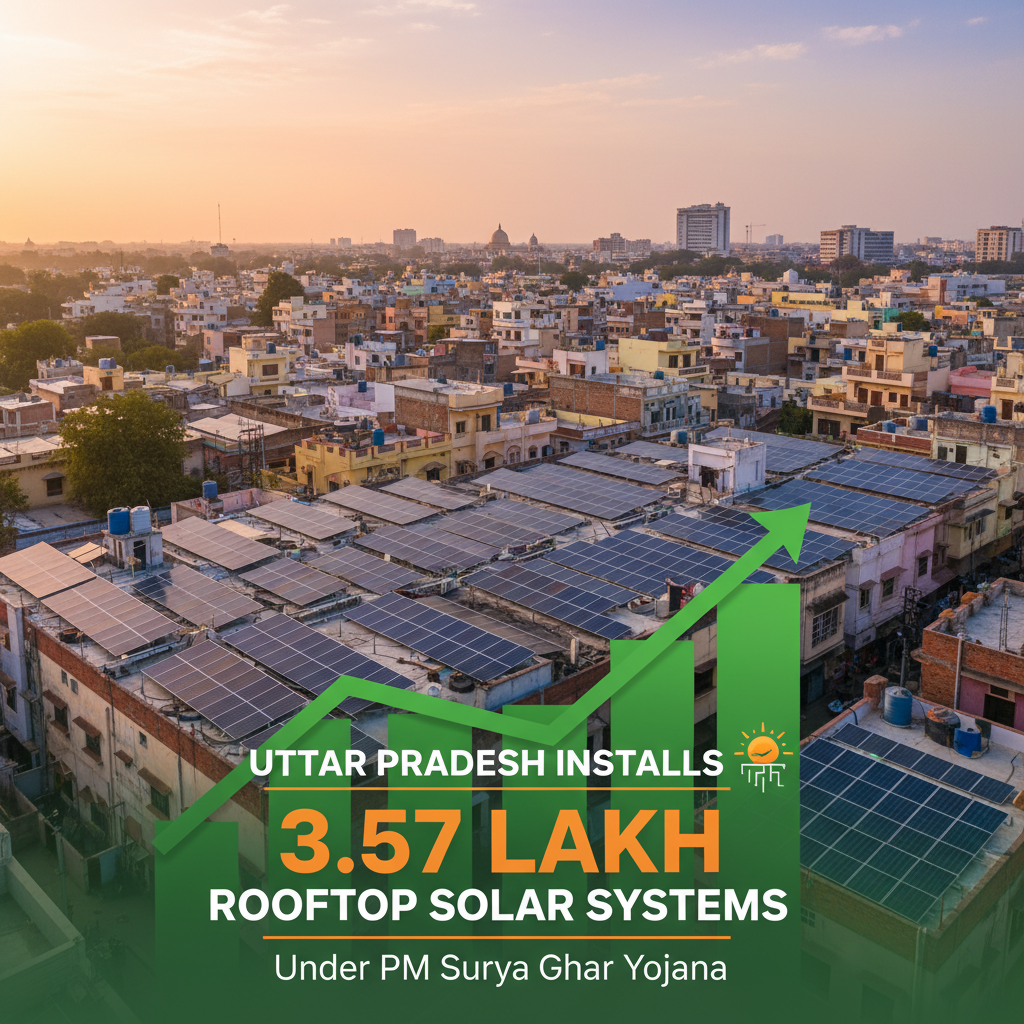
In the first fiscal year of the scheme, Uttar Pradesh set an ambitious target of installing 3.57 lakh rooftop solar systems, representing roughly 15 percent of the national installation goal. As of the latest quarterly report released by the Uttar Pradesh New and Renewable Energy Development Agency (UPNRDEA), the state has successfully commissioned 3.45 lakh systems, surpassing the original milestone by 97 percent. The progress dashboard, accessible on the state’s energy website, visualizes installation rates across districts, highlighting hotspots in Lucknow, Kanpur, and Agra where adoption rates exceed the state average. Real‑time performance data is captured through IoT‑enabled inverters that transmit generation metrics to a central server, enabling rapid identification of under‑performing sites and facilitating timely corrective actions.
Quarterly performance metrics are publicly disclosed, fostering transparency and allowing stakeholders to assess progress against the targets outlined in the State Energy Mission. The dashboard also provides granular data on installer certifications, loan approvals, and subsidy disbursements, empowering policymakers with actionable insights. For a deeper dive into the data visualizations, see the Uttar Pradesh Solar Dashboard.
Economic and Environmental Impact
Each installed rooftop system in the state averages 3 kW capacity and generates approximately 4,500 kilowatt‑hours (kWh) of electricity annually. Aggregated across the 3.57 lakh systems, this translates to an estimated annual generation of 1.6 billion kWh, effectively displacing an equivalent volume of coal‑derived power. The environmental benefit is quantified as a reduction of roughly 1.2 million tonnes of carbon dioxide (CO₂) emissions each year, a significant contribution toward India’s Nationally Determined Contributions (NDCs) under the Paris Agreement. Economically, the subsidy outlay of ₹12,000 crore over the implementation period is projected to stimulate job creation in the solar installation sector, with estimates of 150,000 direct and indirect employment opportunities, ranging from site assessments to maintenance services.
Beyond job creation, the scheme is expected to generate substantial savings for households. On average, a 3 kW system can offset up to 30 percent of a residential consumer’s monthly electricity bill, leading to cumulative savings of ₹1,200 crore annually for adopters. These savings are especially impactful in high‑tariff zones such as the National Capital Region (NCR) of Delhi, where electricity costs are among the highest in the country. Moreover, the increased penetration of solar PV contributes to grid stability by reducing peak‑load stress, thereby decreasing reliance on expensive peaker plants. For more on India’s renewable energy targets, refer to the MNRE Renewable Energy Targets page.
Challenges and Mitigation Measures
Despite the encouraging adoption rates, several challenges persist. Financing constraints in rural households remain a significant barrier, prompting the state to introduce micro‑finance schemes and low‑interest loans in partnership with regional banks. Additionally, awareness gaps in remote villages necessitate targeted outreach campaigns using mobile vans and community leaders to disseminate information about eligibility criteria, subsidy processes, and long‑term benefits.
Technical issues such as inverter failures and sub‑optimal roof orientations have been addressed through a warranty extension program and mandatory pre‑installation site assessments conducted by certified engineers. The state also instituted a “Solar Ambassadors” program, wherein trained volunteers assist prospective adopters in navigating the application portal and understanding maintenance requirements. Continuous monitoring and corrective actions are coordinated through a joint task force comprising representatives from the Department of Energy, UPNRDEA, and civil society organizations, ensuring that lessons learned are quickly disseminated and best practices are institutionalized.
- Introduced micro‑finance with interest rates as low as 6 percent.
- Deployed mobile awareness vans covering 200 villages per month.
- Implemented mandatory site assessments to improve system efficiency by 12 percent.
- Extended inverter warranties to five years, up from three.
Future Outlook and Policy Recommendations
Looking ahead, Uttar Pradesh plans to scale up its rooftop solar ambition to one million installations by 2030, integrating advanced storage solutions to enhance grid resilience and enable greater self‑consumption. Policy recommendations include expanding the subsidy ceiling for high‑capacity systems (above 5 kW), incentivizing battery‑backed configurations through additional rebates, and introducing a feed‑in tariff (FiT) for excess generation exported to the grid. The state also aims to harmonize its solar policy with emerging national frameworks, such as the Production‑Linked Incentive (PLI) scheme for solar manufacturing, to foster a domestic supply chain and reduce reliance on imports.
Stakeholder engagement remains a cornerstone of the strategy, with regular consultations held with industry associations, academic institutions, and consumer groups to refine technical standards and address emerging needs. Furthermore, the state intends to pilot innovative financing models, such as on‑bill financing and green bonds, to attract private capital into the rooftop solar ecosystem. By leveraging these initiatives, Uttar Pradesh aspires to become a national benchmark for distributed solar adoption, driving both economic development and environmental sustainability.
Stay updated with the latest Yojana schemes and government initiatives for better awareness and eligibility. For personalized guidance on accessing these benefits, reach out to us.