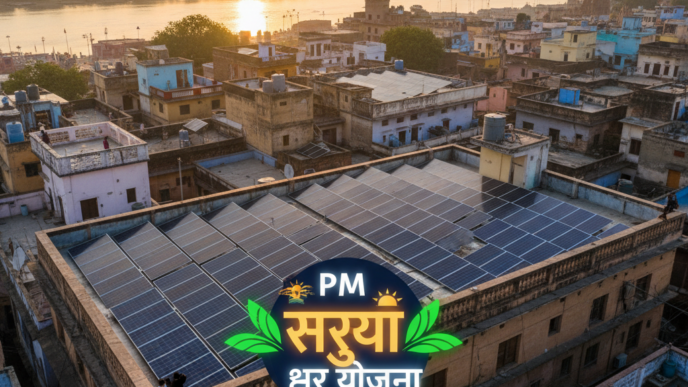



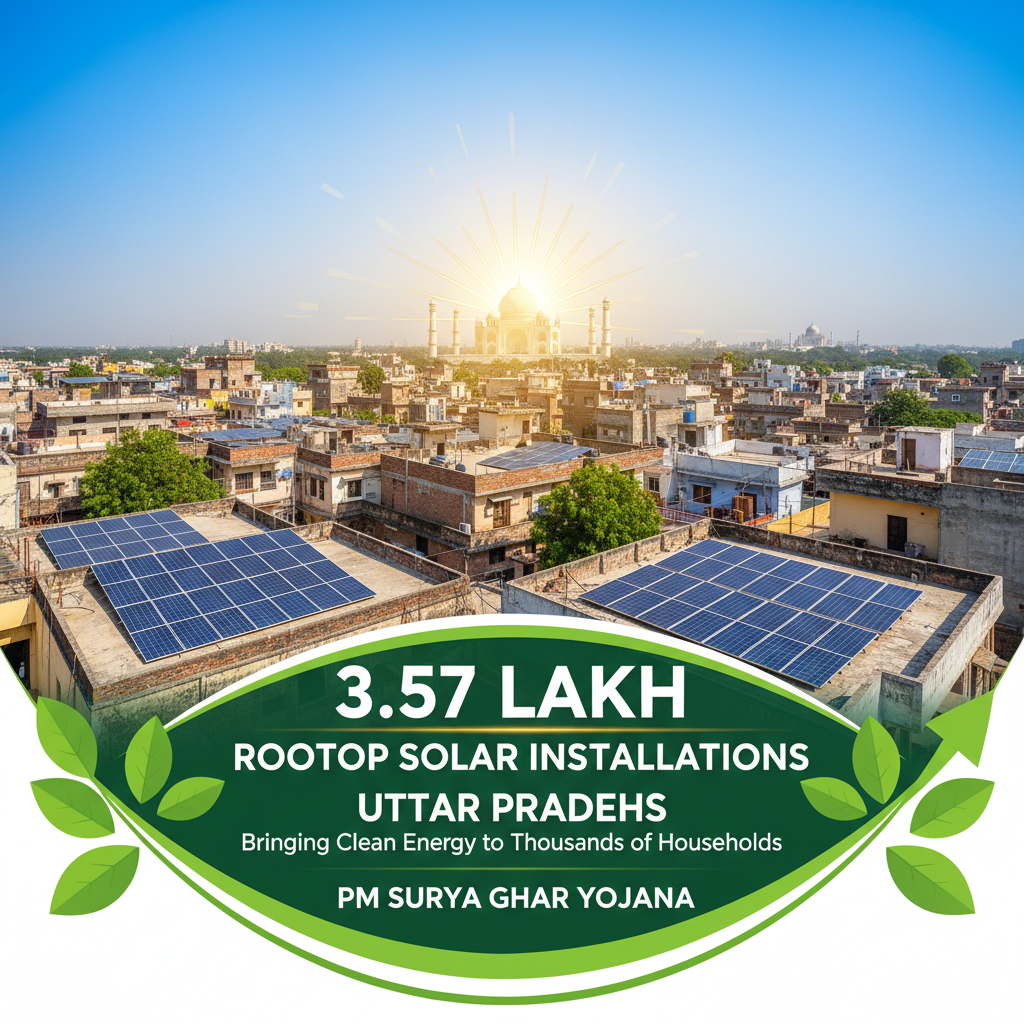
Uttar Pradesh Hits 3.57 Lakh Rooftop Solar Installations Under PM Surya Ghar Yojana
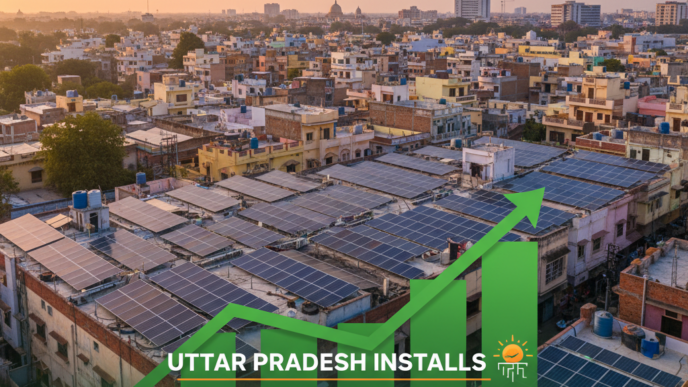
Uttar Pradesh has achieved a landmark milestone by successfully installing 3.57 lakh (357,000) rooftop solar photovoltaic systems under the national PM Surya Ghar Yojana. The rollout, coordinated by the Uttar Pradesh New and Renewable Energy Development Agency (UPNREDA), reflects the state’s aggressive push to bring clean, affordable electricity to millions of households while aligning with India’s broader renewable energy targets. According to the latest government data released in August 2024, the installations collectively generate over 150 megawatts of clean power, cutting an estimated 300,000 tonnes of carbon dioxide emissions each year. This progress places Uttar Pradesh among the top performing states in the country’s push to add 100 gigawatts of solar capacity by 2030, a goal championed by Prime Minister Narendra Modi.
Objectives of PM Surya Ghar Yojana
The PM Surya Ghar Yojana was launched in April 2023 with the explicit aim of providing every Indian household with access to cost‑effective, sustainable electricity through rooftop solar adoption. Key objectives include reducing dependence on fossil‑fuel‑based generation, curbing electricity bills, and creating a self‑sustaining market for solar energy that can be sold back to the grid through net‑metering. The scheme also seeks to empower marginalized groups—such as women entrepreneurs and small‑holder farmers—by offering targeted subsidies and financing support. By enabling citizens to become “prosumer” participants—both producers and consumers of electricity—the programme aligns with the larger vision of energy security and climate resilience.
Implementation Strategy in Uttar Pradesh
UPNREDA spearheaded the implementation by launching a fully digital enrollment portal that identifies eligible households based on criteria such as existing electricity connection, roof suitability, and income level. The portal assigns a unique identification number to each applicant, streamlining the subsidy disbursement process. State officials conducted on‑site technical assessments to determine optimal system size, typically limiting installations to 3 kW for residential units. To ensure widespread awareness, the government partnered with local radio stations, regional television channels, and social media influencers to run multi‑language campaigns highlighting the long‑term savings and environmental benefits of solar adoption. These outreach efforts have been credited with driving a 42 % increase in application rates during the fiscal year 2023‑24. 
Financial Incentives and Support
Financial assistance under the scheme is structured to minimize upfront costs for beneficiaries. Eligible households receive a capital subsidy of up to 40 % of the total project cost for solar systems sized up to 3 kW. Additional incentives are available for women‑led enterprises and farmers who integrate solar with irrigation or agro‑processing activities. For those requiring financing, partner banks—including State Bank of India, Punjab National Bank, and several regional rural banks—offer low‑interest loans covering the remaining balance, often with repayment periods extending up to 10 years. The subsidy architecture is designed to ensure that the net out‑of‑pocket expense for a typical 3 kW system does not exceed INR 45,000, making solar an economically viable option for middle‑class and lower‑income families.
- Subsidy up to 40 % for systems ≤ 3 kW
- Special incentives for women entrepreneurs and marginal farmers
- Collaborative financing with partner banks at preferential rates
- Net‑metering arrangements allowing excess power to be sold back to the grid
Environmental and Economic Impact
The 3.57 lakh installations are projected to generate approximately 150 MW of clean electricity annually, enough to power over 300,000 households. This surge in renewable generation translates into an estimated reduction of 300,000 tonnes of CO₂ emissions each year, contributing significantly to India’s climate commitments under the Paris Agreement. From an economic standpoint, households that have adopted rooftop solar report average annual savings of INR 5,000–8,000 on electricity bills, depending on consumption patterns and local tariffs. Moreover, the rapid expansion of the solar ecosystem has spurred job creation across the value chain; local manufacturers, installers, and maintenance firms have reported a collective increase of over 10,000 employment opportunities in Uttar Pradesh alone, as per a recent survey by the Confederation of Indian Industry (CII).
Challenges and Future Roadmap
Despite notable achievements, several challenges persist. Grid integration remains a critical hurdle, particularly in rural areas where distribution infrastructure may not be fully equipped to handle two‑way power flows. Additionally, ongoing system monitoring and maintenance are essential to sustain performance levels and prevent degradation over time. To address these issues, the state government has announced plans to expand the target to 5 lakh installations by the end of 2027, leveraging advanced data analytics to track generation metrics, maintenance needs, and consumer satisfaction. Enhanced public‑private partnerships are also being encouraged to introduce cutting‑edge technologies, streamline supply chains, and further reduce system costs. A pilot program focusing on battery‑backed storage solutions is slated for launch in 2025 to improve reliability during peak demand periods.
- Target of 5 lakh rooftop solar systems by 2027
- Implementation of real‑time performance monitoring dashboards
- Expansion of net‑metering regulations to facilitate greater energy export
- Pilot projects for solar‑plus‑storage systems in high‑consumption zones
Community Response and Success Stories
Residents across districts such as Lucknow, Kanpur, Bareilly, and Gorakhpur have shared overwhelmingly positive experiences, citing reduced electricity bills, fewer power outages, and a heightened sense of energy independence. One standout case involves a small textile shop owner in Gorakhpur who installed a 2 kW rooftop system in early 2024. Within six months, his electricity expenses dropped by 60 %, and he now sells excess power back to the grid, generating an additional INR 3,500 per month. In the Bundelkhand region, women’s self‑help groups have embraced solar-powered irrigation pumps, enabling year‑round cultivation of high‑value crops and creating a new revenue stream for participants. These grassroots successes underscore the scheme’s potential to drive socioeconomic upliftment while promoting sustainable energy practices.
Conclusion
Uttar Pradesh’s rapid progress under the PM Surya Ghar Yojana illustrates how coordinated policy design, financial incentives, and community engagement can accelerate the adoption of rooftop solar at scale. The state’s achievement not only moves India closer to its national Renewable Energy targets but also sets a replicable benchmark for other states seeking to harness solar energy for economic and environmental gains. With a clear roadmap toward 5 lakh installations, robust financing mechanisms, and growing public awareness, Uttar Pradesh is poised to play a pivotal role in India’s journey toward a solar‑powered future. Continued innovation, supportive regulatory frameworks, and inclusive outreach will be essential to sustain momentum and ensure that the benefits of clean energy reach every household across the nation.
Stay updated with the latest Yojana schemes and government initiatives for better awareness and eligibility. For personalized guidance on accessing these benefits, reach out to us.