


Overview of the Controversy
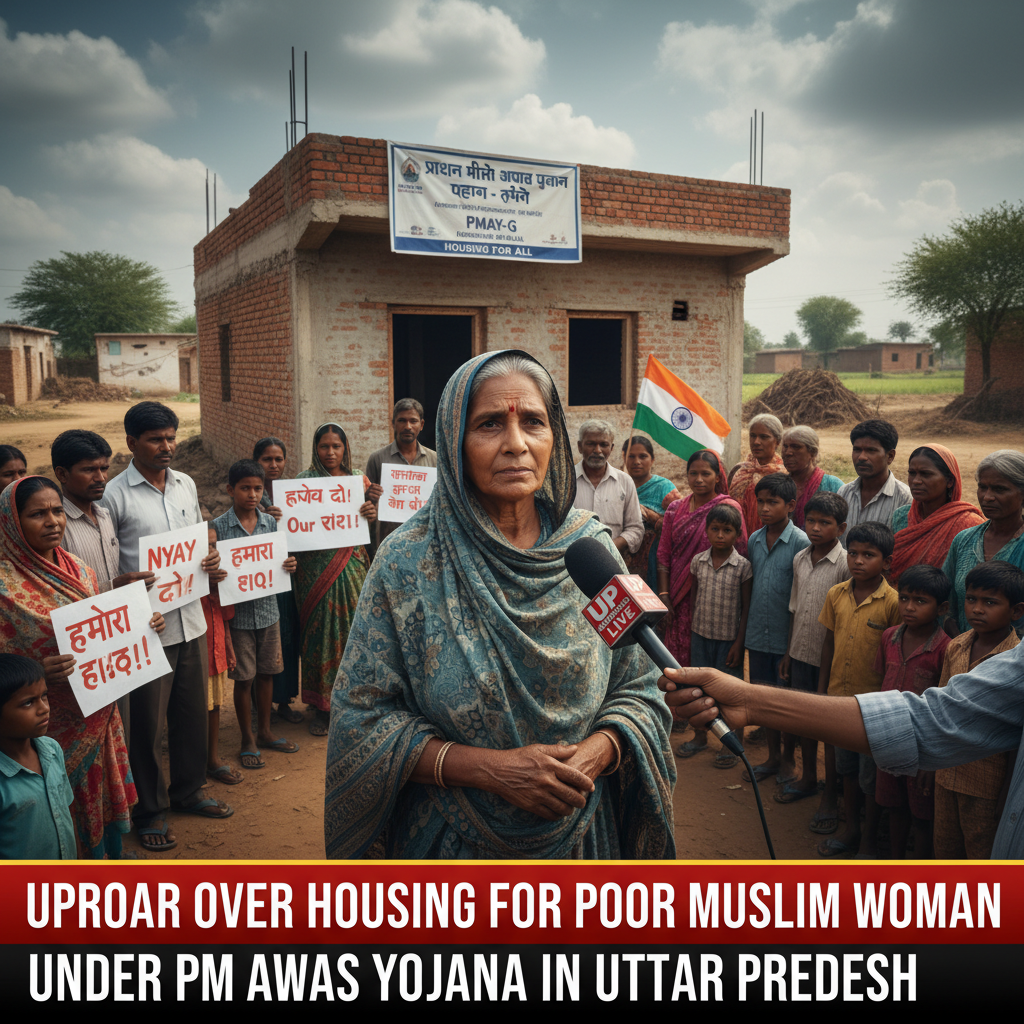
The recent uproar over a modest dwelling allocated to a destitute Muslim woman in Uttar Pradesh has ignited a nationwide debate about the implementation of the Pradhan Mantri Awas Yojana. Media reports reveal that the family, classified as a Below Poverty Line (BPL) household, had been awaiting assistance for months, only to see their application stalled despite meeting all eligibility criteria. Local activists allege that the denial of housing is not merely a technical glitch but a symptom of deeper societal biases that disproportionately affect minority groups. As the story gained traction on social media platforms, citizens across the country began questioning the efficacy of the scheme and demanding accountability from the authorities. The incident underscores how a flagship programme promising “Housing for All” can be perceived as exclusionary when bureaucratic delays intersect with communal prejudice.
Background of PM Awas Yojana
Launched in 2015, the Pradhan Mantri Awas Yojana (PMAY) was designed to provide permanent housing for all citizens, especially those belonging to the economically weaker sections (EWS) and low‑income groups. The scheme offers three components: In‑Situ Upgrading, Credit Linked Subsidy, and Subsidised Housing through the Indira Awas Yojana (IAY) model. Eligibility is determined by income thresholds—annual family income up to ₹3 lakh for urban EWS and up to ₹2 lakh for rural EWS—and by the absence of a pucca (permanent) house. Beneficiaries receive a subsidy of up to ₹2.67 lakh for constructing a 30 m² house, or a direct allocation of a ready‑made IAY house. According to the Ministry of Housing and Urban Affairs, over 20 million houses have been sanctioned since inception, yet the distribution remains uneven across states. The scheme also emphasizes the use of locally available materials, environmentally sustainable design, and community participation to foster ownership and pride among residents. However, implementation gaps—such as delayed fund releases, inadequate monitoring, and limited awareness—have left many eligible families without the promised support, particularly in high‑need states like Uttar Pradesh.
Incident in Uttar Pradesh
The situation in Uttar Pradesh came to a head when a local journalist uncovered that a widow from the minority community had been denied a house despite submitting all required documents, including a caste certificate, income proof, and a death certificate of her late husband. According to the report, the housing officer cited “pending verification” and “inadequate documentation” as reasons for the delay, even though the woman’s family had been on the waiting list for over eight months. The bureaucratic roadblock sparked outrage, as the community perceived the denial as overt discrimination. Protesters gathered outside the district office, demanding immediate allocation of a dwelling and transparent clarification of the verification process. The incident also attracted national media attention, prompting a broader conversation about the intersection of religion, poverty, and public service delivery in India. A Uttar Pradesh Wikipedia page notes that the state houses nearly 20 % of India’s Muslim population, making equitable access to housing a critical issue for social cohesion. 
Political Reactions and Accountability
Political reactions have been swift and polarized. Opposition parties have seized upon the case as evidence of governmental neglect, accusing the ruling coalition of failing to protect vulnerable minorities and calling for a parliamentary inquiry into the allocation process. They have demanded that the central government intervene directly in the state’s housing administration and allocate additional funds for minority‑focused welfare measures. Conversely, government officials have defended the decision, asserting that the verification process is standard procedure and that any exceptions would undermine the scheme’s integrity. Senior leaders have, however, acknowledged the need for sensitisation programmes to eliminate unconscious bias among field officers. In a recent press briefing, the Press Information Bureau statement emphasized that “the scheme’s objectives remain intact, but we are committed to ensuring that no eligible beneficiary is left behind due to procedural lapses.” The debate has also spilled into academic circles, where scholars argue that without targeted policy adjustments, the scheme may inadvertently exacerbate existing social inequities rather than alleviate them.
Government Response and Corrective Measures
In response to mounting pressure, the Ministry of Housing and Urban Affairs announced a set of corrective measures aimed at ensuring equitable implementation of PMAY. These include the establishment of a dedicated grievance redressal portal specifically for minority communities, mandatory sensitivity training for field officers, and periodic audits of housing allocations in high‑risk districts. The ministry also pledged to allocate additional funds to states that demonstrate a commitment to inclusive housing delivery, with a particular focus on regions exhibiting low minority beneficiary rates. Pilot projects are being rolled out in several states to test localized interventions, such as partnering with NGOs to facilitate documentation and verification for marginalized applicants. For instance, the NGO Darpan platform now allows NGOs to submit pre‑verified dossiers on behalf of applicants, reducing processing time from weeks to days. While these steps are lauded as proactive, critics argue that genuine change will require systemic reforms, stronger oversight, and a cultural shift within bureaucratic ranks. Strengthening data‑driven monitoring mechanisms—such as real‑time dashboards that track demographic composition of beneficiaries—could help detect and rectify disparities before they escalate.
In conclusion, the uproar over the housing dispute in Uttar Pradesh serves as a stark reminder that policy implementation must be as robust as the legislation itself. While the Pradhan Mantri Awas Yojana holds promise, its success hinges on overcoming systemic barriers, fostering accountability, and ensuring that every eligible citizen, irrespective of faith or background, receives the support they deserve. Continued dialogue between government, civil society, and affected communities will be essential to refine the scheme, rectify shortcomings, and rebuild public trust. Only through such collaborative efforts can India move closer to the ideal of equitable, sustainable housing for all its citizens.
Stay updated with the latest Yojana schemes and government initiatives for better awareness and eligibility. For personalized guidance on accessing these benefits, reach out to us.