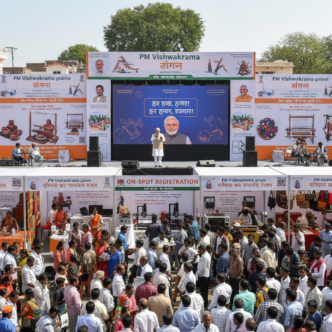



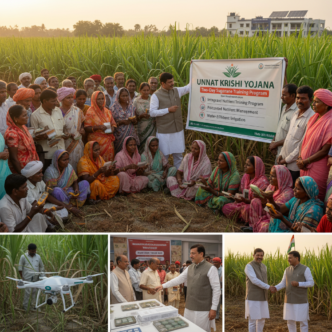
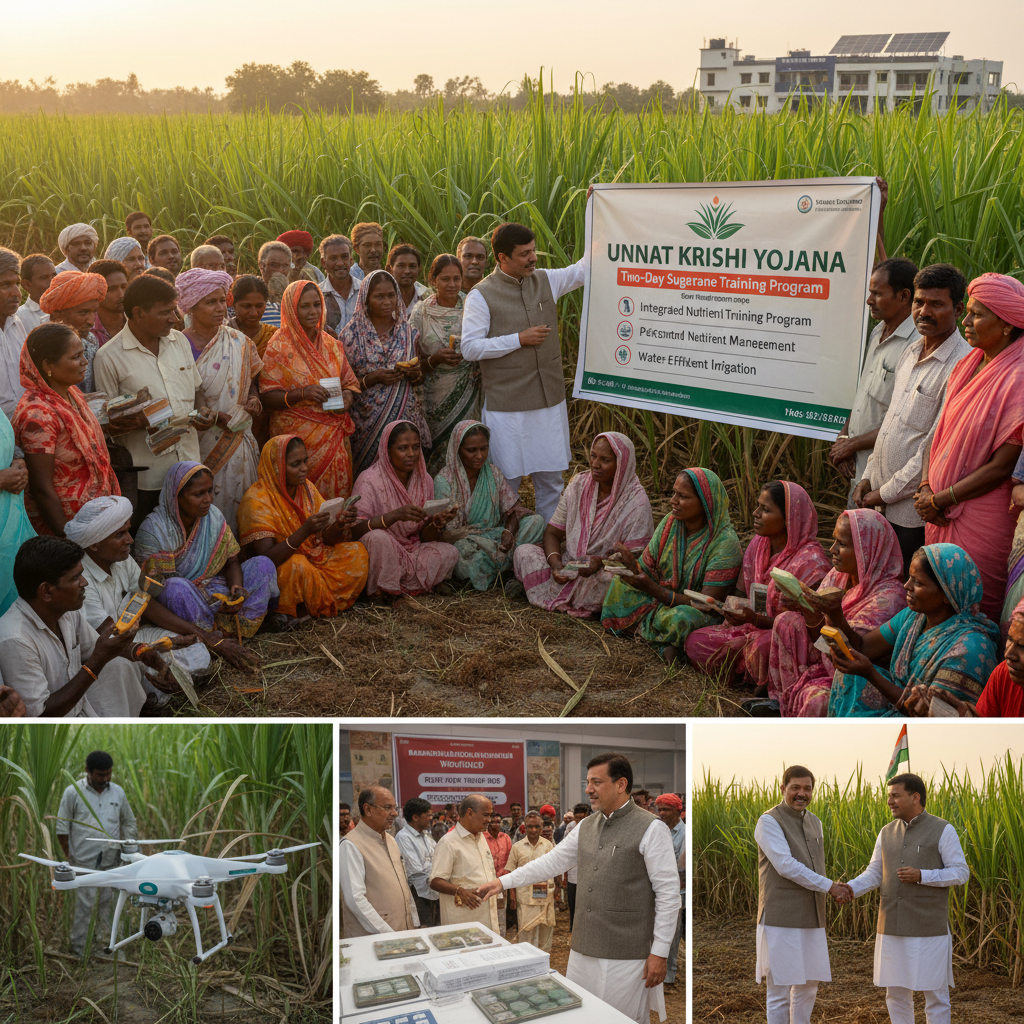
Unnat Krishi Yojana Two-Day Training Enhances Sugarcane Farming Practices
The recent two‑day training program under the Unnat Krishi Yojana brought together more than 150 sugarcane growers from Maharashtra and Karnataka, marking one of the largest farmer‑focused capacity‑building events of the current agricultural season. Organised by the State Agriculture Department in partnership with the Sugarcane Research Institute, the workshop aimed to translate cutting‑edge agronomic research into practical actions that can be adopted on small‑holder fields. Participants received hands‑on instruction in soil health assessment, nutrient budgeting, pest‑management strategies, water‑saving irrigation, and the latest cultivar releases, all under the umbrella of the centrally‑sponsored Unnat Krishi Yojana which targets the modernisation of agriculture in 20 districts by 2027.
Program Overview
Launched as part of the central government’s initiative to double farmer incomes by 2025, the Unnat Krishi Yojana focuses on technology transfer, financial incentives, and market‑oriented reforms across the value chain. In the 2024‑25 fiscal year, the scheme allocated INR 1,200 crore for extension services, subsidised inputs, and farmer‑producer organisations (FPOs). The sugarcane component of the programme was identified as a priority because the crop supports the livelihood of over 3.5 million households in western and southern India and contributes significantly to the nation’s sugar and ethanol production. The two‑day training was therefore designed not only to improve yields but also to enhance the quality of cane, reduce input costs, and promote environmentally sustainable practices.
- Integrated nutrient management: Soil testing, balanced fertilisation, and use of bio‑fertilisers.
- High‑yield, disease‑resistant varieties: Adoption of certified seed and clonal material.
- Mechanised harvesting techniques: Training on modern cane‑cutter equipment and post‑harvest handling.
- Water‑efficient irrigation: Drip‑irrigation design, scheduling, and moisture‑sensor utilisation.
- Biological pest control: Application of Trichoderma spp., Bacillus subtilis, and IPM‑based monitoring.
Key Training Sessions
Day one began with an inaugural address by the Director of Agriculture, who highlighted the scheme’s vision of “revitalising agrarian economies through science‑driven extension.” Sessions covered soil‑health assessment, emphasizing the creation of Soil Health Cards, interpretation of pH and nutrient levels, and the formulation of site‑specific fertiliser prescriptions. Farmers practiced using handheld pH meters and portable NPK analyzers, and calculated optimal NPK ratios for their fields based on soil type and crop stage. 
Day two shifted focus to pest‑management and water‑use efficiency. Entomologists introduced Integrated Pest Management (IPM) frameworks, demonstrating how to scout for early symptoms of red rot, white rust, and sugarcane borer, and how to deploy pheromone traps for population monitoring. Biological control agents such as Trichoderma harzianum and Bacillus subtilis were showcased in seed‑treatment and foliar‑spray applications, offering a viable alternative to synthetic pesticides. Water‑management workshops guided participants through the design of low‑cost drip‑irrigation kits, calibration of flow rates, and interpretation of soil‑moisture sensor data, enabling up to a 30 % reduction in groundwater extraction without compromising cane weight.
Throughout both days, subject‑matter experts from the Sugarcane Research Institute, the Indian Council of Agricultural Research (ICAR), and leading agri‑tech firms delivered concise lectures supported by field demonstrations. Attendees were also briefed on micronutrient correction using zinc sulphate and boron foliar sprays, techniques that improve sugar content and juice extraction rates in ratoon crops, thereby enhancing overall farm profitability.
Impact on Farmers
Feedback collected immediately after the training indicated a high level of confidence among participants in applying scientific methods to their fields. A post‑event survey of 120 growers revealed that 78 % intended to implement at least one of the recommended practices on a pilot basis across a portion of their holdings within the next cropping cycle. In particular, farmers from the drought‑prone districts of Solapur and Satara expressed optimism that water‑saving irrigation and balanced fertilisation would mitigate the adverse effects of erratic monsoons.
Experts project that early adopters could achieve a 10 %–15 % increase in cane weight per acre in the forthcoming harvest, translating into an additional INR 1.5 lakh of revenue per acre for small‑holder families. Moreover, the shift toward organic inputs and reduced pesticide use positions participating farms to qualify for eco‑label certifications, which can command premium market prices in both domestic and export channels.
Beyond individual farms, the training fostered networking among growers, leading to the formation of several informal farmer groups that are now exploring formal Farmer‑Producer Organisations (FPOs). These collectives aim to aggregate produce, negotiate better contract‑farming terms, and access collective credit facilities under the ancillary support mechanisms of Unnat Krishi Yojana.
Government Commitment and National Alignment
The State Deputy Chief Minister, addressing the closing ceremony, reaffirmed the government’s commitment to farmer empowerment through schemes like Unnat Krishi Yojana, stating that “capacity building is as crucial as financial assistance.” He underscored that the training aligns with the national agenda to double farmer incomes by 2025, a target that requires a multi‑pronged approach involving technology dissemination, market linkage, and risk mitigation.
Officials highlighted that the scheme’s budgetary allocation for extension services has increased by 22 % year‑on‑year, reflecting a strategic shift toward knowledge‑intensive agriculture. The integration of climate‑smart practices—such as drought‑tolerant cultivars and water‑efficient irrigation—directly supports India’s commitments under the Paris Agreement, positioning the agricultural sector as a key player in the country’s climate‑action plan.
Future Plans and Scaling Up
Building on the pilot’s success, the State Agriculture Department announced plans to roll out similar two‑day workshops for staple crops including rice, maize, and pulses, ensuring that knowledge dissemination keeps pace with evolving agricultural challenges. The department estimates that the expanded programme will reach an additional 30,000 hectares by the end of the fiscal year, leveraging partnerships with private agri‑tech firms, research institutions, and non‑governmental organisations.
Stakeholders have pledged sustained support through follow‑up field visits, monitoring missions, and the provision of subsidised input kits. A dedicated online portal—unnatkrishi.gov.in—will host registration details, training schedules, and downloadable resources such as Soil Health Card templates and IPM guides. Farmers can also access a toll‑free helpline for real‑time agronomic advice, further strengthening the extension network.
Industry analysts note that the Unnat Krishi Yojana training module serves as a replicable model for other states grappling with fragmented extension services, especially where resource constraints limit traditional outreach. Its emphasis on practical, hands‑on learning, combined with digital empowerment, is expected to accelerate the adoption of best practices across the Indian agrarian landscape.
Economic and Environmental Benefits
From an economic standpoint, the adoption of high‑yield, disease‑resistant varieties coupled with optimized fertilisation can raise average cane yields by 12 %–18 % per hectare. This uplift translates into additional revenue of roughly INR 1.5 lakh per acre for small‑holder farmers, improving household food security and enabling investment in education and health. Simultaneously, the reduction in synthetic pesticide use—estimated at 20 %–30 % per farm—lowers input costs and diminishes the risk of pesticide resistance, contributing to long‑term soil health.
Environmentally, the promotion of drip irrigation and moisture‑sensor technologies curtails groundwater extraction, safeguarding aquifers that are under stress in many parts of Maharashtra and Karnataka. The integration of bio‑fertilisers and organic compost also reduces nitrogen runoff, protecting nearby water bodies from eutrophication and preserving biodiversity. These climate‑smart measures align with national sustainability targets and open avenues for certification under eco‑label programmes that command price premiums in niche markets.
Resources for Farmers and Further Reading
Farmers interested in registering for upcoming training sessions can visit the official Unnat Krishi Yojana portal at unnatkrishi.gov.in, where they can also download the “Soil Health Card Handbook” and access a calendar of extension activities across the state. For an in‑depth understanding of sugarcane agronomy, the Wikipedia entry on sugarcane provides a comprehensive overview of cultivation practices, while the page on Integrated Pest Management explains IPM strategies in detail. Additional information on water‑saving irrigation can be found on the FAO Water Portal, a trusted source for global best practices.
Stay updated with the latest Yojana schemes and government initiatives for better awareness and eligibility. For personalized guidance on accessing these benefits, reach out to us.