




Overview of the PM Dhan‑Dhaanya Krishi Yojana CSR Conclave
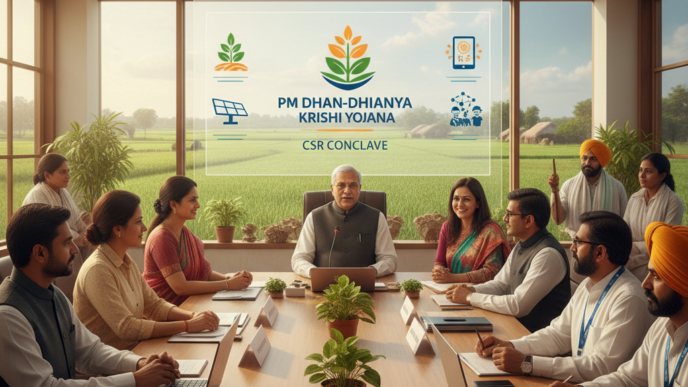
The PM Dhan‑Dhaanya Krishi Yojana CSR Conclave convened on 14 February 2026 brought together senior officials from the Department of Agriculture & Farmers Welfare, the United Nations Development Programme (UNDP) India, the Bill & Melinda Gates Foundation, and a coalition of private sector partners. Hosted in a hybrid format at New Delhi, the gathering aimed to accelerate the impact of the PM Dhan‑Dhaanya Krishi Yojana (DDKY) by mobilising corporate social responsibility (CSR) initiatives, technological expertise, and innovative financing mechanisms. With an estimated 12 crore eligible farmer families, the conclave set the stage for a coordinated effort to deepen income security, modernise agrarian value chains, and embed climate‑smart practices across India’s rural landscape.
Participants highlighted that the conclave marks a strategic pivot from isolated welfare transfers to an integrated model where CSR programmes can act as catalysts for scalable, data‑driven interventions. By aligning corporate objectives with the scheme’s goal of delivering a minimum monthly income of ₹6,000 to small and marginal farmers, the event underscored a new paradigm of public‑private synergy that could serve as a blueprint for similar initiatives worldwide.
Understanding PM Dhan‑Dhaanya Krishi Yojana
Launched in 2021, PM Dhan‑Dhaanya Krishi Yojana is a centrally sponsored income‑support programme that supplements the existing Pradhan Mantri Kisan Samman Nidhi (PM‑Kisan) by guaranteeing a monthly inflow of ₹6,000 to eligible cultivators, irrespective of crop performance or market volatility. Eligibility is determined through a combination of the Agricultural Census, satellite‑derived land‑use data, and soil‑health card inputs, ensuring that benefits reach genuine smallholder households. The scheme targets roughly 12 crore farmer families, covering approximately 40 % of India’s agricultural workforce. 
Beyond the cash transfer, DDKY emphasises capacity building, climate‑resilient agriculture, and market access. The Ministry of Agriculture integrates real‑time procurement price data and weather forecasts to Flag emerging risks, while also promoting investments in high‑value crops and irrigation upgrades. This shift from input‑centric subsidies to direct income support is intended to reduce farmer distress, encourage diversification, and improve overall rural livelihoods.
For more detailed information on the scheme’s design and eligibility criteria, refer to the official portal PM‑Kisan and the Ministry of Agriculture’s comprehensive guide Agriculture & Farmers Welfare.
Key Discussions and Policy Commitments
The conclave produced a joint communiqué that outlined four concrete commitments to amplify DDKY’s reach and effectiveness. First, a Joint DDKY Innovation Fund will be seeded with ₹500 crore from private contributors to finance pilot projects in precision farming, water‑use efficiency, and farmer‑centric e‑marketplaces. Second, a Digital Dashboard will aggregate real‑time data on crop performance, procurement prices, and beneficiary disbursements, enabling agile decision‑making by policymakers and private partners alike. Third, a Farmer‑Mentor Network will connect seasoned agribusiness professionals with smallholder groups, providing technical guidance and market intelligence. Finally, an annual impact assessment framework, developed in partnership with leading academic institutions, will measure income uplift, credit access, and adoption of climate‑resilient practices.
Each corporate participant pledged to align at least one CSR portfolio pillar with one of these commitments within the upcoming fiscal year, signalling a decisive move toward accountable, outcome‑driven corporate engagement in agricultural welfare.
Strategic Partnerships, Funding Mechanisms and CSR Alignment
UNDP India positioned itself as the facilitation hub for multi‑stakeholder collaboration, offering technical assistance, global best practices, and access to its extensive development network. The Gates Foundation announced a $30 million grant earmarked for research on biofortified varieties and resilient seed systems that can be integrated into DDKY’s beneficiary outreach. Corporate participants, ranging from leading agribusiness houses to fintech firms, committed to embedding DDKY‑linked digital payment solutions, thereby reducing transaction costs and enhancing transparency in cash transfers.
Private sector partners also pledged to co‑develop open‑source Application Programming Interfaces (APIs) that enable seamless data exchange between state procurement portals and private market platforms. This initiative is expected to foster competition, improve price discovery for farmers, and reduce dependency on intermediaries. Collectively, these partnerships aim to create a robust ecosystem where CSR investments translate directly into measurable gains for India’s smallholder farmers.
Technology, Innovation and Agritech Integration
Delegates showcased a suite of agritech solutions designed to embed cutting‑edge capabilities within the DDKY delivery framework. Demonstrations included drone‑based field surveys for early pest detection, Internet‑of‑Things (IoT) soil‑moisture sensors that trigger automated irrigation, and blockchain‑secured ledgers for tracking grain procurement from farm to market. These technologies are intended to reduce input losses, improve yield forecasting, and provide farmers with actionable insights via low‑cost mobile applications.
Partnerships with AI‑driven agronomy startups were explored to deliver personalised advisory services that guide farmers on crop selection, input application, and market timing. By disseminating these tools through the Digital Dashboard, the conclave envisages a data‑rich environment where decision‑makers can monitor adoption rates, assess impact, and scale successful pilots across high‑burden districts.
For a broader perspective on agritech innovations in India, see the Wikipedia overview of agricultural technology and the World Bank’s report on digital agriculture.
Stay updated with the latest Yojana schemes and government initiatives for better awareness and eligibility. For personalized guidance on accessing these benefits, reach out to us.