


Overview of the Announcement
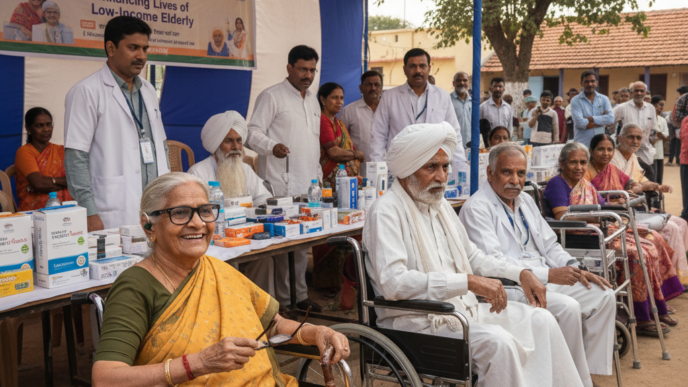
In a historic address on Monday, 2 February 2026, Finance Minister Nirmala Sitharaman unveiled two flagship programmes under the Union Budget 2026‑27 that are explicitly designed for the empowerment of Divyangjan. The initiatives aim to bridge the long‑standing gaps in education, employment, and accessibility for persons with disabilities across India. By integrating technology, community outreach, and robust monitoring, the government seeks to create a truly inclusive ecosystem where every citizen can contribute to the nation’s growth story. Officials highlighted that these schemes are part of a broader commitment to fulfil the goals of the United Nations Convention on the Rights of Persons with Disabilities, reinforcing India’s pledge to leave no one behind.
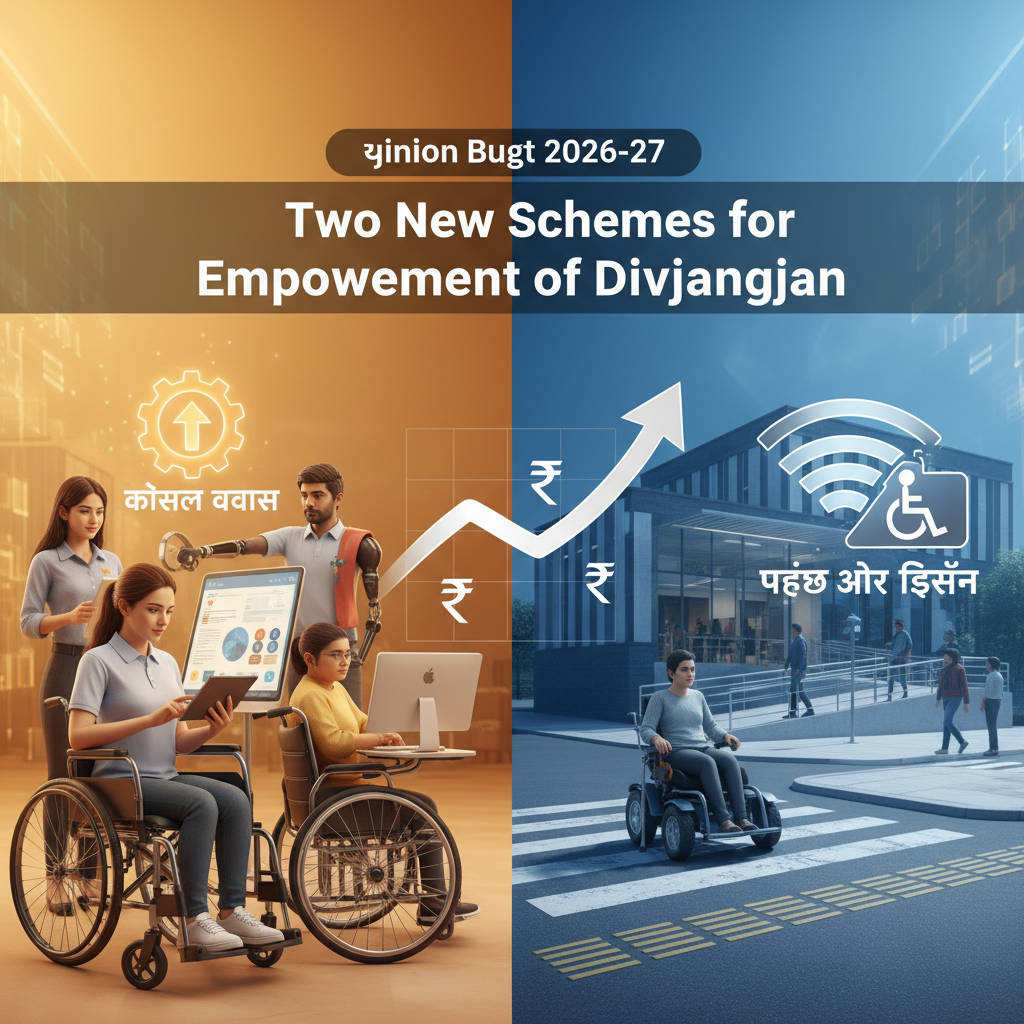
The first programme focuses on vocational training and skill development, while the second places universal design and accessibility at the forefront. Together, they constitute a comprehensive strategy that intertwines capacity building with systemic change, positioning India as a global leader in inclusive development. Stakeholders from academia, industry, and civil society have welcomed the move, anticipating a transformative impact on millions of lives.
Key Features of the First Scheme
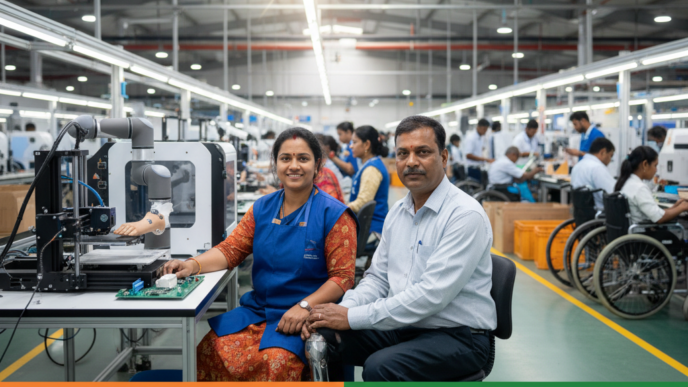
The Skill Development Scheme for Divyangjan introduces a network of statutory training centres that will deliver courses in high‑growth sectors such as renewable energy, digital marketing, advanced manufacturing, and AI‑enabled services. The curriculum has been co‑designed with industry giants like Tata Consultancy Services, Infosys, and the Renewable Energy Association of India to ensure immediate employability. Eligible trainees will receive a monthly stipend of up to Rs 2,500, along with transportation allowances that cover travel to training centres from remote locations. 
Key benefits include:
- Industry‑linked certifications that are recognized by the National Skills Qualifications Framework (NSQF).
- Quota reservation for private employers with more than 50 employees, mandating a minimum of 5 % of positions for persons with disabilities.
- Tax incentives for companies that exceed the quota, offering a 10 % reduction in corporate tax for each additional disabled employee hired.
- Mentorship programmes pairing trainees with experienced professionals who have physical or sensory impairments, fostering role‑model visibility.
Eligibility criteria require applicants to possess a valid disability certificate, be between 18 and 45 years of age, and demonstrate a genuine interest in the targeted sector.
Implementation Mechanisms
To spearhead execution, the Ministry of Social Justice and Empowerment will collaborate with state governments, premier educational institutions, and industry partners. A dedicated online portal – Divyangjan Skills Hub – will serve as a one‑stop solution for registration, progress tracking, and certification issuance. The portal also hosts a mentorship matching engine that connects trainees with vetted professionals across the country.
Monitoring and evaluation will be carried out through quarterly audits and a real‑time dashboard that aggregates data on enrolment numbers, course completion rates, and post‑training employment outcomes. The dashboard will be publicly accessible, allowing civil society and researchers to assess impact transparently. Additionally, a grievance redressal system embedded within the portal will enable beneficiaries to report issues and receive timely resolutions, ensuring accountability and continuous improvement.
Second Scheme: Accessibility and Universal Design
The Universal Accessibility Initiative targets physical and digital barriers that limit participation of Divyangjan in public life. Over the next five years, the government will retrofit 15,000 government buildings, 8,000 public transport hubs, and 5,000 educational institutions to meet universal design standards set by the Bureau of Indian Standards (BIS). The scheme allocates Rs 1,200 crore specifically for retrofitting, including ramps, tactile signage, and height‑adjustable workstations.
Digital accessibility receives a major boost through the development of an open‑source accessibility toolkit. The toolkit provides developers with ready‑to‑integrate components such as screen‑reader compatible navigation, captioning templates for video content, and adjustable UI settings for colour contrast and font size. By encouraging adoption across government websites, mobile apps, and private sector platforms, the initiative aims to make digital services universally usable.
Research funding of Rs 300 crore is earmarked for assistive technology innovation, supporting startups focusing on prosthetic devices, smart‑home solutions for independent living, and AI‑driven communication aids. Grants will be awarded through a competitive process overseen by the National Innovation Council, fostering a vibrant ecosystem of home‑grown assistive tech entrepreneurs.
Financial Allocations and Sustainability
The combined outlay for the two schemes totals Rs 4,500 crore over the fiscal period 2026‑27 to 2030‑31, reflecting a strategic commitment to long‑term sustainability. Of this, Rs 2,800 crore is earmarked for skill development, while Rs 1,700 crore supports accessibility retrofits and assistive‑technology research. The budget also allocates Rs 200 crore for nationwide awareness campaigns and a dedicated grievance redressal fund.
Recognizing the importance of multi‑stakeholder financing, the Ministry plans to engage corporate social responsibility (CSR) partners to co‑fund technology upgrades and community outreach activities, especially in underserved regions. A performance‑linked incentive structure will reward implementing agencies for achieving predefined milestones, such as a 90 % enrolment rate and a measurable increase in employment of trained Divyangjan within six months of course completion.
Community Involvement and Awareness
Public acceptance is pivotal to the success of any empowerment initiative. To this end, the government will launch the nationwide campaign “Empower Every Ability”, leveraging television, radio, and social media to showcase success stories from pilot projects in Kerala, Punjab, and the North-East. The campaign will highlight how early adopters have transitioned from unemployment to entrepreneurship, underscoring the tangible benefits of inclusive design.
Local NGOs, self‑help groups, and Panchayati Raj institutions will be partnered to conduct door‑to‑door outreach, organize workshops, and facilitate registration drives in remote and tribal areas. A dedicated grievance portal will collect feedback from beneficiaries and route concerns to relevant ministries for swift action, fostering a sense of ownership and trust among the community.
Potential Impact on Employment and Social Inclusion
Policy analyses project that the skill development scheme could generate more than 1.2 million employment opportunities for Divyangjan within the first three years, potentially reducing the current unemployment rate of approximately 60 % among persons with disabilities. By aligning training modules with market demand, the initiative aims to channel skilled individuals into sectors facing acute talent shortages, such as renewable energy installation and e‑commerce logistics.
Simultaneously, the accessibility scheme is expected to improve mobility and participation across education, health, and civic services. Early pilots in Delhi and Mumbai demonstrated a 25 % increase in school enrollment among children with disabilities after retrofitting campuses with universal design features. Collectively, these measures are projected to elevate the socio‑economic status of Divyangjan, contributing to India’s broader goal of inclusive growth outlined in the Sustainable Development Goals (SDGs).
Expert Opinions and Future Outlook
Analysts from the Observer Research Foundation and the Centre for Budget Policy Studies view the budget’s targeted focus on Divyangjan as a progressive step aligned with international human‑rights commitments. However, they caution that effective implementation will hinge on timely fund disbursement, robust inter‑ministerial coordination, and transparent data collection. Experts recommend strengthening partnerships with private‑sector skill councils to keep curricula abreast of emerging technologies, and expanding mentorship networks to rural regions.
Looking ahead, the Ministry has signaled plans to introduce complementary schemes in the forthcoming budgets, focusing on mental‑health support, independent‑living assistance for severely disabled individuals, and tax relief for caregivers. If executed with diligence, the current initiatives could set a benchmark for inclusive policymaking worldwide, positioning India as a model for integrating disability empowerment into national development agendas.
Stay updated with the latest Yojana schemes and government initiatives for better awareness and eligibility. For personalized guidance on accessing these benefits, reach out to us.