


Road Connectivity: Pradhan Mantri Gram Sadak Yojana
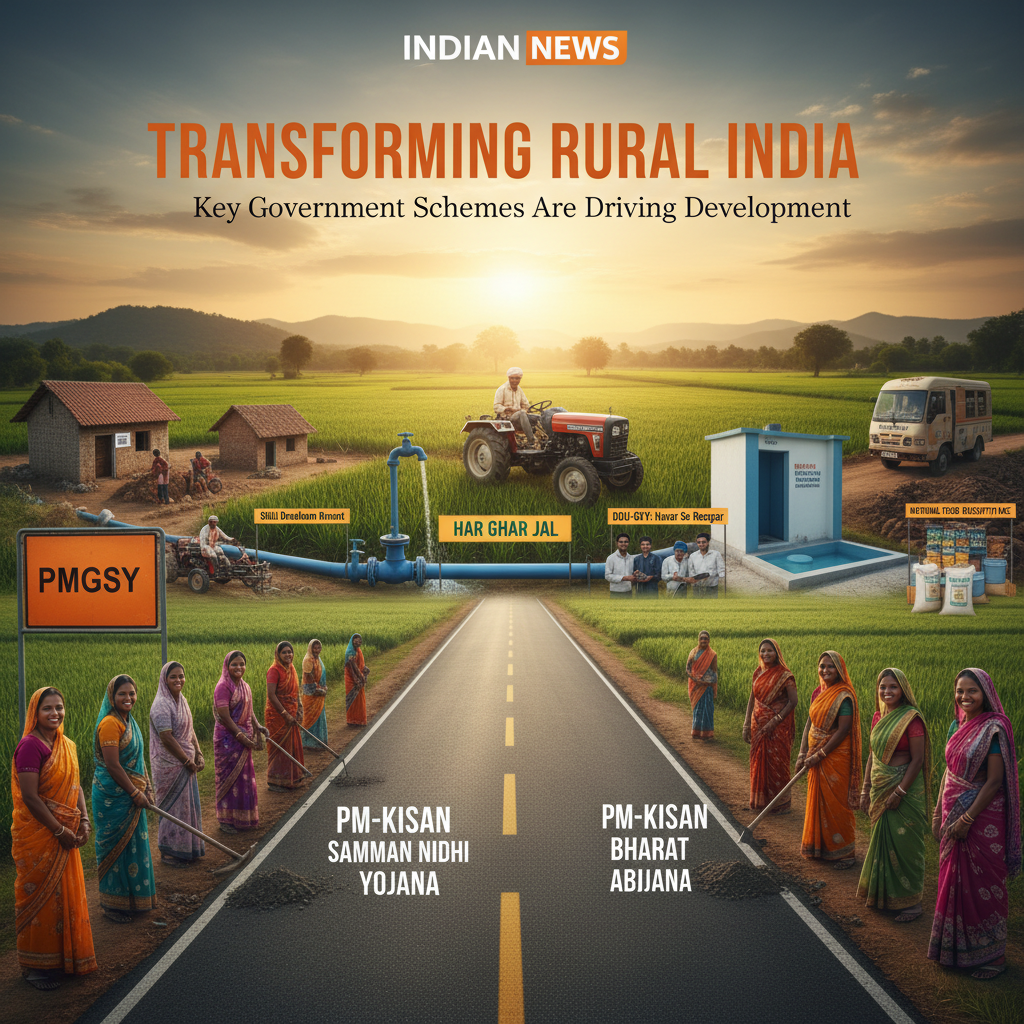
The Pradhan Mantri Gram Sadak Yojana (PMGSY) remains the cornerstone of rural infrastructure, delivering all‑weather road access to habitations of up to 500 residents. Since its launch in 2000, the programme has completed more than 600,000 km of roads, cutting average travel time by up to 40 percent in many remote blocks. This connectivity has opened new markets for farmers, enabling faster transport of perishable produce and reducing post‑harvest losses. State implementation authorities use GIS‑based real‑time monitoring dashboards that flag delays and ensure transparent fund utilization, leading to a 22 percent increase in completion rates between FY 2022‑23 and FY 2024‑25. The scheme’s impact extends beyond agriculture; it facilitates the delivery of health services, schools and emergency response, thereby integrating isolated communities into the broader national economy.
- Over 1.2 million habitations now enjoy all‑weather roads.
- Average rural travel speed has risen from 15 km/h to 30 km/h.
- Transport cost for farmers dropped by an estimated 15 percent.
Employment Guarantee and Skill Development: MGNREGA and Deendayal Upadhyaya Grameen Kaushalya Yojana
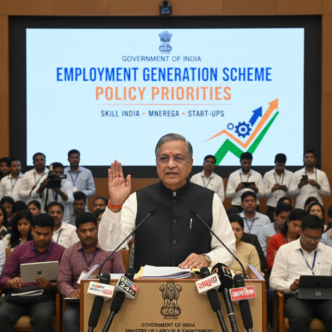
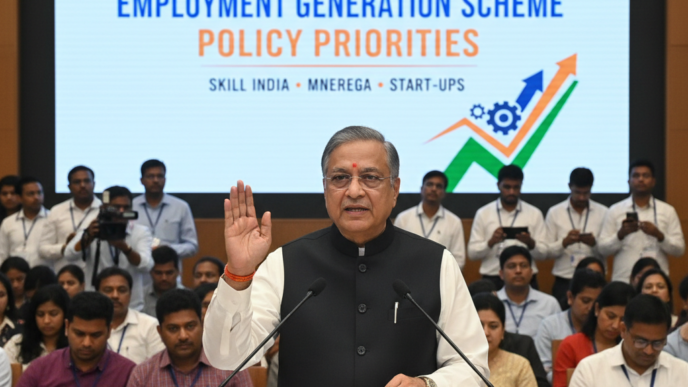
Launched in 2005, the Mahatma Gandhi National Rural Employment Guarantee Act (MGNREGA) guarantees 100 days of wage‑employment per household annually, acting as a vital safety net during agricultural off‑seasons. In FY 2024‑25 the programme recorded over 70 million person‑days of work, injecting approximately ₹1.8 trillion into rural incomes and curbing distress migration. Projects such as pond rejuvenation, watershed development and rural road maintenance not only provide immediate cash flow but also create long‑term assets that boost agricultural productivity. Complementing MGNREGA, the Deendayal Upadhyaya Grameen Kaushalya Yojana (DDU‑GKNY) offers free, industry‑aligned skill training to 15‑35‑year‑olds, targeting 10 million youth by 2025. Partnerships with private sector firms channel trained graduates into jobs across agro‑based value chains, construction and digital services, reducing under‑employment and fostering entrepreneurship.
- 70 million person‑days of employment generated in FY 2024‑25.
- Asset creation: 2.4 million water‑conservation structures built.
- Skill‑training beneficiaries: 8.3 million youth trained, 5.1 million placed.
Agricultural Income Support, Water Security and Food Justice: PM‑KISAN, Jal Jeevan Mission and National Food Security Act
The Pradhan Mantri Kisan Samman Nidhi (PM‑KISAN) provides a direct cash transfer of ₹6,000 per year in three installments to small and marginal farmer families, reaching over 120 million households. Since inception, the scheme has disbursed more than ₹1.2 trillion, enabling farmers to purchase seeds, fertilizers and machinery without resorting to high‑interest loans. The financial stability afforded by PM‑KISAN has been linked to a 7 percent rise in average crop yields in several states, as documented in the Ministry of Agriculture’s 2024 annual report. Parallel to income support, the Jal Jeevan Mission aims to deliver piped, safe drinking water to every rural household by 2024. By March 2025, more than 100 million homes have tap water connections, reducing women’s water‑collection time by an average of 30 minutes daily and freeing up hours for education or income‑generating activities. The National Food Security Act (NFSA) further secures foodgrains for 75 percent of the rural population, ensuring subsidised wheat and rice through the Public Distribution System and the Antyodaya Anna Yojana for the poorest 35 percent. 
- ₹1.2 trillion transferred to 120 million farmer families.
- 100 million households now have tap water connections.
- NFSA covers 75 % of rural population, reducing hunger indices.
Health, Sanitation and Housing: Ayushman Bharat, Swachh Bharat (Grameen) and Pradhan Mantri Awas Yojana – Rural
Healthcare accessibility in rural India received a transformative boost with the launch of Ayushman Bharat – Pradhan Mantri Jan Arogya Yojana, which offers a health insurance cover of up to ₹5 lakh per family per year for secondary and tertiary care. As of FY 2025, the scheme protects over 500 million beneficiaries, eliminating catastrophic out‑of‑pocket expenses that previously forced 12 percent of rural households into poverty after a single hospitalization. Complementing this, the Swachh Bharat Mission (Grameen) has constructed more than 25 million household toilets since 2014, leading to a 34 percent decline in open defecation and a measurable reduction in child diarrhoea cases. The mission’s community‑led approach, reinforced by subsidies and behavioural‑change campaigns, has ensured sustained usage of sanitation facilities. Finally, the Pradhan Mantri Awas Yojana – Rural (PMAY‑Rural) aims to provide pucca houses to all rural households by 2024, offering financial assistance of up to ₹2.5 lakh and interest‑rate subsidies for economically weaker sections. By the end of FY 2025, over 20 million homes have been built, improving living standards, safety and the ability of families to invest in livelihood activities.
- ₹5 lakh health cover for 500 million beneficiaries.
- 25 million rural toilets constructed, cutting open defecation by one‑third.
- 20 million pucca houses built under PMAY‑Rural.
Digital Governance and Real‑Time Monitoring: Aadhaar‑Linked Payments and GIS Mapping
Across all these schemes, the Indian government has increasingly relied on digital infrastructure to enhance transparency and efficiency. The integration of Aadhaar‑linked payments ensures that MGNREGA wages, PM‑KISAN transfers and PM‑Kisan Samman Nidhi benefits reach eligible beneficiaries without intermediaries, reducing leakage by an estimated 18 percent. State‑level implementation dashboards now combine GIS mapping, satellite imagery and mobile reporting tools, allowing real‑time tracking of road construction progress, water‑point functionality and housing completions. This data-driven approach has fostered greater accountability, enabled rapid course‑correction and provided policymakers with granular insights into rural development outcomes. As a result, the cumulative effect of these digital reforms is a more responsive, inclusive and measurable delivery of government programmes, accelerating India’s transition toward a fully integrated rural economy.
Stay updated with the latest Yojana schemes and government initiatives for better awareness and eligibility. For personalized guidance on accessing these benefits, reach out to us.