


Introduction to Affordable Housing in Delhi‑NCR
Delhi‑National Capital Region (NCR) has been grappling with a severe housing deficit for years, especially among middle‑ and low‑income families. According to the Ministry of Housing and Urban Affairs, the region requires over 10 million affordable units to meet the demand of its rapidly growing population. In response, the central and state governments, together with private developers, have launched a slew of budget‑friendly housing projects aimed at delivering sustainable, cost‑effective homes. These initiatives are part of the broader “Housing for All” mission, which targets the economically weaker sections (EWS) and low‑income groups (LIG) with subsidies, credit guarantees, and infrastructure support. The focus is not only on affordability but also on integrating green spaces, reliable connectivity, and modern amenities to ensure a holistic living environment.
Spotlight on the Top 10 Budget‑Friendly Projects
Below is a concise overview of the ten projects slated for launch in 2026, each designed to balance cost, quality, and community living. Prices, unit sizes, and key features are highlighted to help prospective buyers compare options.
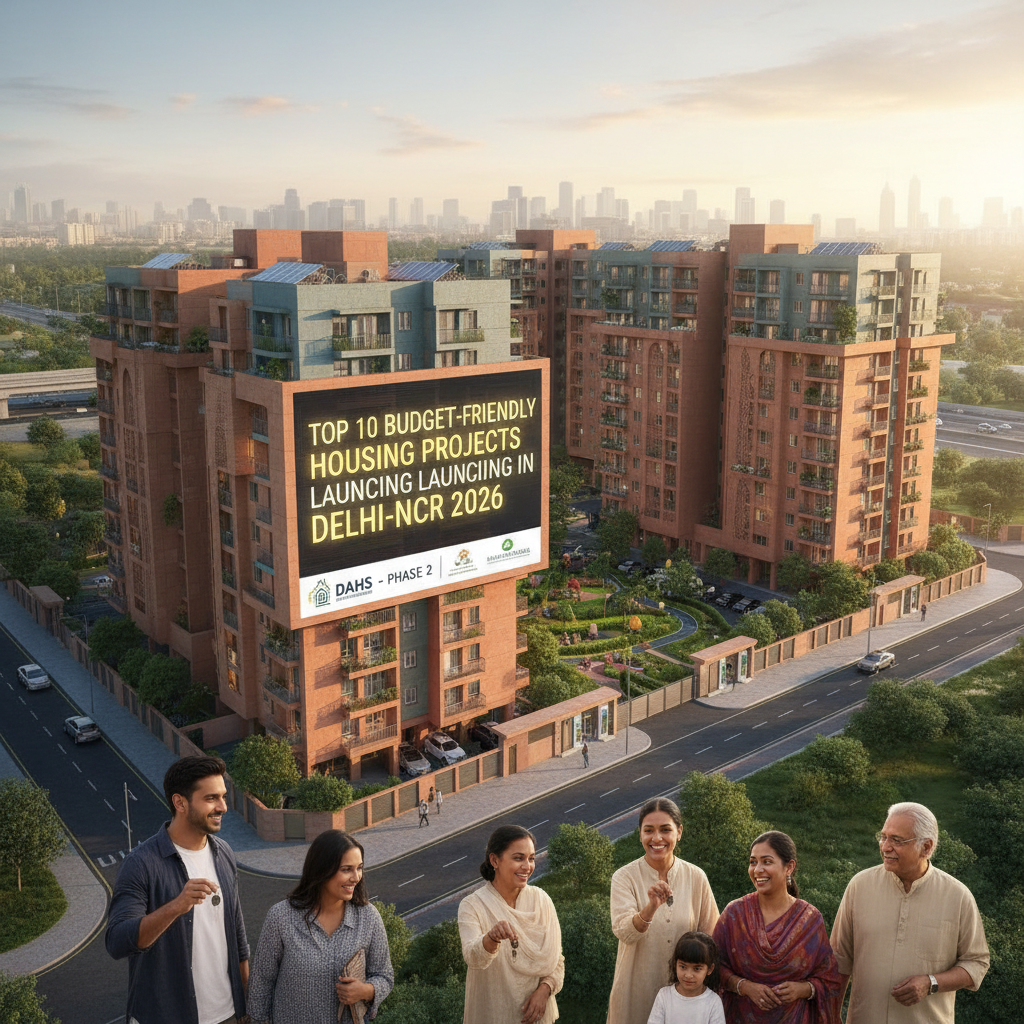
- Delhi Affordable Housing Scheme (DAHS) – Phase 2: 2BHK and 3BHK units of 950–1,200 sq ft in Gurugram, starting at INR 45 lakh. Linked to the upcoming metro extension and a dedicated bus corridor.
- NCR Urban Renewal – Sector 79, Faridabad: 800–1,050 sq ft units priced between INR 40 lakh and INR 55 lakh, featuring solar panels, rainwater harvesting, and community gardens.
- Housing for All – Badshahpur, Gurgaon: Plots of 600 sq ft offered at INR 30 lakh, with a 30 % government subsidy on construction costs for EWS families.
- Smart City Affordable Housing – Sector 9, Jhajjar: 1,000–1,300 sq ft 2BHK units averaging INR 58 lakh, equipped with smart lighting, security, and a co‑working hub.
- Green Horizons – Sohna Road: 900–1,150 sq ft eco‑friendly homes starting at INR 62 lakh, featuring green roofs, reclaimed materials, and EV charging stations.
- Heritage Heights – Bahadurgarh: 1,050–1,400 sq ft units priced from INR 70 lakh, blending jaaliwork façades and courtyards with government subsidies.
- Future Ready Residences – Gurugram Sector 63: 850–1,200 sq ft units starting at INR 55 lakh, offering high‑speed fibre, co‑living spaces, and a rooftop solar farm.
- Awas Yojana – Palwal: Plots of 700–1,000 sq ft from INR 38 lakh, eligible for a 20 % purchase subsidy under the national “Housing for All” scheme.
- Metro‑Adjacent Housing – Sector 150, Noida: 950–1,300 sq ft units priced INR 60–80 lakh, with childcare centres, sports complexes, and proximity to the upcoming metro line.
- Eco‑Smart Villas – Faridabad Sector 28: 1,500–2,000 sq ft villas starting at INR 85 lakh, featuring geothermal heating, composting units, and tiered payment plans.
Eligibility, Benefits and Application Process
Each project comes with specific eligibility criteria, subsidy mechanisms, and financing options that can significantly reduce the out‑of‑pocket expense for buyers. Understanding these details is crucial for first‑time homeowners seeking to leverage government support. 
General Eligibility: Applicants must be Indian citizens, aged 18 years or above, and belong to the EWS, LIG, or MIG categories as defined by the Ministry of Housing. Income limits typically range from INR 0–6 lakhs per annum for EWS to INR 6–12 lakhs for LIG. Proper documentation—including Aadhaar, income proof, and domicile certificates—is mandatory.
Subsidy Structures: Many schemes offer direct cash subsidies (e.g., 20 %–30 % of the purchase price) or subsidised loan interest rates through the National Housing Bank. For instance, the DAHS Phase 2 provides interest‑rate rebates linked to the Pradhan Mantri Jan Dhan Yojana scheme.
Financing Options: State‑owned banks and housing finance corporations often partner with developers to offer zero‑down‑payment schemes, longer loan tenures (up to 25 years), and flexible EMI structures. Some projects also allow lease‑to‑own models, where a portion of the rent is credited toward the eventual purchase price.
Application Timeline: Most projects open online portals for application three months before construction begins. Prospective buyers must register, upload documents, and participate in a lottery or first‑come‑first‑served allocation process. Timely submission is essential, as many schemes fill up within days.
Community Benefits: Residents gain access to shared amenities such as community halls, playgrounds, and health clinics, fostering social cohesion. Moreover, proximity to public transport and green corridors enhances property appreciation, making these homes a sound long‑term investment.
Future Impact and Conclusion
The convergence of affordable housing, sustainable design, and strategic location in Delhi‑NCR is poised to reshape urban living for millions. By delivering homes that cost under INR 1 crore yet come equipped with basic infrastructure, these projects alleviate the financial burden on low‑income families while promoting environmentally responsible development. Economists predict that such initiatives could reduce the region’s informal settlement rate by 15 % within the next five years, according to a recent report by the Urban Development Institute.
Furthermore, the emphasis on connectivity—especially metro‑adjacent and bus‑corridor projects—ensures that residents spend less time commuting and more time engaging with community amenities. This not only improves quality of life but also stimulates local economies as new commercial hubs emerge around these housing precincts.
For aspiring homeowners, staying informed about the launch dates, application windows, and subsidy eligibility criteria is paramount. Regularly checking official portals of the Delhi Development Authority and the Ministry of Housing will provide the latest updates. With careful planning, the dream of owning a secure, modern, and affordable home in Delhi‑NCR is increasingly within reach.
Stay updated with the latest Yojana schemes and government initiatives for better awareness and eligibility. For personalized guidance on accessing these benefits, reach out to us.