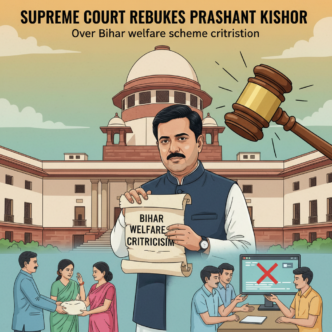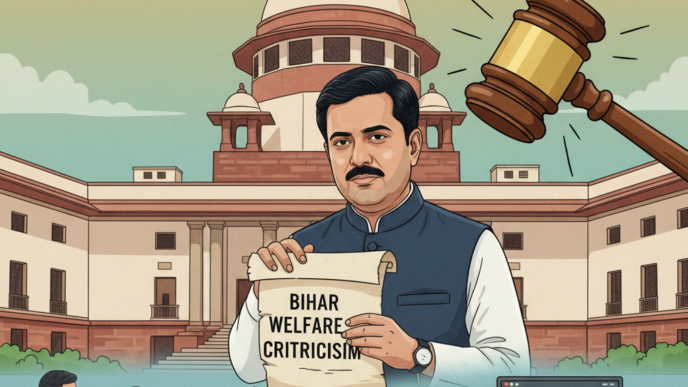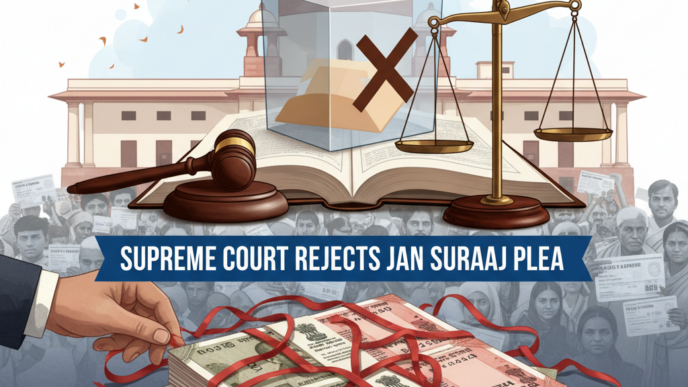



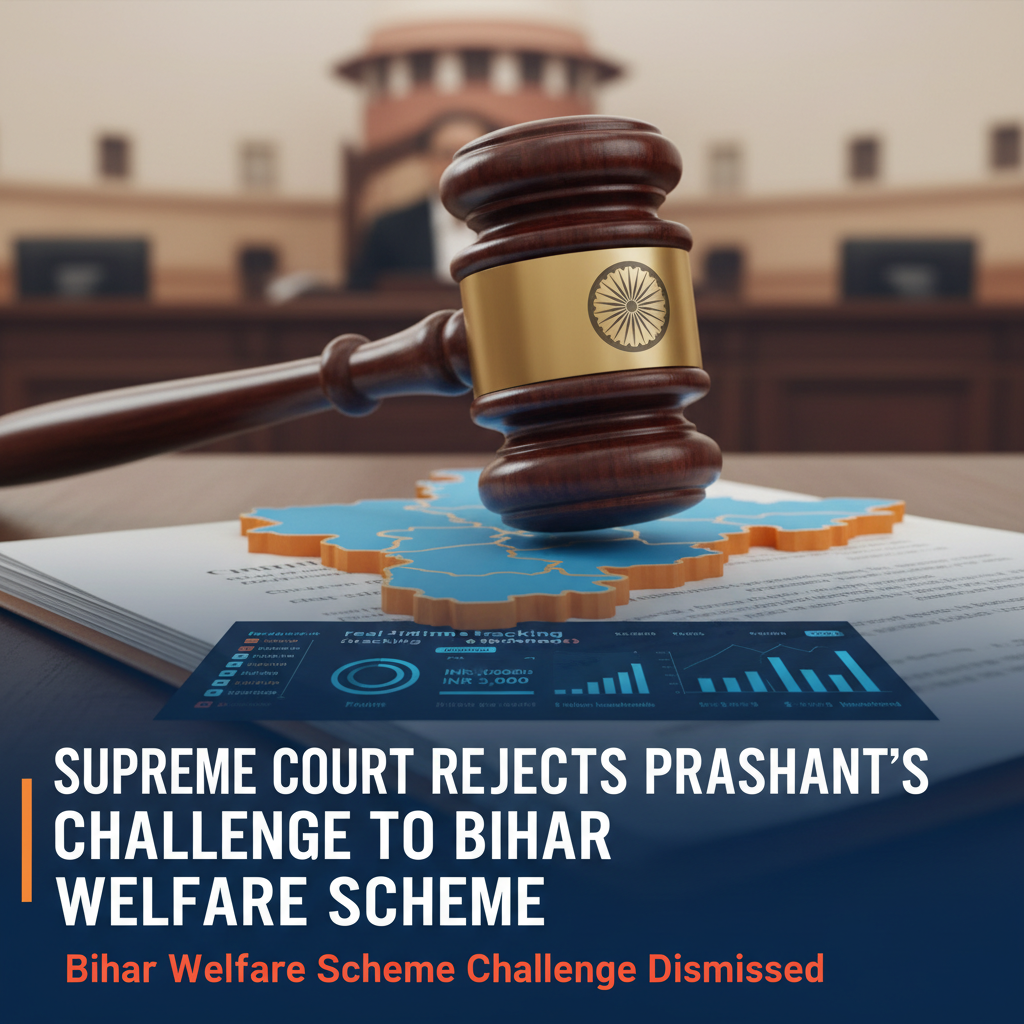
Supreme Court Rejects Prashant Kishor’s Challenge to Bihar Welfare Scheme
The Supreme Court has dismissed the petition filed by political strategist Prashant Kishor that contested the recently launched Bihar welfare scheme. In a concise order, the bench upheld the state government’s authority to design and implement social security programmes, emphasizing that the judiciary will not intervene in policy matters absent a clear violation of constitutional rights. The ruling not only preserves the continuity of the initiative but also sets a legal benchmark for future challenges to state‑specific welfare projects across India.
Background of the Scheme
The Bihar welfare scheme was announced earlier this year as part of the state’s broader agenda to modernise its social safety net. It targets over five million households identified as economically vulnerable through data drawn from the Public Distribution System (PDS) and local panchayat records. Funding is sourced from the state’s allocation under the centrally sponsored Rural Development Programme, supplemented by grants from the Finance Commission. Chief Minister Nitish Kumar described the programme as “a decisive step toward eradicating extreme poverty in the most disadvantaged districts.”
Key Features and Eligibility Criteria
The initiative comprises several salient components: 
- Targeted beneficiaries: Families classified below the poverty line in both rural and urban pockets.
- Monthly cash transfer: Beneficiaries receive between INR 1,000 and INR 3,000, calibrated to household size and regional cost‑of‑living indices.
- Eligibility verification: An algorithm cross‑references PDS enrolments with panchayat databases to confirm entitlement.
- Digital monitoring: A publicly accessible dashboard displays real‑time transaction data, aiming to curb leakages and enhance transparency.
According to the Bihar Department of Rural Development, the scheme is projected to lift approximately 12 percent of targeted households out of chronic deprivation within the first two fiscal years.
Legal Arguments Raised by Prashant Kishor
Kishor’s legal team argued that the Bihar welfare scheme suffered from opaque selection criteria, potentially excluding the most marginalised sections of society. They cited Article 14 of the Constitution, contending that arbitrary classification could breach the Right to Equality. The petition further demanded an independent audit mechanism to verify fund utilisation and to ensure that the programme did not become a vehicle for partisan electoral gain.
Specific points of contention included:
- Lack of a publicly disclosed methodology for identifying beneficiaries.
- Potential overlap with existing central schemes, leading to duplication of benefits.
- Absence of a third‑party oversight committee with statutory powers.
Court’s Reasoning and Dismissal
The Supreme Court bench, headed by Justice X, observed that the scheme had been formulated after extensive consultation with the State Planning Commission and that its selection methodology had undergone scrutiny by the Comptroller and Auditor General (CAG). The court noted that the petitioner failed to produce concrete evidence of procedural irregularities or constitutional infringements. Consequently, the petition was dismissed on grounds of lack of merit and jurisdictional limits, reinforcing the principle that policy decisions in the realm of welfare fall within the legislative domain.
Legal scholars interpret the ruling as a clear signal that courts will defer to state governments unless a demonstrable miscarriage of justice is evidenced. This stance bolsters the legal shield surrounding state‑specific initiatives like the Bihar welfare scheme, allowing policymakers greater latitude in experimental social programmes.
Political Reactions and Wider Implications
The judgment sparked a flurry of political commentary. Supporters of the ruling coalition hailed the decision as a vindication of their developmental agenda, asserting that it safeguards the state’s right to pursue ambitious welfare policies without judicial interference. Conversely, opposition parties warned that the scheme could be weaponised for electoral advantage, urging the establishment of robust audit mechanisms to prevent misuse.
Political analysts suggest that the verdict may embolden other states to launch similar cash‑transfer programmes without fearing immediate injunctions, thereby accelerating the diffusion of innovative welfare models across the country. The decision also underscores the growing nexus between technology‑driven monitoring and policy implementation, a trend that is likely to shape future legislative designs.
Potential Impact on Citizens
If fully realised, the Bihar welfare scheme promises measurable improvements in socio‑economic indicators. A recent report by the Institute of Development Studies estimates that the direct cash transfers could reduce poverty rates by up to 12 percent in targeted districts. Early pilot data show heightened household consumption, increased school enrolment among children, and better access to primary healthcare services. Moreover, the digital dashboard has already demonstrated a 15 percent reduction in fund leakage during the scheme’s introductory phase, according to the Bihar Finance Department.
Beyond immediate financial relief, the initiative is expected to empower marginalised communities by providing them with a reliable income stream that can be allocated toward education, nutrition, and small‑scale entrepreneurship. Stakeholders argue that such empowerment could catalyse long‑term human capital development, especially in regions historically plagued by seasonal migration and agrarian distress.
Future Steps and Expansion Plans
The Bihar government has outlined an ambitious roadmap for scaling the programme. In the upcoming fiscal year, the state aims to enrol an additional two million households, leveraging the national Aadhaar database for cross‑verification and reducing verification delays. Capacity‑building workshops are scheduled for panchayat officials to ensure seamless data entry and beneficiary grievance redressal at the grassroots level.
Furthermore, the administration plans to integrate the scheme with the Centre’s Direct Benefit Transfer (DBT) platform, enabling a unified payment infrastructure that could streamline disbursements across states. Pilot projects in select blocks have already demonstrated that coupling cash transfers with financial literacy modules improves asset‑building behaviours among beneficiaries, a finding that the state intends to roll out statewide.
Conclusion
The Supreme Court’s dismissal of Prashant Kishor’s challenge to the Bihar welfare scheme reflects a nuanced balance between judicial oversight and legislative autonomy in welfare policymaking. While the verdict may be perceived as a setback for civil‑society advocacy, it provides much‑needed clarity for state governments seeking to innovate within the social security landscape. The ongoing dialogue among courts, policymakers, and citizens will continue to shape the evolution of welfare initiatives across India, potentially paving the way for more inclusive and technologically sophisticated schemes that address poverty at its roots.
Stay updated with the latest Yojana schemes and government initiatives for better awareness and eligibility. For personalized guidance on accessing these benefits, reach out to us.