


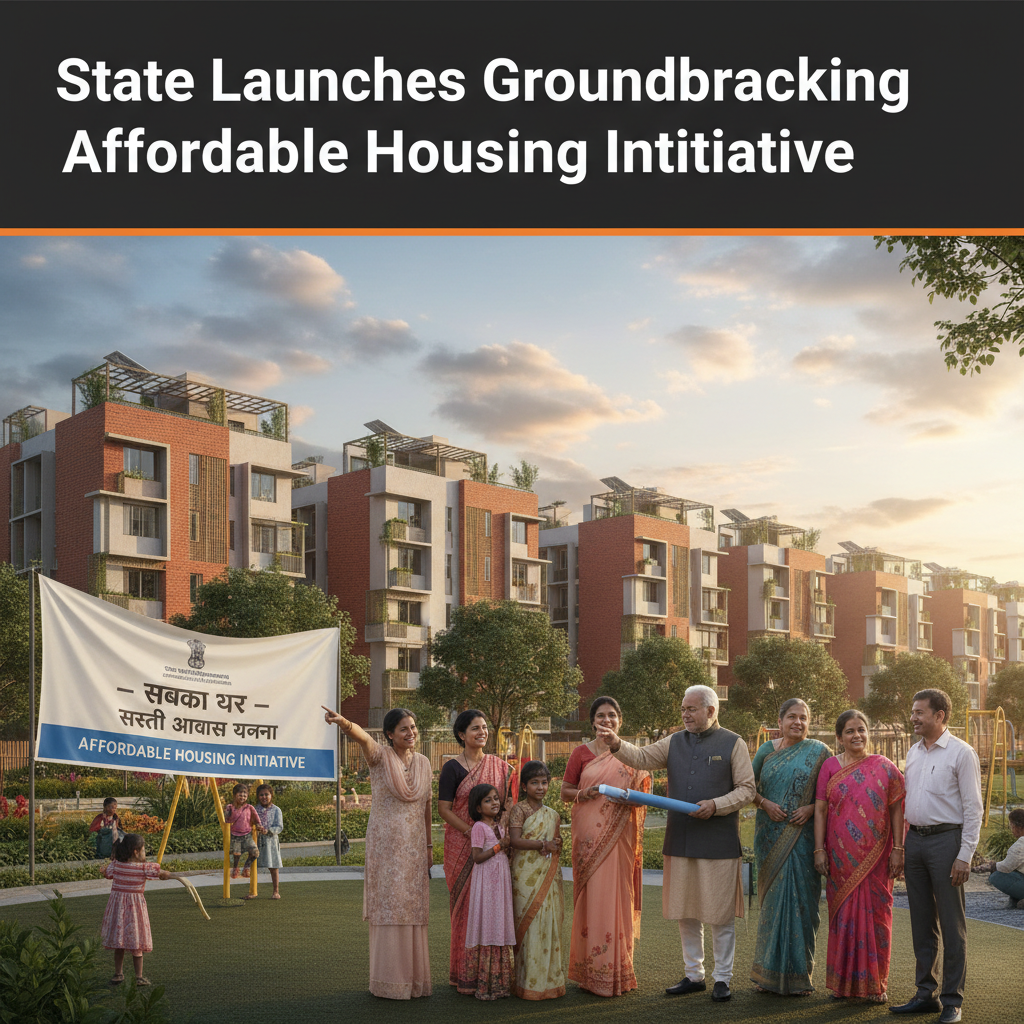
State Launches Groundbreaking Affordable Housing Initiative
The state government has officially rolled out an ambitious affordable housing initiative that promises to deliver 100,000 new homes over the next five years, targeting families across both bustling urban centers and remote rural villages. This program is framed as a direct response to the growing housing insecurity faced by low‑ and middle‑income households, aiming to cut homelessness rates, lift living standards, and spark economic activity in underserved regions. By aligning closely with national housing goals and complementing existing schemes such as the Pradhan Mantri Awas Yojana, the initiative creates a cohesive strategy for affordable housing delivery. Stakeholders including municipal bodies, private developers, and civil society groups were consulted early in the planning process to ensure that project designs reflect local cultural and infrastructure realities.
Funding Model and Sources
Financial backing for the affordable housing initiative comes from a blended model that combines a dedicated state budget allocation of five thousand crore rupees, central government grants, and strategic public‑private partnerships. The state has earmarked funds for land acquisition, basic infrastructure, and subsidised construction costs, while private investors are being invited to co‑fund projects in exchange for tax incentives and streamlined permitting. Transparency mechanisms such as quarterly financial audits and public expenditure dashboards will be put in place to monitor fund utilisation. The approach is designed not only to meet the housing deficit but also to generate thousands of construction‑related jobs, thereby contributing to broader economic development.
Implementation Framework
A dedicated project management unit, operating under the state housing department, will coordinate all aspects of the affordable housing initiative, from site selection to tender execution and construction oversight. Priority zones have been identified through a detailed housing deficit analysis that factors in population density, income levels, and existing infrastructure. The tender process will be transparent, with evaluation criteria that favour developers who have a proven track record in delivering low‑cost homes. Construction milestones are set to be reviewed quarterly, and fast‑track approvals for utilities, building permits, and environmental clearances will be granted to keep timelines aggressive yet realistic. The state expects the first batch of 20,000 units to become habitable within 18 months. 
Eligibility and Application Process
Eligibility criteria for the affordable housing initiative are calibrated to reach economically weaker sections, low‑income groups, and middle‑income families that meet defined income thresholds. Applicants can register through an online portal or at designated municipal offices, where staff will assist with documentation. Required paperwork typically includes proof of residence, income certificates, and valid identification. After an initial verification, applications will be ranked based on need, income level, and family size. Successful applicants will receive housing units priced below market rates, with options for subsidised loan schemes and flexible repayment structures. Special provisions are also being made for Scheduled Castes, Scheduled Tribes, and persons with disabilities to ensure equitable access.
Benefits for Beneficiaries
Residents who secure homes under the affordable housing initiative enjoy a suite of financial and social benefits that go beyond reduced purchase prices. Subsidised interest rates on home loans lower monthly repayments, making ownership more attainable for families with modest incomes. Flexible repayment plans can be adjusted to match income fluctuations, providing greater financial stability. All units meet minimum safety, sanitation, and basic amenity standards, ensuring a decent quality of life. Additionally, each development incorporates community facilities such as parks, schools, and primary health centres, fostering holistic well‑being and social inclusion for the new neighbourhoods.
Community Engagement and Social Impact
Community engagement lies at the core of the affordable housing initiative, with the state actively encouraging resident participation throughout planning and implementation phases. Public consultations and workshops will be held to gather input on design preferences, desired amenities, and cultural considerations, ensuring that projects resonate with local identities. Green spaces, playgrounds, and community centres will be integrated into each development to promote healthy lifestyles and social interaction. Skill‑development programmes will also be offered, training residents in trades such as construction, maintenance, and entrepreneurship to boost employability. Complementary health‑education and welfare support schemes aim to address the holistic needs of the community, ultimately uplifting entire neighbourhoods.
Monitoring, Evaluation, and Future Outlook
A robust monitoring and evaluation framework will track the progress of the affordable housing initiative from inception to completion. Independent auditors will conduct periodic reviews of financial spending, construction quality, and adherence to timelines, ensuring accountability and transparency. Key performance indicators—such as the number of units delivered, beneficiary satisfaction scores, and environmental sustainability metrics—will be regularly published to keep the public informed. Lessons learned during early phases will be documented and applied to refine subsequent stages, enhancing effectiveness and scalability. The state envisions that, if successfully implemented, this initiative could close a significant portion of the housing shortage within the next decade, serving as a replicable model for other regions across India.
Conclusion
In conclusion, the state’s affordable housing initiative represents a comprehensive, forward‑looking effort to address the pressing need for accessible, quality homes across diverse communities. By combining substantial financial investment, transparent implementation, inclusive eligibility, and robust monitoring, the programme aspires to deliver tangible improvements in living standards and economic opportunity. The collaborative approach—engaging government agencies, private partners, and civil society—underscores a shared responsibility and commitment to sustainable development. Continuous stakeholder engagement and adaptive management will be essential to navigate challenges and maximise impact. Ultimately, this ambitious undertaking aims to set a benchmark for affordable housing solutions not only within the state but also across the broader national landscape.
Stay updated with the latest Yojana schemes and government initiatives for better awareness and eligibility. For personalized guidance on accessing these benefits, reach out to us.