


Overview of the Initiative
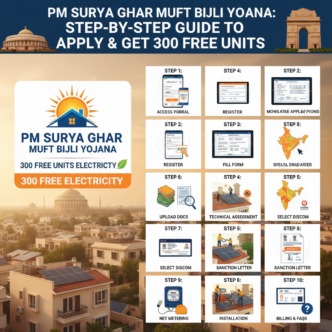
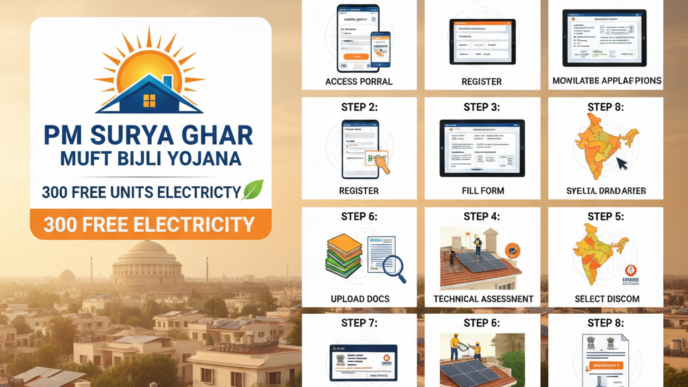
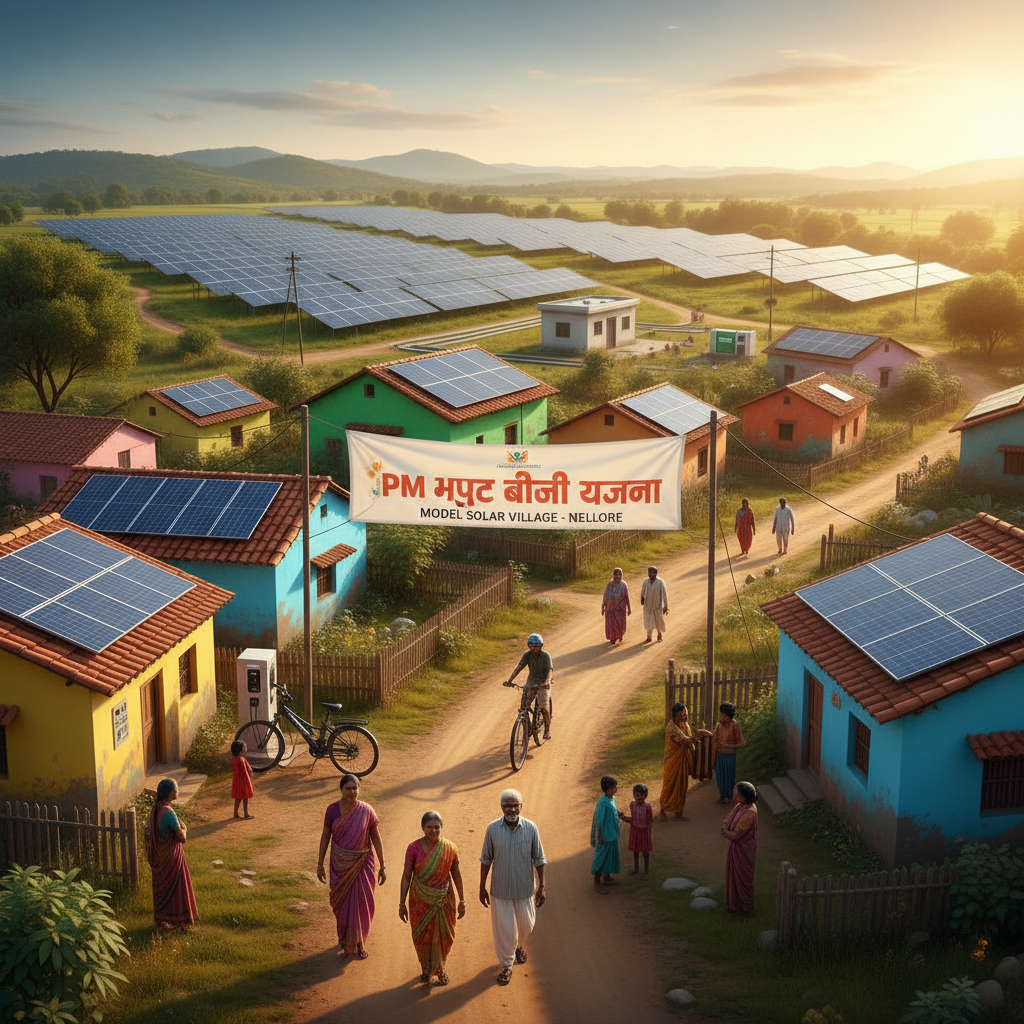
Six model solar villages are being launched in the Nellur district of Andhra Pradesh under the umbrella of the PM Muft Bijli Yojana, a flagship programme of the Government of India aimed at delivering free, reliable electricity to households that remain off‑grid. The initiative, announced by Prime Minister Narendra Modi in the 2024 Union Budget, seeks to transform remote hamlets into replicable templates for clean‑energy based rural electrification. By harnessing rooftop panels, ground‑mounted solar farms and advanced battery storage, the project will supply uninterrupted power to over 12,000 residents across the selected villages. This effort aligns with India’s broader ambition to achieve 500 GW of non‑fossil capacity by 2030 and to cut diesel‑generator usage by more than 70 % in targeted rural pockets. Analysts from the Ministry of New and Renewable Energy (MNRE) note that the model could be rolled out to 500 villages nationwide within the next five years, making it a cornerstone of the country’s decentralized energy strategy.
Prime Minister Modi highlighted the project during his recent address to the nation, emphasizing that “the light of solar energy will illuminate the aspirations of our rural brothers and sisters.” The initiative also dovetails with the national Saubhagya scheme, which has already connected over 28 million households to the grid since 2017. By complementing these efforts with renewable solutions, the government aims to ensure not just access but also affordability and sustainability for the poorest communities.
Goals and Objectives
The PM Muft Bijli Yojana for model solar villages in Nellur is anchored on five core objectives that serve as the blueprint for similar projects across the country. First, it endeavors to guarantee a 24‑hour power supply for every household as well as essential public facilities such as schools, health centres and panchayat offices. Second, the scheme intends to replace diesel generators and other fossil‑fuel‑based power sources with clean solar energy, thereby reducing operating costs and environmental impact. Third, it focuses on generating local employment opportunities in installation, operation and maintenance of solar assets, with a particular emphasis on upskilling youth and women. Fourth, it seeks to foster community ownership through capacity‑building workshops and micro‑enterprise creation. Finally, the project aims to create a scalable model that can be replicated in neighbouring districts and across the nation, accelerating India’s transition to a renewable‑energy‑driven rural economy. 
- Ensure reliable 24‑hour electricity for all households and public infrastructure
- Eliminate dependence on diesel generators and reduce carbon emissions
- Create skilled jobs in solar operations and maintenance
- Empower women and youth through targeted skill‑development programmes
- Facilitate the diffusion of solar technology to adjacent regions
Implementation Plan and Timeline
The rollout of the six model solar villages will unfold in a carefully phased manner over the next two years, a schedule devised by the Andhra Pradesh Renewable Energy Development Agency (APREDA) in coordination with the Ministry of New and Renewable Energy. The first phase, scheduled for completion by the end of the current fiscal year, comprises site identification, structural surveys, and the procurement of solar panels, inverters, mounting structures and battery banks. Engineers from MNRE will supervise the installation of approximately 15 MW of solar capacity across the six villages, with each site receiving a tailored mix of rooftop installations on schools, health centres and panchayat buildings, alongside ground‑mounted farms covering roughly five hectares per village.
Following installation, a second phase will commence, focusing on community training, operational hand‑over and real‑time monitoring of energy consumption. Mobile applications and smart meters will be deployed to track usage patterns, while a dedicated monitoring dashboard will provide policymakers with live data on generation, storage and consumption. Technical assistance will be sourced from leading Indian solar EPC firms, and a on‑ground operations team will be recruited locally to ensure smooth maintenance and prompt fault resolution.
Key Features of the Solar Villages
Each of the six model solar villages is designed as a self‑sufficient energy hub, integrating cutting‑edge renewable technologies with user‑friendly services. The features include a mix of rooftop and ground‑mounted solar arrays, advanced storage solutions and smart grid functionalities that together enable sustained power delivery even during periods of low sunlight. By prioritising indigenous engineering expertise and global best practices, the villages are set to become showcases for sustainable rural development.
- Roof‑top solar installations on schools, health centres and panchayat offices
- Ground‑mounted solar farms spanning approximately five hectares per village
- Battery banks capable of storing energy for up to six hours during low‑sunlight periods
- Smart metering systems for real‑time usage tracking and demand‑response management
- Community charging stations for electric vehicles, mobile devices and agricultural equipment
These elements are complemented by a user‑centric tariff structure under the PM Muft Bijli Yojana, which promises zero‑cost electricity up to a defined consumption ceiling for eligible households. Beyond electricity, the model integrates digital connectivity solutions, including solar‑powered Wi‑Fi hotspots, to bridge the digital divide and enable e‑learning and tele‑medicine services.
Socio‑Economic Impact and Community Benefits
Early impact assessments conducted by the Andhra Pradesh Department of Rural Development indicate that reliable electricity access can transform multiple facets of rural life. Students in the targeted villages are expected to enjoy improved study conditions, leading to projected increases in school attendance and academic performance by up to 15 %. Small‑scale enterprises, such as textile units and agro‑processing micro‑businesses, will benefit from a stable power supply, enabling higher output and reduced post‑harvest losses. Health centres can operate critical equipment round‑the‑clock, enhancing Maternal and Child Health (MCH) outcomes.
From an economic perspective, the project is projected to attract at least 30 new micro‑enterprises that rely on electric machinery, potentially creating 1,200 direct and indirect jobs within the first two years. Women’s participation is being amplified through targeted training modules that cover solar system maintenance, financial literacy and entrepreneurship, positioning them as leaders in community energy management. Moreover, the shift away from diesel generators is anticipated to cut household energy expenses by an average of INR 1,800 per month, freeing up disposable income for education and health expenditures.
Funding, Partnerships and Governance
The financial architecture of the PM Muft Bijli Yojana model in Nellur combines central and state allocations, private sector investment and international technical cooperation. The Ministry of Finance has earmarked INR 1,200 crore for the acquisition of solar equipment, battery storage and monitoring infrastructure, while the Andhra Pradesh government contributes matching funds and facilitates land acquisition. Private solar manufacturers, including Tata Power Solar and Adani Energy Solutions, have signed memoranda of understanding (MoUs) to supply high‑efficiency photovoltaic modules and provide after‑sales service contracts.
International collaboration plays a pivotal role, with technology partners from Germany and Japan offering design expertise and ensuring that installations meet global IEC standards. The MNRE will act as the nodal agency for policy oversight, while a joint steering committee comprising representatives from the Ministry of Rural Development, APREDA and civil‑society organisations will monitor progress and address grievances. Transparency measures, such as publicly accessible expenditure dashboards and third‑party audits, have been instituted to safeguard against cost overruns and ensure fiscal responsibility.
- Central government grant of INR 800 crore under the PM Muft Bijli Yojana
- State matching contribution of INR 400 crore
- Private sector investment of INR 1,000 crore through technology partnerships
- International technical assistance from Germany’s Fraunhofer Institute and Japan’s JICA
Monitoring, Evaluation and Future Outlook
A robust monitoring framework will be established to track the performance of the six pilot villages against a defined set of key performance indicators (KPIs). These include the percentage of households connected to reliable electricity, the reduction in diesel‑generator usage, the amount of renewable energy generated and stored, and improvements in socio‑economic metrics such as school enrolment and household income. Data will be gathered through mobile surveys, satellite‑derived irradiance analytics and on‑ground inspections, then aggregated on a centralized dashboard accessible to policymakers, donors and the public.
If the pilot phase achieves the targeted benchmarks — such as 95 % household connectivity and a 30 % reduction in carbon emissions — the central government plans to scale the model to additional districts across Andhra Pradesh, Telangana, Odisha and Jharkhand. Lessons learned regarding community engagement, financing mechanisms and technical troubleshooting will be codified into a national replication guide, slated for release in the 2026–27 fiscal year. This scaling ambition aligns with India’s broader vision of universal electricity access by 2030 and positions solar‑based micro‑grids as a pivotal element of the nation’s clean‑energy transition.
Stay updated with the latest Yojana schemes and government initiatives for better awareness and eligibility. For personalized guidance on accessing these benefits, reach out to us.