


Overview of Saur Sujala Yojana
The Saur Sujala Yojana is a flagship irrigation initiative launched by the Government of Chhattisgarh to bring reliable, year‑round water to small and marginal farmers across the state’s drought‑prone districts. By replacing diesel‑driven tube wells with solar‑powered pumps and integrating drip‑irrigation networks, the scheme reduces dependence on unpredictable monsoon patterns while cutting operational costs. The program aligns with the state’s broader vision of sustainable agriculture, renewable energy adoption, and rural economic upliftment.
Key objectives of the Yojana include: providing uninterrupted water supply to cultivated plots, lowering farmer expenditure on fuel, and enabling multiple cropping cycles. According to the scheme’s official documentation, it targets 5,000 hectares of agricultural land in the first phase, with a strong emphasis on regions such as Surguja, Jashpur, and Bastar where water scarcity is most acute. The initiative also incorporates capacity‑building components, training farmers in the maintenance of solar equipment and best‑practice water management.
Implementation in Mohbhatta Village
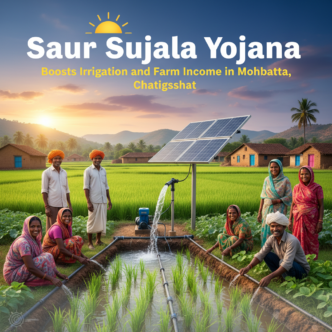
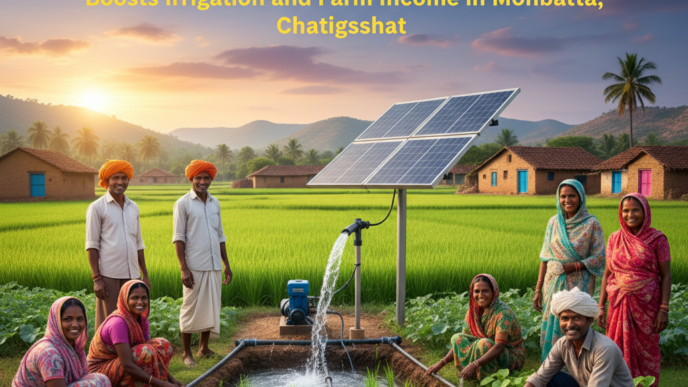
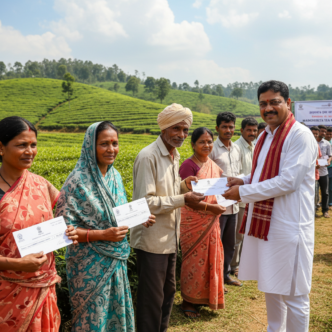
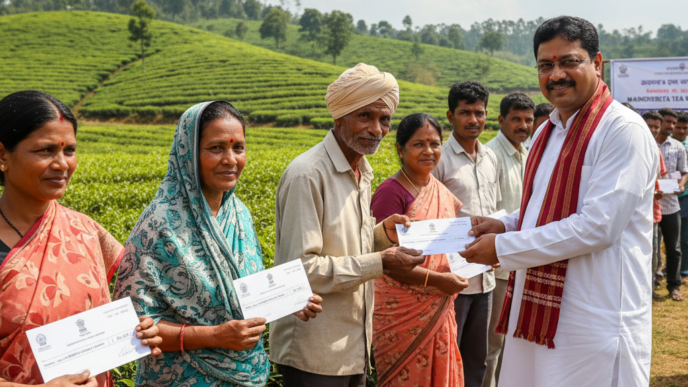
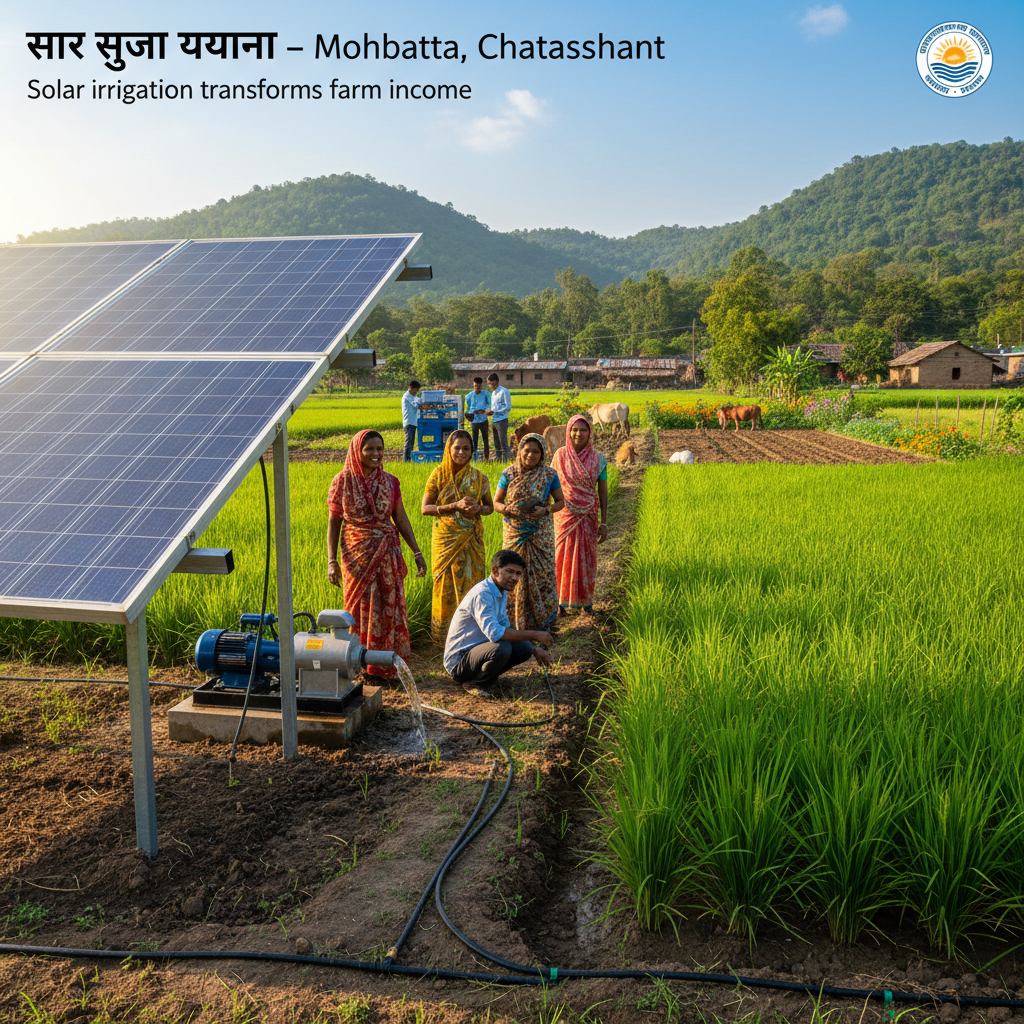
In February 2026, the remote village of Mohbhatta, situated in Surguja district, became the pilot site for the Saur Sujala Yojana’s expansion into tribal belt communities. District officials, in collaboration with a local non‑governmental organization, installed 45 solar‑powered tube wells equipped with automatic sun‑sensing controllers. Each well was linked to a drip‑irrigation grid that distributed water through a network of low‑density polyethylene (LDP) tubing laid across 120 hectares of cultivated fields. 
The deployment involved a meticulous site‑selection process that considered soil type, topography, and existing irrigation infrastructure. Engineering teams had to navigate challenging terrain, including steep slopes and dense forest patches, which required the use of portable digging equipment and community‑sourced labor. By the end of the installation phase, over 350 farming families—representing roughly 1,800 individuals—had been directly linked to the new water supply, marking a transformative shift from intermittent bore‑well releases to a continuous, renewable water source.
Technical support was bolstered by a mobile training unit deployed by the Chhattisgarh Renewable Energy Development Agency (CREDA). The unit conducted hands‑on workshops that taught villagers how to clean solar panels, monitor battery health, and troubleshoot pump failures. This community‑centric approach ensured that local technicians could address minor issues without waiting for external assistance, thereby enhancing the scheme’s long‑term sustainability.
Irrigation Improvements
Prior to the Saur Sujala Yojana, Mohbhatta’s farmers relied predominantly on manual bore‑well pumps powered by diesel generators—a solution that proved unreliable during the scorching summer months when groundwater levels fell dramatically. Under the new scheme, each solar pump operates autonomously, activating when solar irradiance exceeds a set threshold and shutting down automatically during nighttime or low‑light conditions. This mechanism not only guarantees a steady flow of water but also eliminates the need for costly diesel refills.
The integration of drip‑irrigation channels further refined water delivery. Instead of flooding fields—a practice that leads to significant evapotranspiration losses—the system delivers water directly to plant roots through a network of emitters spaced precisely 30 centimeters apart. Studies conducted by the Indian Institute of Technology (IIT) Raipur demonstrated that drip irrigation can achieve water‑use efficiencies of up to 90 percent, compared with merely 30‑40 percent for traditional flood irrigation.
Consequently, farmers now enjoy a dependable water supply throughout the year, enabling them to cultivate a broader range of crops, including high‑value vegetables and horticultural produce that were previously limited by water constraints. The reliable irrigation has also reduced the incidence of crop failure, thereby stabilizing household incomes across the village.
Economic Impact on Farmers
Government reports released in September 2026 reveal that the average farm income in Mohbhatta surged by 27 percent within the first six months of the Saur Sujala Yojana’s operation. This uplift is attributed to several interlocking factors: higher yields from multiple cropping cycles, diversification into cash crops such as chilies and carrots, and a dramatic reduction in irrigation‑related expenses.
Specifically, the elimination of diesel fuel—previously costing an average of ₹2,800 per hectare per season—has resulted in a 35 percent drop in total cultivation costs. Savings have been reinvested into quality seeds, organic fertilizers, and minor farm improvements, fostering a virtuous cycle of productivity enhancement. Moreover, the steady water supply has encouraged farmers to adopt greenhouse cultivation, further expanding their marketable output.
Beyond pure economics, the scheme has empowered farmers with greater financial autonomy. Accessible micro‑credit facilities, facilitated through local self‑help groups (SHGs), enable producers to purchase BetterSeeds® certified seeds and drip‑irrigation kits on affordable terms. This financial inclusion has been pivotal in sustaining the momentum of income growth and fostering entrepreneurial attitudes among the farming community.
Community Benefits
The ripple effects of Saur Sujala Yojana extend well beyond individual farms, touching the broader socioeconomic fabric of Mohbhatta. Women’s SHGs, traditionally focused on handicrafts, have diversified into agro‑based enterprises, leveraging the reliable water source to cultivate vegetables for both household consumption and market sale. As a result, women’s participation in decision‑making processes has risen, and household nutrition indicators have shown measurable improvement.
To ensure the longevity of the infrastructure, the district administration partnered with youth collectives to form “Solar Maintenance Committees.” These committees receive periodic training from CREDA engineers and are responsible for routine panel cleaning, battery checks, and reporting any technical anomalies. This initiative has created paid employment opportunities for over 20 village youth, reducing seasonal migration to urban centers.
Additionally, the consistent water availability has revitalized auxiliary activities such as livestock rearing and pond‑based fish farming. Healthier animals, thanks to improved water quality, have contributed to increased dairy production, further diversifying income streams. A small “kitchen‑garden cooperative” has also emerged, where households grow herbs and leafy greens for both personal use and sale at local weekly markets, enhancing dietary diversity and generating supplemental revenue.
Challenges and Lessons Learned
Despite its successes, the rollout of Saur Sujala Yojana in Mohbhatta faced several logistical hurdles. The rugged terrain of Surguja necessitated extended timelines for site preparation, and a shortage of skilled technical personnel initially slowed the installation pace. Recognizing these constraints, the state government deployed mobile training units and forged partnerships with NGOs specializing in renewable energy projects. These collaborations facilitated on‑ground capacity building and accelerated the deployment schedule.
Community feedback played a crucial role in refining the water‑distribution design. Villagers highlighted that certain low‑lying plots required elevated distribution lines to prevent waterlogging, while higher‑altitude fields needed pressure‑boosting devices to maintain adequate flow. By incorporating this localized input, engineers adjusted the channel layout, resulting in a more equitable water distribution across all fields.
Another lesson emerged from the maintenance phase: battery lifespan proved shorter than anticipated under high‑temperature conditions. In response, the program introduced periodic battery replacement cycles and explored the adoption of lithium‑ion modules that offer longer life spans and better performance in hot climates. These iterative improvements underscore the importance of adaptive management in large‑scale rural development projects.
Future Outlook
Building on the demonstrable impact in Mohbhatta, the Chhattisgarh administration announced an ambitious expansion plan in October 2026. The Saur Sujala Yojana will be replicated across 15 additional villages spread across Surguja, Korba, and Dantewada districts, targeting a cumulative coverage of over 1,200 hectares of farmland. This expansion aims to benefit an estimated 10,000 farming families, representing a significant stride toward alleviating chronic poverty in the region.
To ensure the scalability of the initiative, the government intends to institutionalize community participation by establishing Village Water Management Committees in each new site. These committees will oversee the selection of beneficiary households, monitor water usage, and coordinate maintenance activities. Moreover, the rollout will incorporate gender‑sensitive training modules, guaranteeing that women’s groups receive equal access to micro‑credit and technical know‑how.
Stakeholders anticipate that the broader implementation will not only boost agricultural productivity but also foster resilient rural economies less vulnerable to climate variability. By marrying renewable energy with modern irrigation techniques, Saur Sujala Yojana is poised to become a replicable model for other states grappling with similar water‑scarcity and income‑gap challenges, potentially influencing national policy frameworks on climate‑smart agriculture.
Conclusion
In summary, the Saur Sujala Yojana illustrates how renewable‑energy‑driven irrigation can simultaneously resolve water scarcity and stimulate economic prosperity in rural India. The Mohbhatta case study provides concrete evidence of measurable gains in farm income, substantial reductions in input costs, and heightened community resilience. As the scheme expands to more villages, it promises to deliver a scalable, sustainable solution that can be emulated across the country, reinforcing India’s commitment to climate‑smart agriculture and inclusive growth.
Stay updated with the latest Yojana schemes and government initiatives for better awareness and eligibility. For personalized guidance on accessing these benefits, reach out to us.