


Why static GK on Government Schemes matters for RRB Group D
Static General Knowledge about government schemes is a decisive scoring area in the RRB Group D examination. Unlike current‑affairs topics that evolve daily, the core list of major schemes remains largely unchanged, allowing aspirants to memorise key facts and retrieve them instantly during the test. This stability translates into predictable marks, which can lift an overall percentile by 5‑10 points when answered correctly. Moreover, scheme‑based questions often test not only recall but also basic understanding of objectives, eligibility criteria, and societal impact — skills that align with the analytical mindset expected of future railway staff. Coaching platforms such as Physics Wallah highlight RRB Group D Static GK Important Government Schemes as a core topic because mastering this section provides a reliable safety net for candidates who may struggle with more volatile sections like quantitative aptitude or reasoning.
Major Government Schemes Covered in RRB Group D Syllabus
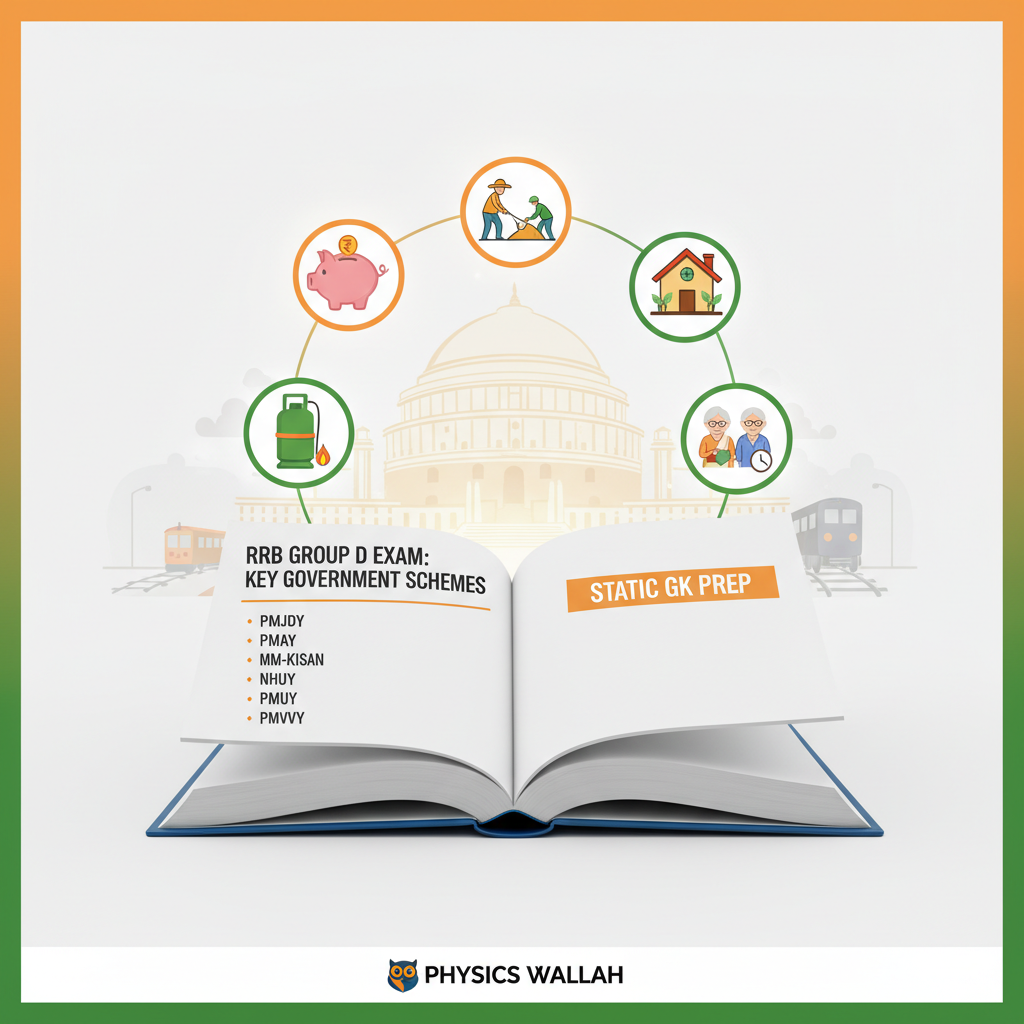
Below is a concise yet comprehensive overview of the schemes that appear most frequently in RRB Group D static GK questions. Each entry includes the launch year, primary objective, target beneficiaries, and recent performance metrics.
- Pradhan Mantri Jan Dhan Yojana (PMJDY): Launched in August 2014, this flagship financial‑inclusion programme aims to provide a bank account to every household. By the end of 2023, over 45 crore accounts had been opened, with a special focus on women and marginalised communities. The scheme also links beneficiaries to accidental insurance (₹2 lakh) and a modest overdraft facility.
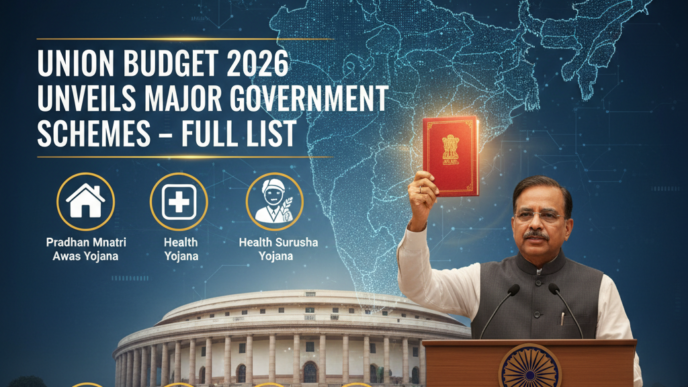
- Pradhan Mantri Awas Yojana (PMAY): Initiated in June 2015, PMAY‑Urban and PMAY‑Gramin together target “Housing for All” by 2022. Eligible families receive an interest subsidy of up to 6.5 % on home loans, and the scheme has sanctioned more than 2 crore houses, dramatically improving living conditions in urban slums and rural hamlets.
- Pradhan Mantri Kisan Samman Nidhi (PM‑Kisan): Introduced in December 2018, this initiative transfers ₹6,000 per year (₹2,000 per instalment) to small and marginal farmers. Recent budget announcements have increased the instalment size by 20 % for the 2024‑25 fiscal, bringing the annual benefit to ₹7,200 for qualifying farmers.
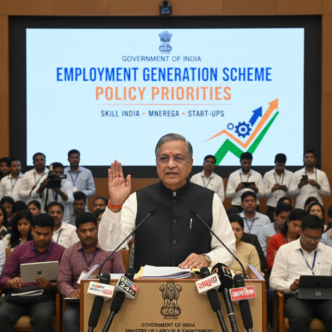
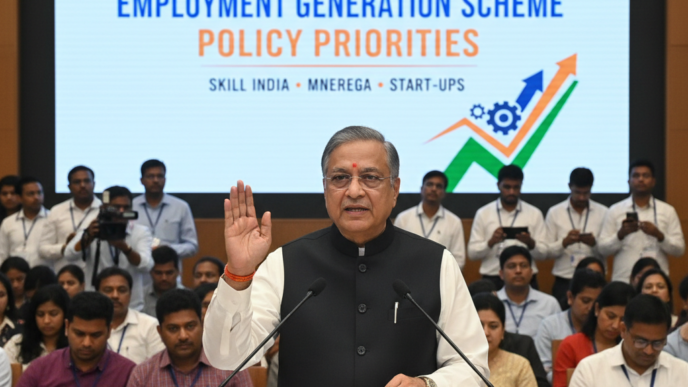
- Mahatma Gandhi National Rural Employment Guarantee Act (MGNREGA): Enacted in 2005, MGNREGA guarantees 100 days of wage‑employment per household. In FY 2023‑24, over 1.2 crore workdays were generated, creating assets such as ponds, roads, and watershed structures that enhance rural infrastructure.
- Pradhan Mantri Ujjwala Yojana (PMUY): Launched in May 2016 to provide LPG connections to women below the poverty line, the scheme has distributed more than 10 crore connections, reducing dependence on traditional biomass fuels and improving indoor air quality.
- National Health Mission (NHM) & Ayushman Bharat: NHM, under which Ayushman Bharat operates, offers health insurance coverage of up to ₹5 lakhs per family per year for beneficiary families, benefitting over 3 crore households as of 2023.
- Swachh Bharat Mission (SBM): Launched in October 2014, SBM aims to eliminate open defecation and improve solid‑waste management. By 2022, over 100 million toilets had been constructed, contributing to a measurable decline in diarrhoeal diseases.
- Pradhan Mantri Vaya Vandana Yojana (PMVVY): A pension scheme for senior citizens (60+ years) that guarantees a fixed return of 7.6 % per annum for a tenure of 10 years, providing a steady income for retirees.
For deeper insights, you can explore the official government portals: Pradhan Mantri Jan Dhan Yojana, MGNREGA, and Press Information Bureau. 
Impact on Different Sections of Society
The transformation brought about by these schemes extends far beyond mere statistics; it reshapes everyday life for diverse demographic groups. PMJDY has empowered more than 30 million women by granting them independent bank accounts, thereby enhancing financial autonomy and facilitating access to credit. PMAY’s urban component has lifted the living standards of slum dwellers, reducing informal settlements and improving sanitation. MGNREGA not only provides a safety net during agricultural off‑seasons but also builds community assets — such as irrigation ponds — that boost long‑term agricultural productivity. Health‑centric initiatives under NHM, notably Ayushman Bharat, have slashed out‑of‑pocket health expenses for low‑income families, enabling timely medical interventions that were previously unaffordable. Similarly, PMUY’s clean‑cooking fuel distribution has reduced respiratory ailments among women and children, demonstrating a direct link between policy and public health outcomes.
Study Strategies to Master Schemes
RRB Group D static GK demands rapid recall, so aspirants should adopt evidence‑based memorisation techniques. First, group schemes by thematic clusters — financial inclusion, agricultural support, housing, and health — to create mental buckets that simplify retrieval. Mnemonic acronyms can be powerful; for instance, the letters “JAP” can cue Jan Dhan, Awas, and Pension (Ujjwala). Flashcards remain a gold standard: write the scheme name on one side and on the reverse note the year of launch, primary objective, eligibility, and a key benefit figure. Regularly reviewing government press releases and budget documents is essential, as the Union Budget often announcements new extensions or increased allocations that may appear in exam questions. Finally, practising previous year’s RRB Group D papers under timed conditions helps cement speed and accuracy, ensuring that scheme‑related questions become second nature.
Recent Updates and New Initiatives
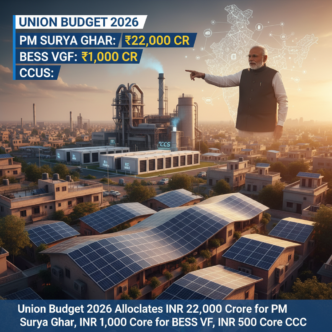
The Union Budget 2024‑25 introduced several extensions that directly impact existing schemes and open avenues for fresh aspirants. The Pradhan Mantri GatiShakti master plan, while primarily an infrastructure agenda, improves rural connectivity, which in turn enhances the reach of MGNREGA worksites and facilitates faster delivery of PM‑Kisan instalments. Health‑sector advancements include the rollout of the Ayushman Bharat Digital Mission, aiming to create a unified electronic health record system across the country by 2026, thereby streamlining beneficiary verification for NHM schemes. Additionally, the government announced a 20 % increase in the PM‑Kisan instalment amount, raising the annual benefit to ₹7,200 for eligible farmers, and introduced a new “Har Ghar Dastak” campaign to accelerate LPG connection distribution under PMUY in remote regions. Keeping an eye on these updates ensures that candidates are prepared for questions that blend classic scheme knowledge with contemporary policy developments.
Conclusion: Linking Scheme Knowledge to Exam Success
For RRB Group D aspirants, mastering static GK on government schemes is more than rote memorisation; it reflects a genuine understanding of India’s developmental trajectory. By focusing on the flagship initiatives outlined above, candidates can secure easy marks, improve their overall score, and demonstrate awareness of the nation’s welfare agenda — qualities essential for future railway employees who will serve the public. Consistent revision, active note‑making, and staying abreast of policy changes are indispensable habits. Platforms such as Physics Wallah offer structured study material, mock tests, and expert guidance to help candidates navigate this segment efficiently. Ultimately, a solid grasp of these schemes not only boosts exam performance but also equips recruits with the contextual knowledge needed to contribute meaningfully to nation‑building.
Stay updated with the latest Yojana schemes and government initiatives for better awareness and eligibility. For personalized guidance on accessing these benefits, reach out to us.