


Overview of PM Surya Ghar Yojana
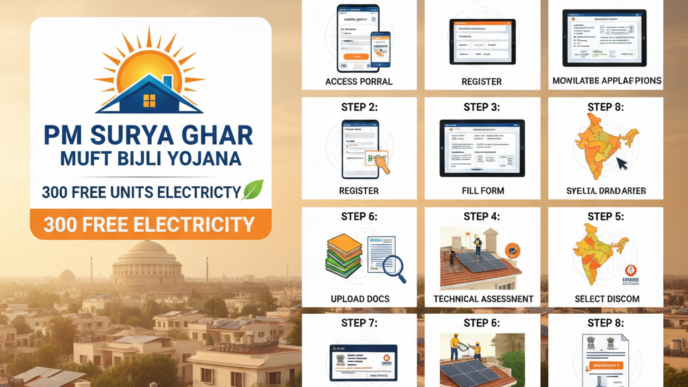
The Pradhan Mantri Surya Ghar Yojana, spearheaded by the Ministry of New and Renewable Energy (MNRE), is a national programme that transforms everyday rooftops into miniature power plants. Launched in 2023 with an initial outlay of INR 8,000 crore, the scheme seeks to install solar panels on up to 10 million residential roofs by 2027, thereby adding a distributed capacity of over 30 GW to India’s renewable energy mix. According to the MNRE’s official portal mnre.gov.in, the initiative combines a capital subsidy, interest‑rate concessions on loans and tax benefits to make solar installations financially attractive for middle‑class families. The programme also draws inspiration from the broader National Solar Mission, which targets 100 GW of solar capacity by 2027, a goal that hinges heavily on decentralized generation.
Under the scheme, eligible households can receive a subsidy of up to 40 % of the installed cost for systems up to 10 kW, with higher rates in certain states that have ambitious renewable targets. The subsidy is disbursed in two installments – an upfront 30 % after approval and the balance after successful commissioning. The MNRE also encourages the use of locally manufactured photovoltaic (PV) modules to boost domestic industry, and it mandates that states adopt simplified net‑metering protocols to facilitate easy grid interaction. By lowering the financial barrier and streamlining administrative procedures, the Surya Ghar Yojana aims to shift the consumer mindset from passive energy consumer to active prosumer.
Recent media reports indicate that the central government has earmarked additional funds for capacity building and awareness campaigns, targeting both urban and rural audiences. The initiative aligns with India’s commitment under the Paris Agreement to reduce carbon emissions intensity by 33‑35 % by 2030, and rooftop solar is considered a low‑cost, rapidly deployable solution. As of the latest MNRE data released in early 2026, over 150,000 households across the country have expressed interest, reflecting a growing appetite for clean, self‑generated electricity. 
Core Objectives and Benefits
At its core, the Surya Ghar Yojana pursues three interlocking objectives: expanding India’s solar capacity, alleviating household electricity bills, and curbing carbon emissions. For end‑users, the tangible benefits begin with a reduction in monthly utility charges; a typical 5 kW rooftop system can offset 60‑70 % of a family’s consumption, translating into annual savings of INR 30,000–45,000. Moreover, surplus generation can be exported to the grid under net‑metering arrangements, allowing families to earn credits or even cash payments from distribution companies. This “pay‑as‑you‑go” model enhances energy security by reducing dependence on volatile fossil‑fuel imports.
From an environmental standpoint, each installed kilowatt of solar capacity avoids approximately 1.5 tonnes of CO₂ emissions annually. Scaling this across millions of homes could cut the nation’s aggregate emissions by several million tonnes each year, contributing to cleaner air in densely populated regions. Economically, the scheme stimulates job creation in the solar installation and maintenance sectors, with estimates suggesting that every megawatt of distributed solar supports 7–10 skilled jobs. Socially, it empowers women and youth in rural households by providing technical training and fostering entrepreneurship around solar micro‑enterprises.
The programme also dovetails with other government initiatives such as the “Saubhagya” scheme, which aims for universal household electricity access, and the “Deendayal Upadhyaya Gram Jyoti Yojana,” which focuses on rural electrification. By integrating solar rooftops into these broader energy access strategies, the Surya Ghar Yojana ensures that new connections are inherently green, thereby future‑proofing India’s growth trajectory.
Financial Incentives and Support Mechanisms
The financial architecture of the Surya Ghar Yojana is designed to be multi‑layered. For residential installations up to 10 kW, the central government provides a subsidy of up to 40 % of the capex cost, subject to a ceiling of INR 2 lakh per kilowatt. In states like Rajasthan and Gujarat, where solar potential is high, the subsidy rate can rise to 50 % for systems installed through state‑run aggregators. Beyond subsidies, beneficiaries can access collateral‑free loans from designated banks such as the State Bank of India and Power Finance Corporation, which offer interest rates as low as 4.5 % per annum. These loans are typically structured with a moratorium period of up to six months, followed by a repayment schedule linked to the expected cash‑flow from electricity savings.
Tax incentives further sweeten the deal: installers can claim accelerated depreciation on the solar assets, allowing them to deduct a larger portion of the capital cost from taxable income in the early years. The scheme also permits the sale of excess electricity through net‑metering, where the utility purchases surplus power at the prevailing feed‑in tariff. This creates a predictable revenue stream that shortens the payback period to an average of 5–6 years for many participants.
To simplify the financing journey, the MNRE has partnered with fintech platforms that offer instant pre‑approval based on Aadhaar‑linked income verification. This digital onboarding reduces paperwork and speeds up subsidy disbursement. Additionally, the scheme provides technical assistance through renewable energy aggregators that help households select certified installers, conduct site assessments, and secure clearance from local authorities, thereby minimizing delays and ensuring quality installations.
State‑Specific Rollout in Jammu & Kashmir
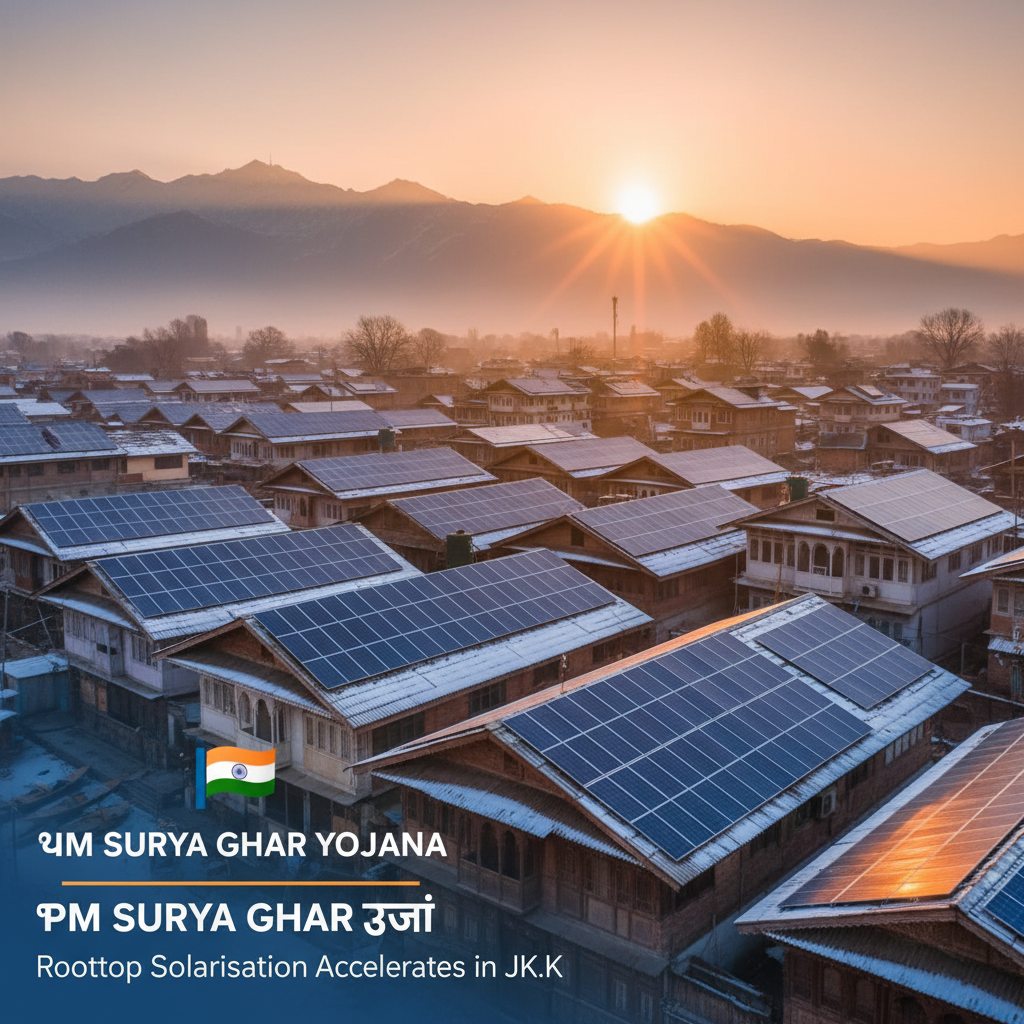
In Jammu & Kashmir, the central Surya Ghar Yojana has been adapted to address the Union Territory’s unique geographical and infrastructural challenges. Remote valleys often suffer from limited grid reliability, high transmission losses and elevated electricity tariffs, prompting the local administration to prioritize rooftop solar as a resilient alternative. The J&K Renewable Energy Development Agency (JKREDA) has partnered with local banks, solar aggregators and technical institutes such as the Indian Institute of Technology (IIT) Jammu to streamline project approvals, provide on‑ground engineering support and conduct capacity‑building workshops.
Since the launch of the state‑level pilot in early 2024, more than 3,500 households have registered interest, with a particular surge in Srinagar and Jammu’s suburban pockets. Pilot installations of 3 kW and 5 kW systems have demonstrated average bill reductions of 65 %, and several beneficiaries have begun exporting surplus power back to the grid under a state‑approved net‑metering framework. The J&K government has set an ambitious target of 50,000 rooftop installations by 2027, a figure that appears increasingly attainable given the 68 % year‑on‑year growth in applications reported by JKREDA in the latest quarterly bulletin.
To address the specific barrier of financing in a region with lower average incomes, the UT administration has negotiated special loan packages with regional rural banks that offer extended repayment periods of up to 10 years and reduced interest rates of 3.8 %. Moreover, a mobile awareness campaign — comprising van‑based demonstration units and community‑level seminars — has been deployed to educate residents in far‑flung villages about the long‑term economic and environmental advantages of solar adoption. These targeted efforts are gradually shifting public perception from a capital‑intensive project to a sustainable livelihood enhancer.
Future Outlook and Conclusion
Looking ahead, the Ministry of New and Renewable Energy plans to augment the Surya Ghar Yojana with complementary measures that will deepen its impact. Upcoming policy drafts propose the introduction of battery‑storage incentives, enabling households to store excess solar generation for use during night‑time or grid outages. Integration with smart‑metering technologies will provide real‑time consumption analytics, empowering users to optimise their energy usage patterns. Additionally, a pilot programme in high‑altitude zones of Jammu & Kashmir aims to combine solar with mini‑hydro and wind resources, creating hybrid micro‑grids that can operate autonomously in remote locations.
These forward‑looking initiatives are expected to accelerate the transition toward a more resilient, flexible and low‑carbon energy ecosystem. For the Union Territory, the vision includes scaling up hybrid solutions that maximise renewable output throughout the year, thereby reducing reliance on imported electricity and enhancing energy sovereignty. Continued collaboration between the central government, state agencies, private installers and financial institutions will be critical to sustain momentum, ensure equitable access and deliver on the promise of a solar‑powered future for every Indian household.
Stay updated with the latest Yojana schemes and government initiatives for better awareness and eligibility. For personalized guidance on accessing these benefits, reach out to us.