


Overview of Rashtriya Vayoshri Yojana
Launched in 2022 by the Ministry of Social Justice and Empowerment, the Rashtriya Vayoshri Yojana (RVY) is a centrally sponsored programme designed to uplift senior citizens from economically weaker sections by providing free assistive devices. The scheme addresses the growing demographic challenge of an ageing population, ensuring that low‑income elders can maintain independence despite mobility, hearing, vision or dental impairments. According to official data, India’s elderly population (60 years and above) is projected to exceed 190 million by 2031, a majority of whom reside in rural and semi‑urban areas with limited access to specialised health equipment. RVY therefore targets this vulnerable group, aiming to reduce disability‑related barriers and promote social inclusion.
Eligibility Criteria and Target Beneficiaries
Eligibility for RVY is strict yet inclusive. Applicants must be Indian citizens aged 60 years or older and possess a valid senior citizen identification card issued by their respective state governments. The financial criterion requires households to fall within the low‑income bracket, typically defined as an annual income not exceeding ₹2 lakh, though individual states may set slightly higher thresholds. Priority is given to senior citizens classified as ‘Below Poverty Line (BPL)’ or those who have been formally registered under state welfare schemes. Verification involves field visits by Panchayat officials, cross‑checking of income certificates, domicile proof and senior citizen cards, after which beneficiaries are entered into a centralized beneficiary registry. This database tracks allocation, distribution status and post‑distribution monitoring, ensuring transparency and accountability.
Assistive Devices and Distribution Mechanism
RVY offers a comprehensive catalogue of assistive equipment, each selected to address specific age‑related challenges. The current list includes: 
- Manual and electric wheelchairs, mobility scooters and walking frames
- Hearing aids, cochlear implant accessories and sound‑amplifying devices
- Vision‑enhancing tools such as magnifying lenses, smart glasses and screen‑reading software
- Dental prosthetics, oral hygiene kits and custom‑fit dental crowns
- Support accessories like crutches, walking sticks and fall‑prevention mats
- Emerging smart wearables that incorporate fall‑detection, GPS tracking and emergency alert functionalities
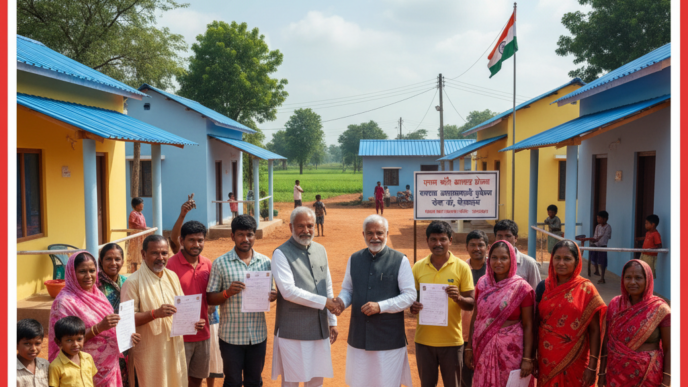
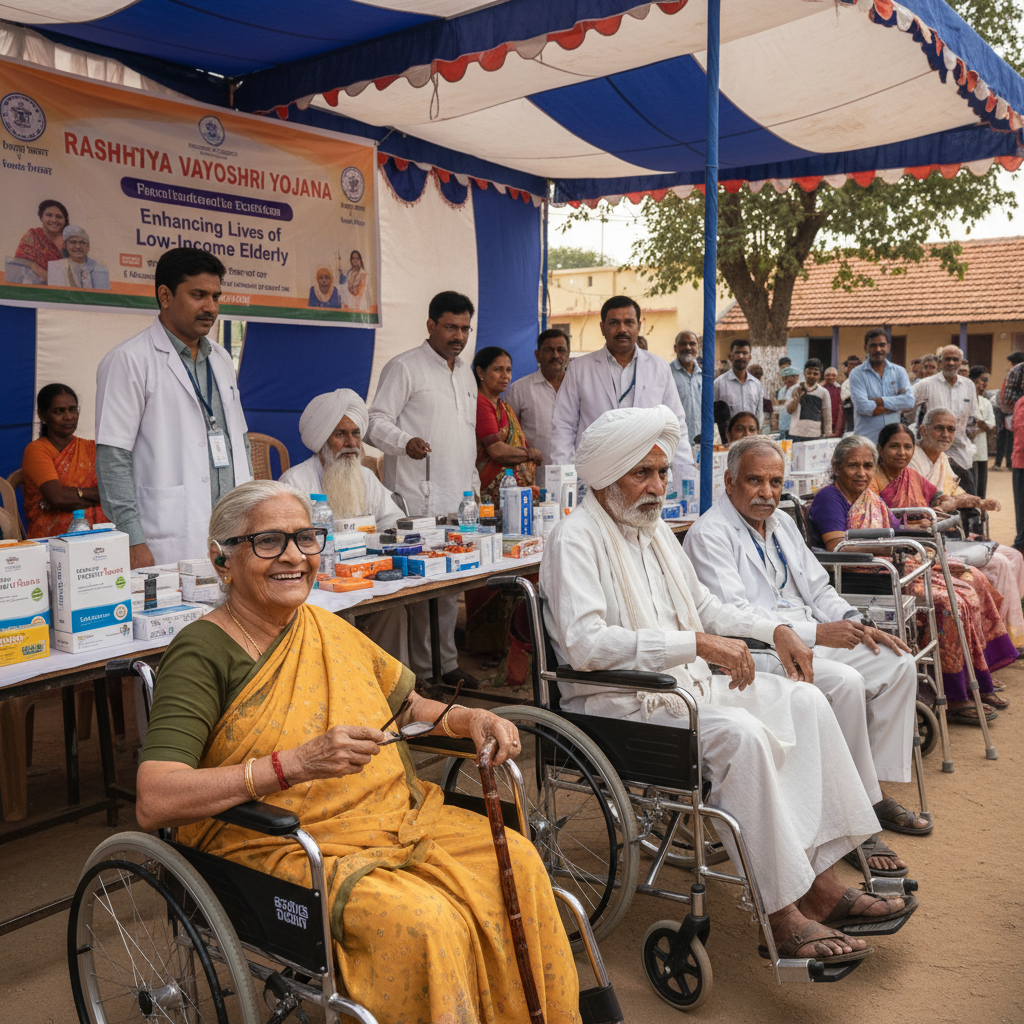
Each device is sourced from vetted manufacturers and undergoes quality verification before inclusion in the scheme’s approved vendor list. Distribution proceeds through grassroots verification by Anganwadi workers, ASHA facilitators and local Panchayat officials, who mobilise applicants and collect necessary documentation. Once verified, beneficiaries attend distribution camps held at block or district headquarters, where a medical professional conducts a brief health assessment to confirm device suitability. Recipients receive the equipment free of charge, accompanied by user manuals, warranty details and a guarantee of post‑distribution support.
Impact on Low‑Income Elderly Communities
Since its inception, RVY has delivered over 150,000 assistive devices across 20 states, directly improving the lives of more than 200,000 senior citizens. Early impact assessments reveal significant gains in mobility and reduced fall incidents, with over 70 % of wheelchair recipients reporting enhanced independence in daily activities. Hearing aid beneficiaries have experienced clearer communication, leading to increased social interaction and a decline in feelings of isolation. Vision‑enhancing devices have enabled older adults to read, use mobile phones and navigate environments more safely, reducing accidente‑related injuries. Dental kits have contributed to better nutrition as elders can chew a wider variety of foods.
Qualitative surveys echo these quantitative findings: families report a noticeable reduction in caregiving burdens, translating into economic savings and improved mental health for caregivers. Participation in community events, religious functions and market activities has risen among beneficiaries, fostering a renewed sense of dignity and belonging. Moreover, local economies benefit as device maintenance and battery replacements stimulate small‑scale enterprises in rural districts.
Monitoring, Evaluation and Future Enhancements
The Ministry of Social Justice and Empowerment has instituted a robust monitoring framework that blends quantitative metrics with qualitative feedback. Key performance indicators (KPIs) include distribution targets, beneficiary satisfaction scores, device functionality checks and post‑distribution device utilisation rates. All data are captured in real time through a dedicated online portal accessible to district officials, enabling immediate updates on stock levels and logistics.
Periodic third‑party audits are commissioned to scrutinise supply chain efficiency and identify bottlenecks. Recent audit recommendations prompted the inclusion of solar‑powered hearing aids for regions with unreliable electricity, as well as the procurement of low‑cost, locally manufactured walking frames to reduce import dependence. In the 2024 Union Budget, the government allocated an additional ₹1,200 crore to expand RVY’s reach and integrate emerging technologies such as artificial intelligence‑driven assistive devices. Plans are underway to collaborate with start‑ups and research institutes to develop wearable health monitors that can alert caregivers during emergencies, further enhancing safety for the elderly.
Looking ahead, RVY aspires to scale up its impact by partnering with private sector innovators, promoting indigenous manufacturing and expanding outreach to remote, hard‑to‑reach communities. Continuous policy refinements, coupled with technology‑driven solutions, position the scheme as a cornerstone of India’s commitment to social inclusion and elder care.
Conclusion
The Rashtriya Vayoshri Yojana represents a pivotal stride toward guaranteeing that low‑income senior citizens across India receive the assistive equipment essential for dignified, independent living. Through a transparent verification process, efficient distribution channels and a dynamic monitoring ecosystem, the programme not only mitigates physical limitations but also fosters broader societal participation for the elderly. Ongoing enhancements, financial commitments and technological integrations underscore the government’s resolve to evolve RVY into a forward‑looking, sustainable initiative that will continue to empower India’s senior citizens for years to come.
Stay updated with the latest Yojana schemes and government initiatives for better awareness and eligibility. For personalized guidance on accessing these benefits, reach out to us.