


Punjab Government Streamlines Mukh Mantri Sehat Yojana Enrollment Process
Chief Minister Bhagwant Mann announced on Tuesday a sweeping simplification of the Mukh Mantri Sehat Yojana enrollment workflow, marking a major step toward universal health coverage in Punjab. The reform, rolled out through a newly launched digital portal and integrated with existing state databases, cuts registration time from days to minutes and eliminates physical document submissions. Eligible families can now verify their identity using Aadhaar and ration card data, receive instant acknowledgment, and track claim status in real time. This move aligns with the government’s broader agenda to make healthcare affordable and accessible, especially for economically vulnerable households.
Overview of Mukh Mantri Sehat Yojana
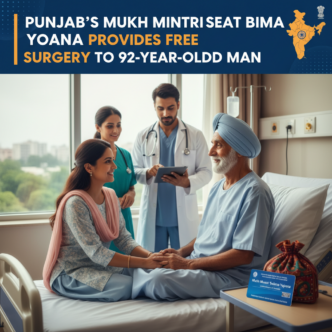
Introduced in 2023, the Mukh Mantri Sehat Yojana provides a sum insured of up to ₹5 lakh per family per annum, covering outpatient consultations, secondary and tertiary hospitalizations, pre‑existing condition treatment after a waiting period, maternity benefits, diagnostic tests, and emergency transport. The scheme also extends to day‑care procedures, ambulance services, and organ transplants, which are typically excluded from conventional health insurance. Coverage is offered on a cash‑less basis across all empanelled public and private hospitals in the state, removing the need for upfront payments and reducing out‑of‑pocket expenses.
Key Features of the Scheme
The scheme’s design targets diverse demographic groups. Families below the poverty line receive full coverage without any co‑payment, whereas other households contribute a nominal premium scaled to income brackets. Preventive health services, including regular check‑ups and wellness camps, are incentivized through government‑run health camps and awareness drives, encouraging early detection of chronic conditions such as diabetes and hypertension. The inclusion of organ transplant surgeries and advanced diagnostic tests positions the scheme as one of the most comprehensive health protection programs in India. 
Eligibility Criteria
All resident families of Punjab are automatically eligible provided they hold a valid ration card or Aadhaar‑linked identity proof. The eligibility net also captures migrant workers who have served a minimum of six months within the state, students enrolled in local institutions and their dependents, senior citizens, and households with multiple members added under a single master policy. This inclusive framework ensures that vulnerable populations, including women‑headed households, receive uninterrupted health security.
Simplification of Enrollment Process
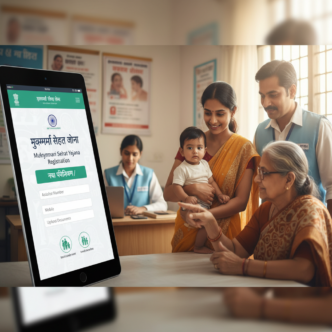
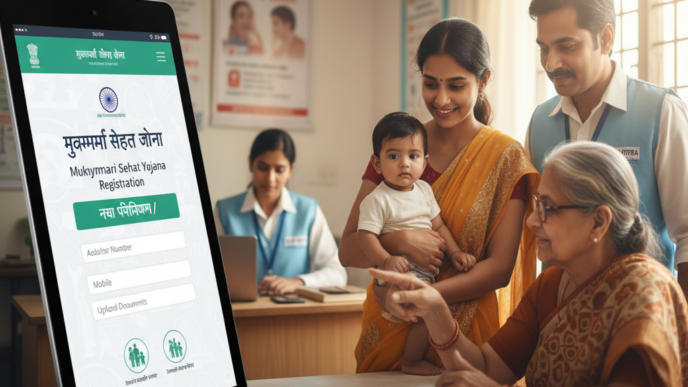
The most recent reform to the Mukh Mantri Sehat Yojana enrollment hinges on a dedicated online portal accessible via web and mobile applications. Applicants input basic details—name, Aadhaar number, and ration card information—while the system automatically cross‑checks data against government databases, delivering instant verification and acknowledgment. Real‑time status tracking, multilingual support, and on‑site assistance at district enrollment centres collectively reduce barriers for digital‑illiterate and rural users.
Technology Integration and User Experience
Behind the portal’s user‑friendly interface lies deep integration with the Public Distribution System (PDS) and the national Aadhaar ecosystem, enabling auto‑fill of personal details and minimizing manual entry errors. The platform offers an extensive FAQ repository, instructional videos, and live chat support to guide users through each step. For those encountering technical hurdles, trained personnel at designated enrollment centres provide on‑the‑ground assistance, ensuring that digital exclusion does not impede access to benefits. This hybrid model has been praised by public health experts for preserving inclusivity while leveraging modern technology.
Integration with Ayushman Bharat
To amplify its impact, the Punjab government has closely aligned the Mukh Mantri Sehat Yojana with the central Ayushman Bharat Pradhan Mantri Jan Arogya Yojana (PMJAY). This convergence facilitates seamless portability of benefits across state borders, allowing migrant workers who relocate to retain coverage. Data sharing with the National Health Authority streamlines claim processing and curtails duplication, while also unlocking additional funding streams from the central pool. The partnership underscores a unified vision of a cohesive national health protection framework.
Impact on Healthcare Infrastructure
Since the enrollment reforms, hospital admission rates for chronic ailments have risen modestly, reflecting heightened awareness and willingness to seek treatment. Empaneled hospitals report a 25 % surge in outpatient volume, attributed to the scheme’s cash‑less guarantee. State investments in upgrading medical equipment at government facilities have improved diagnostic accuracy and treatment quality, easing pressure on private providers and fostering a healthier populace. These outcomes illustrate the scheme’s role in strengthening Punjab’s health ecosystem.
Case Studies and Statistics
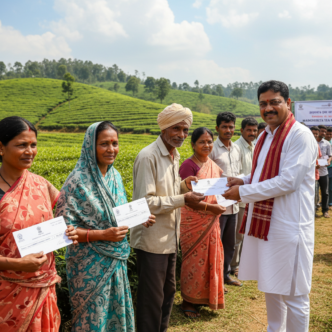
Early evaluation data released by the Punjab Health Department indicate that over 3.2 million families have enrolled within the first six months of the simplified enrollment drive. Approximately 1.8 million claims have been processed, with an average settlement time of 48 hours—dramatically faster than the previous 15‑day average. Notably, enrollment among women‑headed households rose by 38 %, reflecting targeted outreach campaigns that emphasized financial independence and health security. Districts previously lagging, such as Faridkot and Moga, now report participation rates exceeding 70 % of eligible households, narrowing regional disparities.
Challenges and Future Roadmap
Despite commendable progress, the scheme confronts several challenges. Concerns over data privacy have emerged as personal information circulates across multiple agencies, prompting the government to reinforce cybersecurity protocols. Capacity constraints at certain empanelled hospitals occasionally generate waiting lists for specialized procedures. To mitigate these issues, Punjab plans to expand the network of accredited facilities, introduce telemedicine services, and deploy a real‑time monitoring dashboard that tracks enrollment, claim settlement, and health outcomes. Future enhancements will also incorporate preventive health incentives, such as wellness rebates for regular exercise and routine health check‑ups, fostering a culture of proactive self‑care.
Conclusion
In summary, the recent simplifications championed by the Bhagwant Mann administration have transformed the Mukh Mantri Sehat Yojana enrollment process into a more transparent, efficient, and inclusive mechanism for delivering universal health coverage in Punjab. By harnessing digital innovation, aligning with national health initiatives, and prioritizing vulnerable populations, the scheme is poised to fulfill its promise of accessible, high‑quality medical care for all residents. Sustained investment in infrastructure, vigilant monitoring, and community engagement will be essential to maintain momentum and ensure that every citizen, irrespective of socioeconomic status, can benefit from timely and quality health services.
Stay updated with the latest Yojana schemes and government initiatives for better awareness and eligibility. For personalized guidance on accessing these benefits, reach out to us.