


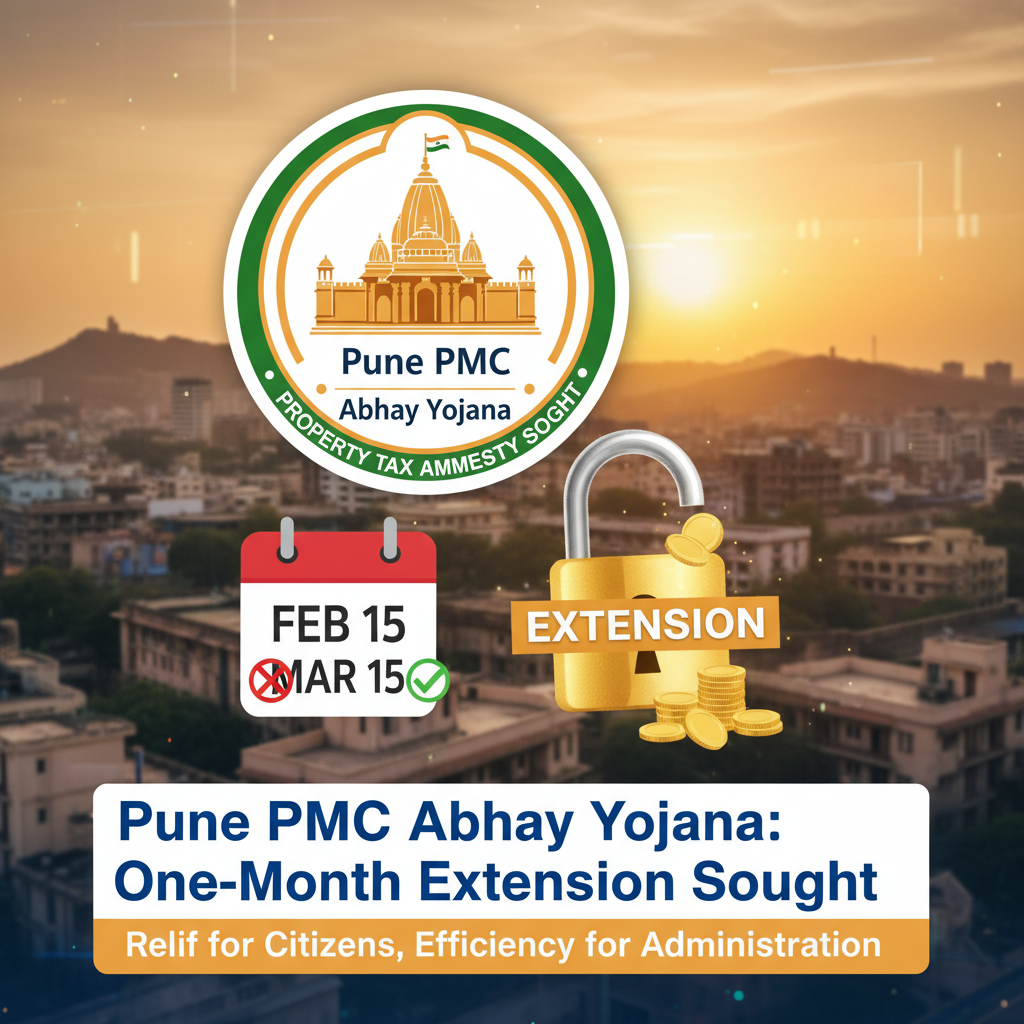
Pune PMC Abhay Yojana: One‑Month Extension Sought by Corporators
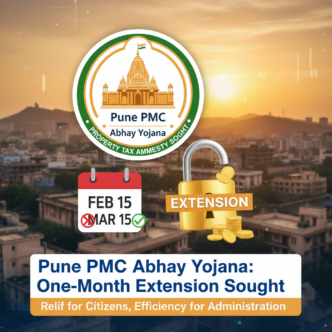
Corporators representing a cross‑section of Pune’s 151 wards have formally petitioned the Pune Municipal Corporation (PMC) to extend the Abhay property‑tax amnesty scheme by an additional month. The original deadline of 15 February 2026 left many residents scrambling to regularise long‑pending dues, especially as the COVID‑19‑induced backlog and recent portal upgrades created bottlenecks. Under the current rules, property owners who submit their applications before the cut‑off can benefit from a reduced penalty and waive interest on arrears. By pushing the final filing date to 15 March 2026, the civic body aims to ensure that every eligible owner — whether a senior citizen in a densely populated slum or a small‑scale entrepreneur in the Old City — can complete the process without incurring extra charges. The request also signals a broader willingness to adapt administrative timelines to the lived realities of Pune’s diverse citizenry.
Rationale Behind the Extension Request
At the heart of the corporators’ appeal lies a convergence of technical and socio‑economic challenges that have hampered the scheme’s uptake. During the peak weeks of February, the PMC’s online tax portal experienced intermittent outages, causing delays for users attempting to upload scanned documents or make payments. In addition, the rollout of awareness material was criticised for being insufficiently translated into Marathi, Hindi, and Urdu, leaving a sizeable portion of the population uninformed about eligibility criteria and procedural steps. Corporators highlighted that informal properties — such as temporary stalls, chawls, and mixed‑use buildings — often lack clear paperwork, forcing owners to seek legal counsel or face inadvertent disqualification. These systemic barriers disproportionately affect low‑income households, whose limited digital literacy can turn a simple tax filing into a daunting ordeal. Extending the deadline, therefore, is seen not merely as a procedural concession but as a corrective measure to democratise access to tax relief.
- Technical outages on the PMC tax portal during peak submission periods
- Inadequate outreach material in regional languages
- Complex documentation requirements for informal properties
- Limited staff capacity to handle last‑minute queries
Details of the Proposed One‑Month Extension
The motion tabled by the corporators calls for a uniform extension of the Abhay Yojana’s final filing date from 15 February to 15 March 2026, covering all property categories — residential, commercial, and mixed‑use — under the scheme. In addition to the temporal shift, the proposal recommends a targeted awareness campaign that leverages door‑to‑door visits, radio announcements on local frequencies, and simplified instructional videos hosted on the PMC’s YouTube channel. A dedicated grievance‑redressal cell would also be established to log and resolve technical glitches reported by applicants during the extended window. Senior municipal officials have signalled a tentative willingness to evaluate the request case‑by‑case, pending a cost‑benefit analysis that factors in expected revenue uplift and implementation costs. If approved, the extension would provide a predictable timeframe for both citizens and the corporation, enabling better planning for fiscal forecasting and property‑tax collection strategies. 
Financial Implications for Citizens and the Municipality
Granting an extra month for tax submissions carries nuanced financial ramifications for both residents and the Pune municipal budget. For citizens, the reprieve can ease cash‑flow pressures, especially for those whose earnings align with the agricultural cycle or seasonal business peaks, allowing them to allocate resources toward education, health, or small‑business expansions rather than immediate penalty payments. However, municipal finance experts caution that repeated extensions might inadvertently normalise procrastination, potentially eroding the deterrent effect of tax obligations. From the PMC’s perspective, the Amnesty Yojana is projected to generate a modest but meaningful revenue surge; early estimates suggest a 5 % increase in collections compared with the baseline forecast, translating to an additional ₹150 crore in the upcoming fiscal year. This uplift could help offset the short‑term fiscal strain caused by delayed payments and reduce the need for harsh enforcement actions such as property seizures. Ultimately, the financial equilibrium will hinge on how effectively the extended period is used to encourage proactive compliance rather than merely postponing dues.
Expert Opinions and Way Forward
Urban economists and policy analysts have offered divergent perspectives on the viability of the one‑month extension. Dr. Anjali Deshmukh, a professor of public policy at the University of Pune, argues that targeted extensions, when paired with robust outreach and a streamlined digital interface, can boost compliance without compromising the tax base. She warns, however, that frequent extensions may dilute the deterrent impact of tax enforcement and encourage a culture of delayed payments. Conversely, municipal finance specialists suggest that the current window presents an opportunity to pilot a more comprehensive tax‑simplification strategy, including the rollout of a unified digital payment platform akin to those used by other major Indian metros. Such a platform would integrate real‑time error notifications, multilingual support, and automatic penalty waivers, thereby reducing reliance on ad‑hoc amnesty measures. Stakeholders collectively agree that the extension should be leveraged as a catalyst for systemic reform, with recommendations spanning improved portal usability, expanded language accessibility, and a transparent grievance‑redressal mechanism.
Historical Context and Future Outlook
The Abhay Yojana was first introduced in the 2021‑2022 fiscal year as part of a broader initiative to curtail mounting property‑tax arrears across Pune. Its maiden edition offered a 30‑day window for owners to clear outstanding dues at a reduced penalty rate, a move that resulted in a 3.2 % rise in collections despite the short notice. Subsequent iterations in 2023 and 2024 saw incremental adjustments — lowering penalty percentages, expanding eligibility to include mixed‑use establishments, and incorporating feedback from citizen groups. Each cycle has been a learning curve, balancing the municipal corporation’s revenue imperatives with the socio‑economic realities of a rapidly urbanising city. The present debate over a one‑month extension reflects the programme’s evolving nature, underscoring its role as a dynamic instrument of fiscal policy that can be recalibrated in response to citizen feedback and operational challenges. Looking ahead, the PMC hopes to institutionalise a more predictable amnesty schedule while simultaneously investing in digital infrastructure to minimise future bottlenecks.
Potential Outcomes and Citizen Impact
Should the extension be granted, a cascade of positive outcomes is anticipated across multiple dimensions. From the citizen’s lens, the additional time is expected to increase the number of compliant property owners by an estimated 8 %, reducing the incidence of legal notices, penalty escalations, and subsequent court proceedings. This, in turn, could foster a more cooperative relationship between residents and the municipal authority, encouraging proactive engagement in other civic initiatives such as waste segregation and neighbourhood upkeep. Administratively, the extended window would furnish the PMC with richer data on submission patterns, enabling fine‑tuning of future revenue‑generation initiatives and informing the design of targeted relief packages for vulnerable demographics. Moreover, the anticipated boost in collections — projected at up to ₹150 crore — could be redirected toward infrastructure upgrades, public transport enhancements, and flood‑mitigation projects that directly benefit the city’s populace. The ultimate success of the extension will, however, depend on the effectiveness of communication campaigns, the responsiveness of the grievance‑redressal cell, and the seamless functioning of the tax portal during the heightened submission period.
Next Steps and Policy Recommendations
The corporators’ motion is slated for discussion at the upcoming PMC council meeting scheduled for early March 2026. Stakeholders are urging the administration to adopt a multi‑pronged approach: approve the one‑month extension; launch a comprehensive awareness drive targeting underserved communities; implement a user‑friendly digital portal with real‑time error notifications; and publish transparent criteria for eligibility and penalty waivers. By integrating these measures, the PMC can ensure that the Abhay Yojana fulfils its intended purpose — facilitating tax compliance while safeguarding the financial interests of both the city and its residents. Continued collaboration with civil‑society groups, business associations, and technical experts will be crucial to fine‑tune the scheme and prevent recurrence of the bottlenecks that prompted the current request. In sum, a well‑executed extension can serve as a pivotal stepping stone toward a more resilient, inclusive, and efficient municipal fiscal ecosystem.
Stay updated with the latest Yojana schemes and government initiatives for better awareness and eligibility. For personalized guidance on accessing these benefits, reach out to us.