


Introduction
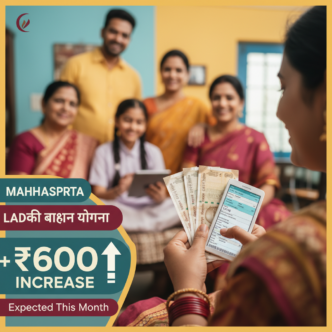
President Droupadi Murmu today unveiled the Delhi Lakhpati Bitiya Yojana, a landmark welfare programme aimed at empowering one hundred thousand women across the National Capital Territory. The initiative, announced during a high‑profile ceremony at the Rashtrapati Bhavan, aligns with the central government’s broader vision of gender‑inclusive economic growth and social justice. By combining direct cash assistance with targeted skill‑development and entrepreneurship support, the scheme seeks to break the cycle of poverty that disproportionately affects women from disadvantaged backgrounds. Officials say the rollout will begin immediately, with a dedicated enrollment portal opening to applicants from 1 December 2025. The programme is being hailed as a significant step toward achieving the United Nations Sustainable Development Goal 5 on gender equality, and it is expected to generate measurable improvements in women’s financial independence, health outcomes, and community development.
Core Objectives
The Delhi Lakhpati Bitiya Yojana is built around four inter‑linked pillars:
- Direct cash assistance: A one‑time grant of INR 1 lakh to each eligible beneficiary.
- Vocational training and mentorship: Access to industry‑aligned courses and micro‑enterprise coaching.
- Digital monitoring dashboard: Real‑time tracking of beneficiary progress, disbursement status, and business outcomes.
- Market linkage and sustainability incentives: Support for green business models and connections to procurement networks.
These objectives are designed to address both the supply side – by equipping women with marketable skills – and the demand side – by facilitating access to financing, customers, and supply chains. The scheme also emphasizes transparency, with an independent audit mechanism to ensure that funds are utilized as intended. 
Financial Assistance Details
Under the Delhi Lakhpati Bitiya Yojana, each selected woman will receive a lump‑sum grant of INR 100,000, released in three instalments:
- First instalment (INR 30,000) upon verification of enrollment and completion of a baseline skills assessment.
- Second instalment (INR 40,000) after approval of a viable business plan and submission of required documentation.
- Final instalment (INR 30,000) following successful implementation of the enterprise for a minimum of six months.
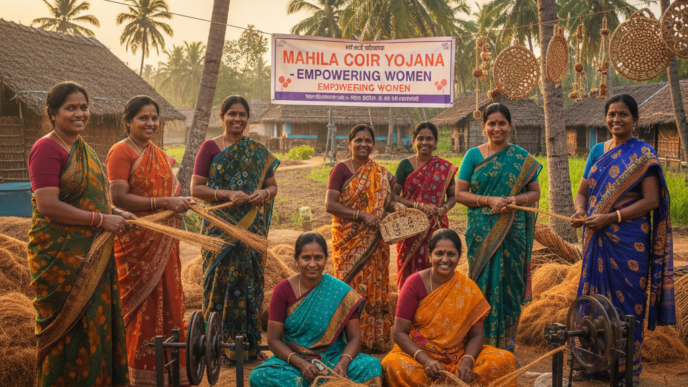
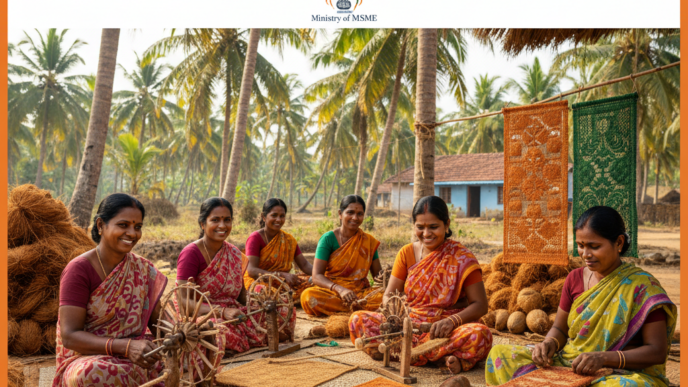
The funds can be channelled into a variety of livelihood activities, such as opening a small handicraft studio, procuring equipment for a home‑based food processing unit, or investing in agricultural inputs. Additionally, the scheme offers an extra subsidy of up to INR 10,000 for projects that adopt environmentally sustainable practices, such as waste‑to‑resource models or renewable‑energy consumption. Eligible applicants can also access a state‑backed micro‑credit facility with interest rates capped at 6 percent per annum, further easing the financial burden of scaling up operations.
Benefits for Women
The Delhi Lakhpati Bitiya Yojana promises a range of tangible benefits that extend beyond immediate monetary support:
- Financial stability: Direct cash infusion reduces reliance on informal lenders and high‑interest informal credit.
- Enhanced social status: Economic empowerment translates into greater decision‑making authority within households and communities.
- Skill enrichment: Training modules cover high‑growth sectors such as digital services, sustainable agriculture, and e‑commerce.
- Network building: Beneficiaries gain entry to mentorship circles, investor forums, and peer support groups.
- Eligibility for subsequent schemes: Successful participants become eligible for state‑sponsored credit lines, insurance schemes, and market‑access initiatives.
These advantages are expected to ripple through families, improving child education, nutrition, and health outcomes while fostering a more inclusive local economy.
Implementation Timeline
The rollout of the Delhi Lakhpati Bitiya Yojana is structured into three distinct phases to ensure rigorous monitoring and impact assessment:
- Phase One (Months 1‑3): Identification of eligible beneficiaries through a transparent online portal that cross‑references data from the Delhi Social Welfare Department, BPL surveys, and self‑declaration forms.
- Phase Two (Months 4‑9): Delivery of customized training programmes, business‑plan workshops, and the first two instalments of the cash grant. This phase also initiates the digital dashboard that logs each beneficiary’s progress.
- Phase Three (Months 10‑24): Ongoing monitoring, independent third‑party audits, and evaluation of enterprise performance. Successful cases will inform scaling strategies and policy refinements for future cohorts.
Regular public reports will be released to maintain accountability, and a dedicated grievance redressal mechanism will be available for beneficiaries to raise concerns at any stage of the programme.
Expert Opinions and Industry Reactions
Economists and gender‑rights advocates have described the Delhi Lakhpati Bitiya Yojana as a “transformative intervention” that bridges the gap between welfare and sustainable livelihood generation. Dr. Anita Sharma, senior researcher at the Indian Institute of Social Welfare, remarked, “Combining direct cash disbursements with robust skill‑development creates a synergistic effect that addresses both immediate poverty alleviation and long‑term economic inclusion.” Similarly, the Confederation of Indian Industry’s Women’s Wing highlighted the need for complementary market‑access programmes, stating that “without viable sales channels, even well‑trained entrepreneurs may struggle to achieve profitability.”
Industry analysts also pointed to the programme’s alignment with recent initiatives such as the Pradhan Mantri Kisan Sampād Utthāna Yojana and the PM Kisan 2023 scheme, noting that integrated approaches across agriculture, manufacturing, and services could accelerate women’s participation in the formal economy.
Future Outlook and Policy Implications
If the Delhi Lakhpati Bitiya Yojana achieves its targeted impact, it could serve as a replicable model for other Indian states and Union Territories seeking to empower women through evidence‑based welfare design. Policymakers anticipate several socio‑economic dividends, including a rise in female labour‑force participation rates, a narrowing of the gender wage gap, and an uptick in entrepreneurship metrics within the capital region. Continuous feedback loops — leveraging data from the digital dashboard and independent evaluations — will be essential to fine‑tune eligibility criteria, enhance training curricula, and expand support services. Moreover, the scheme’s emphasis on sustainability could inspire green‑entrepreneur incubators and foster partnerships with private sector players invested in corporate social responsibility.
In conclusion, the launch of the Delhi Lakhpati Bitiya Yojana underscores the Indian government’s commitment to building an equitable society where women are not only beneficiaries but also architects of economic progress. By marrying financial muscle with capacity‑building and market integration, the programme aims to catalyze a paradigm shift in how gender‑focused welfare is conceptualized and implemented across the nation.
Stay updated with the latest Yojana schemes and government initiatives for better awareness and eligibility. For personalized guidance on accessing these benefits, reach out to us.