


Introduction
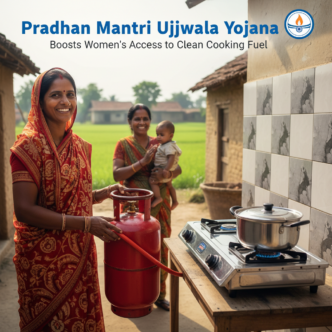
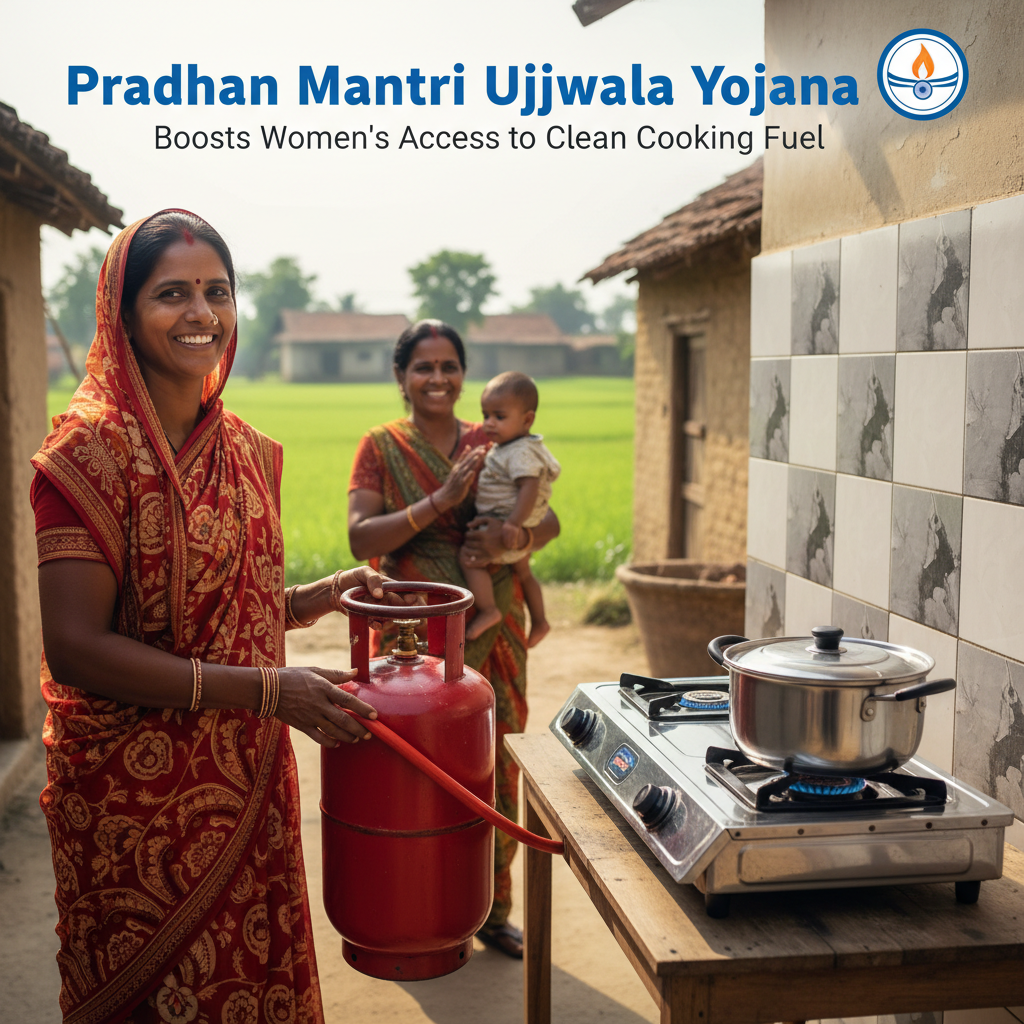
The Pradhan Mantri Ujjwala Yojana, launched by Prime Minister Narendra Modi on 1 May 2016, stands as a cornerstone of India’s drive toward clean energy and gender‑focused welfare. Conceived under the broader ‘Clean India’ umbrella, the scheme pledged to deliver Liquefied Petroleum Gas (LPG) connections to households living below the poverty line (BPL), replacing traditional solid fuels such as firewood, coal and dung‑cakes with a modern, cleaner alternative. By doing so, it sought not only to curtail indoor air pollution—a leading cause of respiratory ailments among women and children—but also to liberate millions of rural women from the time‑consuming chore of fuel wood collection. The initiative was launched with an initial target of 50 million connections, a figure that was swiftly expanded as the programme demonstrated rapid mobilization capabilities. Funding for Ujjwala is drawn from the Ministry of Petroleum and Natural Gas’s budget, with the central government shouldering the bulk of the subsidy while state governments handle on‑ground verification and enrollment. The scheme’s design integrates digital verification, leveraging Aadhaar and banking correspondents to streamline applicant validation, thereby minimizing fraud and ensuring that subsidies reach the intended beneficiaries. Early successes were evident in the first year itself, when more than 3 million LPG connections were sanctioned, signaling strong demand among low‑income households. Today, the programme reports that over 80 million connections have been approved, reflecting both the magnitude of need and the efficiency of its implementation. This scale of reach positions Ujjwala among the world’s largest energy access programmes, underscoring its role as a catalyst for broader energy‑inclusion goals and as a model for poverty‑alleviation strategies that intertwine health, environmental sustainability and women’s empowerment. For more background see the Wikipedia entry and the official Ministry of Petroleum and Natural Gas page.
Genesis and Vision of Ujjwala Yojana
Genesis of the Ujjwala Scheme can be traced to a confluence of policy imperatives that shaped the Modi government’s early agenda. When the Prime Minister announced the initiative during his Independence Day address in 2015, he framed it as part of the ‘Clean India Mission’, a national crusade aimed at eradicating open defecation, improving sanitation and, crucially, providing clean cooking fuel to the nation’s poorest. The conceptual blueprint was drafted by the Ministry of Petroleum and Natural Gas in collaboration with the Ministry of Rural Development, reflecting a cross‑sectoral approach that recognized the interlinkages between energy access, health outcomes and rural livelihoods. Initially, the programme targeted 50 million Below Poverty Line (BPL) households, a figure derived from the Socio‑Economic and Caste Census (SECC) 2011 data that identified approximately 100 million households reliant on solid fuels. To operationalize this ambitious goal, the scheme introduced a‑streamlined enrollment architecture that leveraged the existing network of 5 lakh banking correspondents and panchayat‑level officials. Applicants are required to submit a modest set of documents—primarily a BPL certificate, identity proof and address verification—after which the data is uploaded to a central portal that cross‑checks details against the Aadhaar ecosystem. Once verified, the beneficiary receives a fully subsidized LPG connection, an initial 14.2 kg cylinder and a voucher covering the first refill, thereby removing the upfront financial barrier that traditionally hindered adoption. The rollout strategy also capitalized on partnerships with Indian Oil Corporation, Bharat Petroleum and Hindustan Petroleum, enabling the rapid distribution of connections through their extensive dealer networks. By the end of the fiscal year 2020‑21, the government announced that more than 55 million connections had been sanctioned, a milestone that prompted an upward revision of the target to 80 million by 2022. This expansion was underpinned by a data‑driven monitoring dashboard that tracks enrollment metrics in real time, providing policymakers with insights into regional gaps and enabling targeted interventions. Thus, the Ujjwala Yojana emerged not merely as a fiscal subsidy programme but as a technologically enabled, multi‑layered intervention that blends fiscal incentive, digital governance and private‑sector collaboration to achieve a nationwide transformation in cooking practices. For detailed statistics see the official dashboard.
Health, Environmental and Social Impact
The health and environmental dividends of the Ujjwala Yojana manifest in both quantifiable statistics and lived experiences reported by beneficiaries across rural and peri‑urban India. According to the World Health Organization, indoor air pollution from the burning of solid fuels contributes to an estimated 4.3 million premature deaths globally each year, a crisis that disproportionately affects women and children in developing economies. Prior to the scheme’s implementation, surveys conducted by the Ministry of Health and Family Welfare indicated that over 70 percent of households in the lowest income quintile relied on firewood or dung‑cakes for daily cooking, a practice linked to chronic obstructive pulmonary disease, cataracts and low birth‑weight infants. Since the rollout of LPG connections, peer‑reviewed studies published in the Indian Journal of Public Health have documented a 25‑30 percent decline in reported respiratory symptoms among women in villages where LPG penetration exceeds 50 percent. Moreover, the substitution of wood‑based fuels with LPG has translated into measurable reductions in deforestation; the Forest Survey of India estimated that the scheme has averted the felling of approximately 1.2 million cubic metres of timber annually, a contribution that aligns with India’s commitment under the Paris Agreement to reduce carbon emissions. The environmental impact extends to black carbon reductions; LPG combustion emits roughly 40 percent less particulate matter than traditional biomass, thereby diminishing atmospheric warming effects in densely populated plains. Beyond raw numbers, the scheme has engendered a cultural shift: households now possess a tangible sense of modernity and aspiration, as evidenced by anecdotal reports from self‑help groups in Gujarat and Odisha describing how the introduction of LPG has enabled evening cooking without the smoky haze, fostering safer cooking environments for children and allowing women to allocate previously spent time to income‑generating activities. Collectively, these health and ecological outcomes underscore Ujjwala’s role as a multi‑dimensional catalyst that simultaneously ennobles public health, conserves natural resources and reinforces the nation’s climate ambitions. For WHO data see the WHO Indoor Air Pollution Fact Sheet and for forest data see the Forest Survey of India. 
Implementation, Reach and Outreach
The implementation model of Ujjwala hinges on a decentralized verification network that blends government machinery with private‑sector logistics. Eligibility is limited to households that were classified as Below Poverty Line in the 2011 SECC, with special categories for Scheduled Castes, Scheduled Tribes and families holding official BPL certificates issued by state authorities. Applicants must furnish basic documentation—such as a ration card, Aadhaar number and a signed declaration—through designated banking correspondents, panchayat offices or online portals. Once the data is cross‑checked against the Aadhaar database, the verification officer issues a digital approval slip, which is instantly forwarded to the nearest LPG distributor. The distributor then schedules a home visit to install the connection, provide the first 14.2 kg cylinder and hand over a subsidy voucher that covers the cost of the initial refill. This end‑to‑end process is monitored through a centralized dashboard that aggregates state‑wise enrollment figures, allowing real‑time adjustments to address bottlenecks. Since inception, the scheme has achieved remarkable coverage: by the close of FY 2023‑24, over 78 percent of eligible households in the priority states of Uttar Pradesh, Bihar, Rajasthan, Madhya Pradesh and Odisha had received connections, translating into an estimated 90 million beneficiaries when accounting for secondary beneficiaries. To sustain this momentum, the government has introduced a “Ujjwala Sankalp” outreach campaign that deploys mobile information vans, radio jingles in regional languages and collaborations with NGOs to conduct on‑site enrollment drives in remote villages. These efforts have been successful in raising awareness among marginalized communities, particularly in tribal districts of Jharkhand and Chhattisgarh, where application rates have risen by 18 percent after targeted interventions. Moreover, the ministry has partnered with fintech platforms to offer micro‑loans for cylinder refills, thereby alleviating the recurring cost burden for ultra‑poor households. The convergence of digital verification, robust distribution channels and community‑driven awareness campaigns has ensured that Ujjwala’s reach extends beyond mere numbers, fostering genuine socio‑economic upliftment for millions of women across India. For real‑time data see the Ujjwala dashboard.
Conclusion
The Pradhan Mantri Ujjwala Yojana epitomizes a transformative policy that intertwines technological innovation, gender‑sensitive design and sustainable development, positioning India as a global exemplar of large‑scale energy equity. By delivering clean cooking fuel to over 80 million households, the scheme has demonstrably reduced indoor air pollution, curbed deforestation and uplifted the socio‑economic status of countless women, granting them newfound agency and opportunity. While challenges such as last‑mile connectivity, refill affordability and awareness gaps persist, the government’s proactive measures—ranging from drone‑based logistics pilots to tiered subsidy structures and community‑driven awareness drives—signal a robust commitment to iterative improvement. Looking forward, the integration of Ujjwala with emerging renewable cooking solutions, such as biogas digesters and solar‑powered induction cooktops, promises a seamless transition toward an even greener energy ecosystem, aligning with India’s broader climate and development objectives. Continued investment in data analytics, stakeholder collaboration and inclusive outreach will be pivotal in preserving the scheme’s momentum and ensuring that its benefits endure for generations to come. For ongoing updates on government schemes, stay informed through official portals and community resources.
Stay updated with the latest Yojana schemes and government initiatives for better awareness and eligibility. For personalized guidance on accessing these benefits, reach out to us.