


PM Surya Ghar Muft Bijli Yojana: A Game‑Changer for Rural Electrification
The PM Surya Ghar Muft Bijli Yojana was launched by Prime Minister Narendra Modi in early 2024 as part of a broader push to expand solar‑based electricity access across India’s remote and underserved regions. Built on the success of the earlier Solar Power in India initiatives and the Ministry of New and Renewable Energy’s KUSUM scheme, the programme promises completely free rooftop solar installations for households that meet eligibility criteria. By covering both capital expenditure and installation costs, the central government aims to eliminate the financial barrier that has historically prevented low‑income families from adopting clean energy. The scheme aligns with India’s target of achieving 450 GW of renewable energy capacity by 2030 and is expected to contribute significantly to reducing the nation’s carbon footprint while providing a reliable source of power in areas plagued by frequent grid outages.
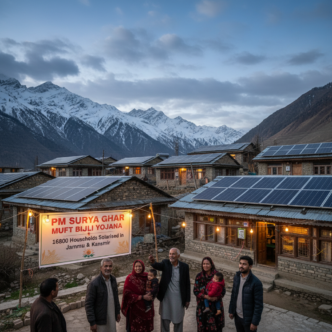
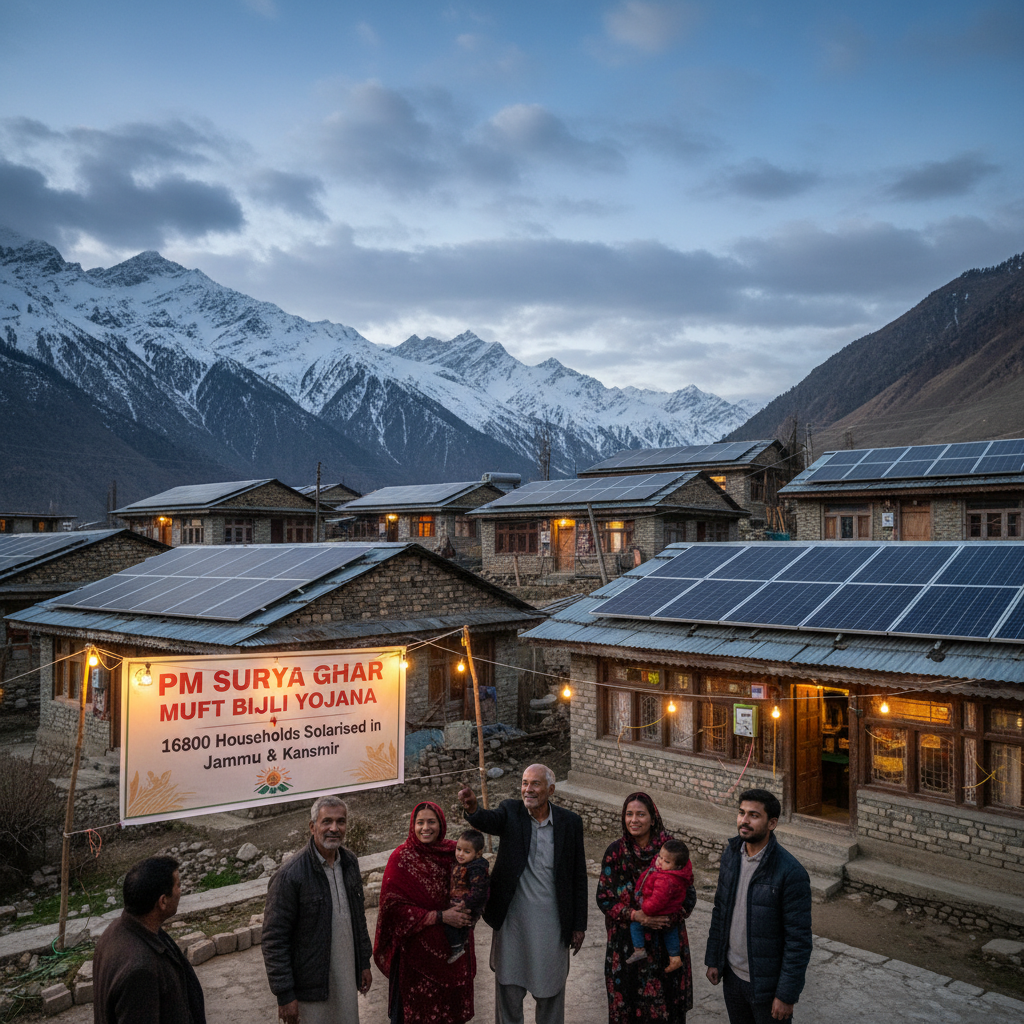
Implementation in Jammu & Kashmir – 16,800 Households Solarised
In the union territory of Jammu & Kashmir, the rollout of the PM Surya Ghar Muft Bijli Yojana has been executed through a coordinated effort between the local administration, the Power Development Department, and a network of accredited solar EPC contractors. A comprehensive household survey identified 16,800 eligible families across both rural valleys and semi‑urban peripheries. Eligibility was primarily granted to households lacking consistent grid connectivity and those classified below the poverty line. Priority was given to dwellings located in high‑altitude zones, homes equipped with indoor cooking facilities, and families that had previously benefited from the Pradhan Mantri Sahaj Bijli Har Ghar Yojana. The selection process leveraged data from the Aadhaar‑linked Socio‑Economic Caste Census, ensuring transparency and minimizing exclusion errors.
- Geographic focus on high‑altitude and remote villages
- Preference for households with indoor cooking facilities
- Integration with existing electrification programmes
Tangible Benefits for Citizens and the Local Economy
Beneficiaries of the PM Surya Ghar Muft Bijli Yojana have reported an average reduction of 30 % in monthly electricity expenses, translating into annual savings of up to INR 12,000 per household. The solar installations provide a dependable power source during the region’s notorious winter blackouts, enabling families to run lighting, fans, and small appliances without interruption. For local enterprises, particularly in tourism‑dependent towns like Pahalgam and Gulmarg, the steady supply of solar electricity has facilitated the operation of electric refrigeration units, point‑of‑sale devices, and communication tools, thereby boosting revenue and creating modest employment opportunities. Moreover, the presence of clean energy has been linked to improved health outcomes, as households are moving away from kerosene lamps and indoor wood‑burning stoves that contribute to indoor air pollution. 
Beyond individual savings, the scheme is fostering a broader cultural shift toward sustainable living. Educational institutions are integrating solar‑energy modules into their curricula, and community workshops are raising awareness about panel maintenance and energy efficiency. Early impact assessments indicate that households with solar roofs are more likely to adopt additional green technologies, such as solar water heaters and battery storage systems, amplifying the long‑term environmental benefits of the initiative.
Challenges, Financial Model and Future Outlook
Deploying solar projects in the rugged terrain of Jammu & Kashmir presents logistical hurdles, especially in transporting heavy PV modules and mounting structures to high‑altitude locations where road access is limited. To mitigate these challenges, the administration has partnered with regional logistics firms that specialize in mountain freight and has adopted modular mounting kits that can be assembled with minimal machinery. Financially, the central government shoulders 100 % of the capital cost, while state‑level responsibilities include monitoring, routine maintenance, and end‑user training. Beneficiaries are required to sign a simple declaration confirming that the system will be used exclusively for domestic purposes, ensuring compliance without imposing additional fiscal burdens.
A robust monitoring framework has been established using smart meters that transmit real‑time generation and consumption data to a national dashboard hosted by the Ministry of Power. This platform enables rapid identification of under‑performing installations and facilitates swift corrective actions, thereby safeguarding the scheme’s reliability metrics. Looking ahead, officials plan to expand coverage to an additional 5,000 households in the Kashmir Valley and the Ladakh region by the end of 2025, leveraging lessons learned from the initial phase to streamline procurement and installation processes. Continued investment in technical expertise, supply‑chain resilience, and community engagement is expected to sustain momentum, positioning the PM Surya Ghar Muft Bijli Yojana as a scalable model for nationwide rural electrification.
Stay updated with the latest Yojana schemes and government initiatives for better awareness and eligibility. For personalized guidance on accessing these benefits, reach out to us.