



Overview of PM Surya Ghar Yojana
The Prime Minister’s Surya Ghar Yojana, launched in January 2024, is India’s most ambitious push to democratise rooftop solar energy for residential consumers. By offering a blend of capital subsidies, low‑interest financing, and a transparent digital platform, the scheme aims to install over 10 million rooftop solar systems by 2027, adding an estimated 5 GW of clean capacity to the national grid. The initiative is positioned at the intersection of affordable electricity, climate mitigation, and job creation, seeking to shift the energy paradigm from centralized coal‑dominant generation to decentralized, consumer‑owned solar power. According to the Ministry of New & Renewable Energy (MNRE), the scheme aligns with India’s broader target of 500 GW of non‑hydro renewable capacity by 2030, as outlined in the India renewable energy roadmap. Early indicators suggest that the programme is already reshaping household energy consumption patterns, especially in high‑insolation states such as Rajasthan, Gujarat, and Maharashtra.
Key Objectives and Eligibility Criteria
The scheme rests on three core objectives: (1) reducing the upfront cost barrier for solar adoption, (2) ensuring a transparent subsidy and financing workflow, and (3) stimulating demand at the household level. Eligibility is open to all residential consumers who own a roof with adequate sunlight exposure and have a connected electricity connection. Priority is given to families classified as Economically Weaker Sections (EWS), who can receive subsidies of up to 60 % of the installed system cost, while general‑category households can claim up to 40 %. The scheme also mandates that installations be performed by MNRE‑certified solar installers, ensuring quality and safety standards. Applicants must provide proof of ownership or tenancy, a recent electricity bill, and a site‑specific solar feasibility report. Once approved, beneficiaries are enrolled in a ten‑year repayment schedule for any financed component, with interest rates as low as 3.5 % per annum.
Financing Mechanisms, Subsidy Structure, and Low‑Interest Loans
Financing under PM Surya Ghar Yojana combines direct cash subsidies with collateral‑free loans from a network of partner banks and non‑banking financial companies (NBFCs). The subsidy amount varies by state and socioeconomic category but typically covers up to 40 % of the total project cost for general households and up to 60 % for EWS families. The remaining balance can be financed through low‑interest loans that stretch over a decade, dramatically shrinking the payback period from the conventional 8‑10 years to approximately 4‑5 years. For instance, a 3 kW rooftop system costing ₹2.5 lakh may attract a ₹1 lakh subsidy for a general‑category applicant, with the balance financed at 3.5 % interest, resulting in a monthly EMI of roughly ₹2,200. This financial architecture is designed to make solar projects economically attractive even for middle‑income families. The scheme also permits the stacking of state‑specific top‑up subsidies, further enhancing affordability. Detailed subsidy calculators are available on the Surya Mitra portal, enabling applicants to estimate net out‑of‑pocket expenses before committing. 
Digital Transparency Tools: The Surya Mitra Portal
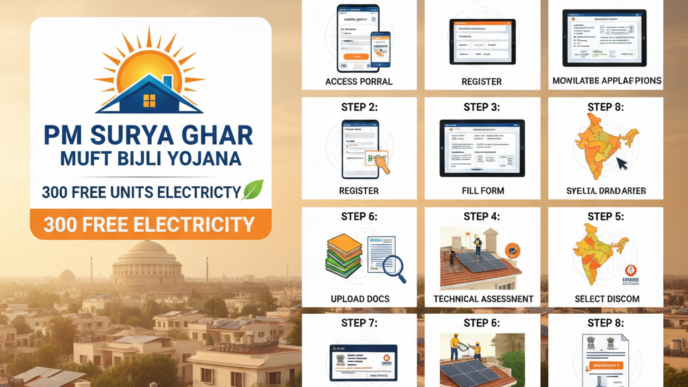
Transparency is a cornerstone of the initiative, and it is delivered through the Surya Mitra online portal – a one‑stop gateway that guides users from application to subsidy disbursement. The portal allows applicants to upload requisite documents, monitor the real‑time status of their request, and receive automated notifications at each milestone, such as approval, subsidy credit, and commissioning. Every approved installation is geo‑tagged and logged in the MNRE solar database, ensuring that each system is traceable and auditable. Independent third‑party auditors conduct periodic verification of subsidy claims, dramatically reducing the risk of fraudulent filings. In addition, the portal integrates with state electricity board (SEB) networks, enabling seamless data exchange about electricity consumption patterns and allowing utilities to plan for distributed generation impacts. Users can also access a built‑in FAQ section, video tutorials, and a chatbot that offers step‑by‑step guidance, making the process accessible even to those with limited digital literacy. For more information, visit the official PM Surya Ghar Yojana page.
Impact on Rooftop Solar Adoption and Household Savings
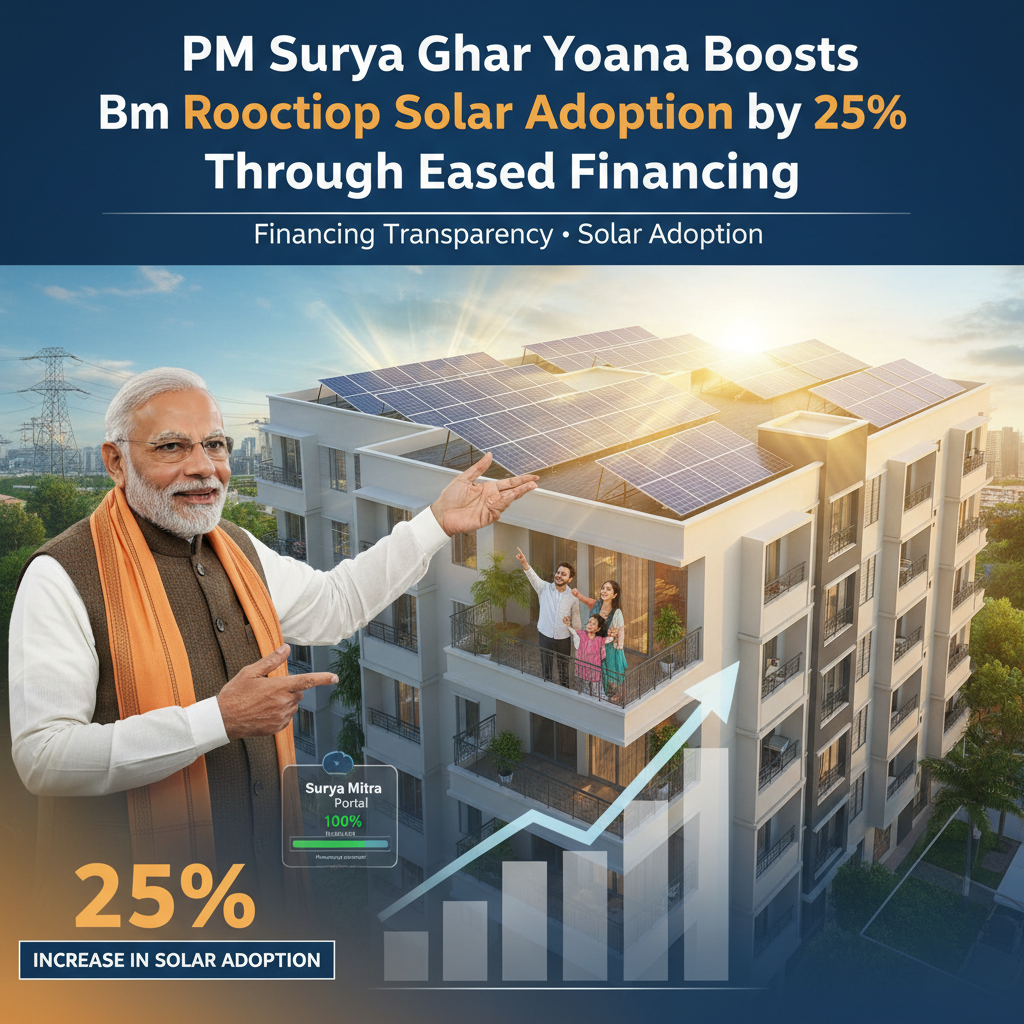
Since the rollout of PM Surya Ghar Yojana, rooftop solar installations have surged by approximately 25 % year‑over‑year, according to MNRE data released in February 2026. The growth is most pronounced in states with high solar irradiance, where approved installations have risen by over 30 % compared to the previous fiscal year. Case studies from Delhi and Bengaluru illustrate that participating households experience an average electricity bill reduction of 35 %, translating into annual savings of ₹15,000‑₹20,000 per family. Moreover, the scheme has contributed to peak‑load reduction during daylight hours, easing stress on the grid and deferring the need for costly peaker‑plant investments. According to the peak shaving literature, distributed solar can cut system‑wide congestion costs by up to 5 % in high‑loading zones. The increased adoption also spurs local economies by creating demand for skilled installers, procurement of balance‑of‑system components, and maintenance services, thereby fostering a nascent circular solar ecosystem across urban and rural locales.
Challenges, Mitigation Strategies, and Future Outlook
Despite the encouraging uptake, several hurdles persist. First, the supply of qualified solar installers varies widely across regions, leading to inconsistent installation quality. To address this, MNRE has launched a certification programme targeting the training of 50,000 installers by 2028, coupled with a quality‑ assurance audit framework that mandates periodic performance reviews. Second, financing constraints for low‑income households remain a barrier; the government is exploring additional micro‑finance partnerships and state‑level subsidy top‑ups to bridge the gap. Third, grid integration in remote or off‑grid locales requires upgrades to distribution infrastructure, a task that is being coordinated with SEBs through the Green Energy Corridor initiative. Looking ahead, analysts project that if the current momentum continues, rooftop solar could account for 15 % of India’s total solar capacity by 2030, up from the current 5 % share. Sustaining this trajectory will depend on policy stability, streamlined permitting processes, and continued private‑sector investment in solar manufacturing and EPC (Engineering, Procurement, Construction) services.
Economic, Environmental, and Employment Benefits
The rollout of PM Surya Ghar Yojana is poised to generate over 1.2 million direct and indirect jobs across the solar value chain by 2030, spanning installation, operations, manufacturing of photovoltaic (PV) modules, and ancillary services such as financing and insurance. From an environmental perspective, the scheme is expected to abate approximately 12 million tonnes of CO₂ emissions annually, an impact equivalent to removing 2.5 million conventional cars from Indian roads. By diversifying the energy mix and reducing reliance on fossil‑fuel‑based peaker plants, the initiative enhances grid stability and mitigates price volatility for end‑users. Renewable generation from residential rooftops also reduces transmission and distribution (T&D) losses, improving overall system efficiency by an estimated 2‑3 %. These environmental gains align with India’s commitments under the Paris Agreement and bolster the nation’s reputation as a climate‑leadership country on the global stage.
Community Engagement and Awareness Initiatives
To ensure widespread adoption, the Ministry of New & Renewable Energy has partnered with local Non‑Governmental Organizations (NGOs), Panchayat bodies, and academic institutions to conduct awareness drives in both urban and rural settings. These campaigns feature mobile workshops, live demonstration installations, and interactive webinars that explain the financial and environmental benefits of rooftop solar. Gram Panchayats receive dedicated liaison officers who assist residents with documentation, site‑selection, and subsidy applications. A toll‑free helpline and a 24/7 chatbot on the Surya Mitra portal provide real‑time assistance, ensuring that even users with limited digital literacy can navigate the process. Periodic surveys and feedback mechanisms allow the government to refine outreach strategies and address grievances promptly. For a deeper dive into community‑led renewable initiatives, see the Community renewable energy Wikipedia entry.
Future Roadmap, Investment Landscape, and Policy Context
Looking forward, the government plans to increase the subsidy ceiling by 10 % for states that meet or exceed renewable‑energy installation targets, encouraging competitive performance and fostering a race to the top among jurisdictions. Private investors are expected to inject an estimated $12 billion into the rooftop solar market through green bonds, venture‑capital funds, and institutional financing, driven by the scheme’s predictable revenue streams and policy certainty. The MNRE aims to expand the Surya Mitra platform to integrate with state‑level energy management systems, enabling automated subsidy disbursement upon successful commissioning and real‑time monitoring of generation metrics. By 2032, the target is to achieve 15 GW of cumulative rooftop solar capacity, representing a tenfold increase from current levels. Continuous monitoring, data analytics, and periodic policy reviews will guide adjustments to subsidy rates, financing terms, and quality standards, ensuring that the scheme remains responsive to technological advancements and market dynamics. For the latest updates on India’s renewable energy policy, consult the Renewable energy in India page.
Conclusion
In summary, PM Surya Ghar Yojana has succeeded in easing financing, improving transparency, and driving a measurable increase in rooftop solar adoption. The 25 % rise in installations underscores the effectiveness of combined financial incentives and digital oversight. While challenges remain, targeted interventions and policy coordination are poised to amplify the scheme’s impact, supporting India’s clean energy ambitions and delivering tangible savings to households across the nation.
Stay updated with the latest Yojana schemes and government initiatives for better awareness and eligibility. For personalized guidance on accessing these benefits, reach out to us.