


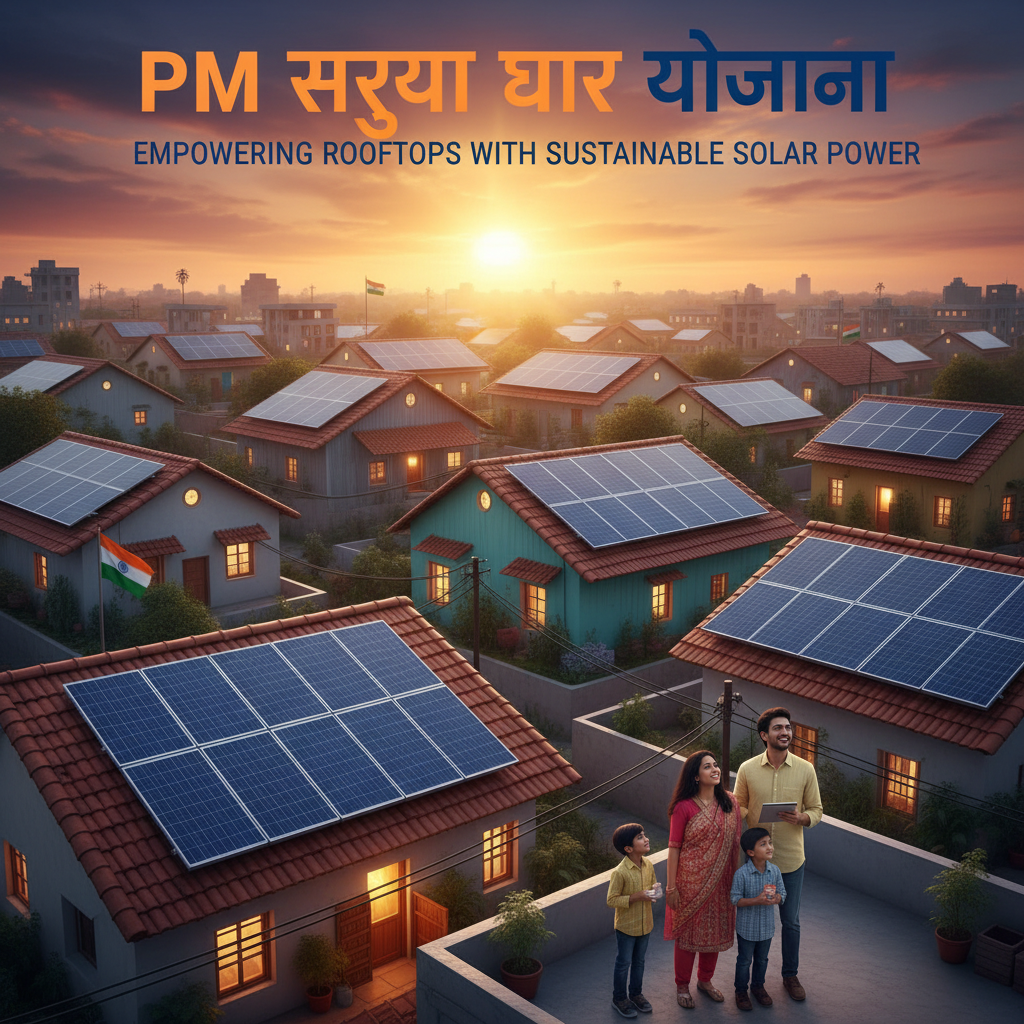
Surya Ghar Yojana: A Transformative Step in India’s Renewable Drive
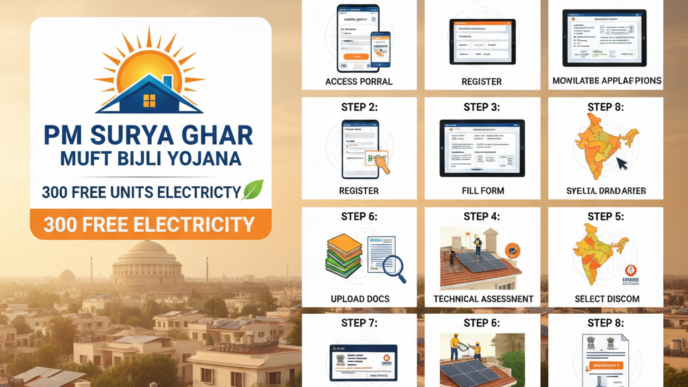
India’s renewable energy portfolio has reached a pivotal juncture with the launch of the PM Surya Ghar Yojana, a flagship programme unveiled by the Ministry of New and Renewable Energy (MNRE) to install solar photovoltaic (PV) systems on the rooftops of one crore households across the nation. The initiative, announced in the Union Budget 2024‑25, seeks to provide clean electricity, reduce utility bills, and promote energy independence for citizens from every corner of the country. By leveraging the abundant solar irradiance that India enjoys—averaging 5‑6 kWh/m²/day—the scheme aligns with the nation’s target of adding 250 GW of renewable capacity by 2030 and complements the broader climate commitments under the Paris Agreement. The government estimates an investment of roughly ₹15,000 crore over the next five years, sourced from a blend of central subsidies, state grants, and low‑interest loans, to make rooftop solar accessible to the masses.
Implementation Framework and Eligibility Criteria
The rollout of the Surya Ghar Yojana follows a structured, multi‑tiered approach that intertwines central oversight with state‑level execution. At the grassroots, state governments identify eligible households through a combination of socio‑economic surveys, panchayat listings, and verification of land ownership. The eligibility matrix includes:
- Roof Area: Minimum net usable area of 10 m², with structural integrity capable of supporting PV modules.
- Ownership: The applicant must be the legal owner or have a long‑term lease arrangement (minimum 25 years).
- Electrical Connection: Existing electricity connection from the local utility is mandatory for net‑metering integration.
- Income Threshold: Priority is given to low‑ and middle‑income families, though the scheme is open to all categories.
Once shortlisted, households engage with certified solar installers who provide end‑to‑end services — from design and engineering to commissioning. The MNRE mandates that all installations adhere to the National Electrical Code and safety standards set by the Bureau of Indian Standards (BIS). A centralized dashboard, accessible to both state nodal agencies and the Ministry, tracks installation progress, real‑time generation data, and subsidy disbursement, ensuring transparency and accountability. 
Complementing the technical framework, a robust awareness campaign — hosted on digital platforms, community radio, and local NGOs — educates citizens about the application process, documentation requirements, and the long‑term financial benefits of rooftop solar.
Financial Incentives and Funding Mechanism
One of the most compelling aspects of the Surya Ghar Yojana is its financial architecture, designed to lower the upfront barrier for adopters. For a typical 3 kW rooftop system — costing around ₹300,000 — the central government provides a subsidy of up to ₹120,000, disbursed in three instalments: 30 % upon approval, 40 % after successful installation, and the remaining 30 % after commissioning and performance verification. State governments may augment this central assistance with additional grants, especially in high‑potential renewable zones such as Rajasthan, Gujarat, and Tamil Nadu.
Beyond subsidies, the scheme facilitates low‑interest loans through participating banks, offering interest rates as low as 4.5 % per annum. The loan repayment schedule is calibrated to the expected savings on electricity bills, resulting in a payback period of approximately 4–5 years for many beneficiaries. Moreover, the integration of net‑metering enables households to export surplus generation to the grid, crediting them at the prevailing feed‑in tariff. This not only offsets consumption during cloudy periods but also creates an additional revenue stream, enhancing the overall economics of the investment.
From a macro‑economic perspective, the scheme contributes to India’s energy security by decentralizing power generation, curbing transmission and distribution (T&D) losses that currently exceed 8 % of total electricity produced. Distributed solar also reduces reliance on imported fossil fuels, aligning with the nation’s broader strategy of achieving energy independence and mitigating price volatility in the global oil market.
Impact on Citizens and Socio‑Economic Benefits
Early adopters of the Surya Ghar Yojana have reported substantial reductions in electricity expenses, with some households witnessing bill declines of up to 70 % after system commissioning. For instance, a family in Pune that installed a 4 kW system in early 2024 reported an average monthly saving of ₹2,200, translating into an annual saving of over ₹26,000. These savings are especially transformative for low‑income families, where electricity costs can represent a significant portion of household expenditure.
Beyond cost savings, the programme is generating employment opportunities across the solar value chain. According to a recent report by the Ministry of Skill Development, the rooftop solar sector is projected to create over 300,000 new jobs in installation, operations, and maintenance by 2027. This job creation is particularly beneficial for youth and women in rural areas, offering skill development pathways that align with the government’s “Skill India” mission.
Socially, the shift to solar power improves indoor air quality by reducing dependence on kerosene lamps and diesel generators, which emit particulate matter and contribute to respiratory ailments. In off‑grid or semi‑urban settlements, solar‑powered homes can run appliances during evening hours, enabling children to study after dark and micro‑enterprises to operate longer, thereby fostering economic upliftment. Moreover, the scheme’s emphasis on inclusive financing seeks to empower marginalized communities — such as Scheduled Castes, Scheduled Tribes, and women-headed households — by providing targeted subsidies and interest‑free loan facilities.
Challenges, Mitigation Strategies, and Policy Outlook
Despite its ambitious design, the Surya Ghar Yojana faces several implementation hurdles that the Ministry is actively addressing. The most prominent challenges include:
- Awareness Gap: Surveys indicate that nearly 40 % of households in remote regions remain unaware of the scheme’s benefits and procedural steps.
- Financing Constraints: Even with subsidies, small‑scale farmers and low‑income families may struggle with the residual capital outlay required for system installation.
- Regulatory Delays: Permitting processes in certain states can extend beyond the targeted six‑month window, causing project timelines to slip.
To bridge these gaps, the MNRE has launched a nationwide digital campaign featuring explanatory videos, FAQ portals, and interactive chatbots that guide applicants through each step. In parallel, pilot financing models such as “pay‑as‑you‑go” solar kits — where users make small monthly installments linked to energy credits — are being tested in partnership with fintech startups. These models aim to eliminate the need for large upfront payments, thereby expanding reach to the most vulnerable segments.
Addressing regulatory bottlenecks, the Ministry has convened a high‑level task force comprising state energy ministers, municipal officials, and BIS representatives. The task force is streamlining the approval workflow by introducing a single‑window clearance system, cutting average permitting time from 90 days to under 30 days. Additionally, a grievance redressal mechanism has been instituted, allowing applicants to lodge complaints related to delays, quality issues, or subsidy disbursement discrepancies.
Looking ahead, the Surya Ghar Yojana is poised to become a cornerstone of India’s decentralized energy strategy. Policy analysts anticipate that successful execution could catalyze a shift toward a “prosumer” model, where households evolve from passive consumers to active contributors of grid stability through distributed generation. This transformation aligns with India’s broader vision of a resilient, low‑carbon energy future and underscores the pivotal role of innovative welfare programmes in driving national development. As technology costs continue to decline and public perception gravitates toward sustainable living, the scheme is expected to accelerate rooftop solar adoption across urban, semi‑urban, and rural landscapes, cementing India’s leadership in the global renewable energy arena.
Stay updated with the latest Yojana schemes and government initiatives for better awareness and eligibility. For personalized guidance on accessing these benefits, reach out to us.