


What is PM Matsya Sampada Yojana?
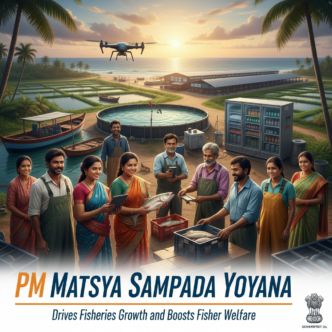
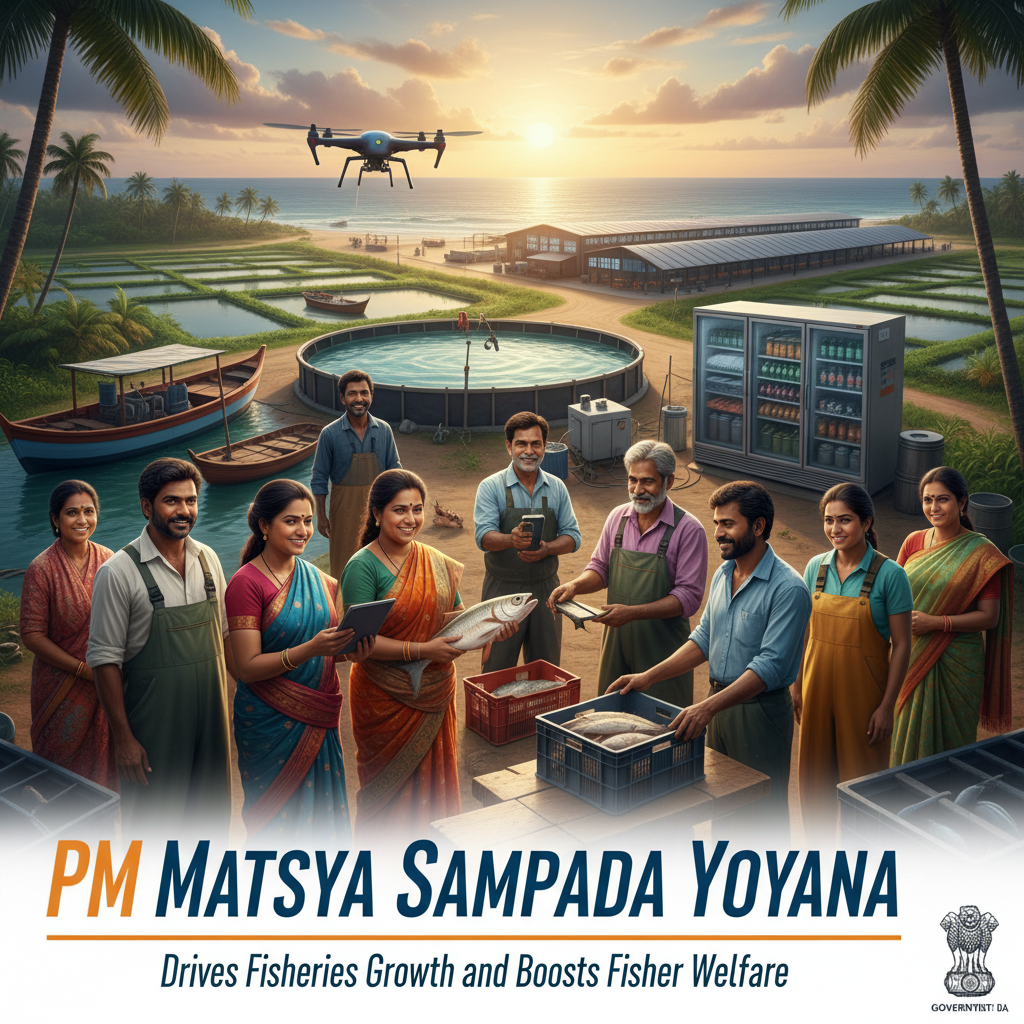
The PM Matsya Sampada Yojana is a flagship programme of the Government of India launched in 2020 under the Ministry of Fisheries, Animal Husbandry and Dairying. Valued at Rs 20,000 crore over five years, the scheme aims to transform the fisheries sector into a blue‑economy driver of growth, employment and nutrition. By integrating modern technology, market linkages and skill development, the initiative seeks to double the income of fishers within a five‑year horizon and achieve self‑sufficiency in fish production. The programme aligns with national goals of increasing fish output from 13.5 million tonnes to 22 million tonnes by 2025 and aligns with the Blue Economy vision.
Key Objectives, Targets and Financial Support
Under Matsya Sampada Yojana, the Ministry has set ambitious targets: raise fish production to 22 million tonnes, create 15 million new jobs, and expand aquaculture area to 2.5 million hectares by 2025. Financial assistance forms the backbone of the scheme. Eligible fishers can obtain up to 50 % capital subsidy for establishing inland or marine aquaculture units, while interest relief on working‑capital loans reduces borrowing costs for modern nets, pumps and water‑quality monitoring devices. A dedicated insurance package covers climate‑related losses, and bonus payments incentivise the cultivation of high‑value species such as shrimp and tilapia. These incentives are administered through state‑level fisheries agencies and are accessible to small‑scale fishers, women’s self‑help groups and tribal communities.
- Up to 50 % capital subsidy for aquaculture units
- Interest‑subvention on working‑capital loans
- Insurance coverage against climate risks
- Bonus payments for high‑value species
Infrastructure Development and Technological Innovation
A robust infrastructure network is central to the scheme’s success. The government is investing in a nationwide system of fisheries hubs that combine hatcheries, feed mills and processing units, enabling integrated value‑chain operations. State fisheries departments are being strengthened to coordinate local projects, while cold‑storage facilities are being installed at major coastal ports to curb post‑harvest losses, currently estimated at 30 % of the total catch. Technological adoption is encouraged through satellite‑based fish‑stock monitoring, drone surveillance for illegal fishing, and blockchain‑enabled traceability systems that enhance transparency. Capacity‑building programmes train fishers in Recirculating Aquaculture Systems (RAS) and biofloc technology, which improve yields while minimising environmental impact. Collaborations with research institutes facilitate the dissemination of best‑practice protocols and the commercialisation of genetically enhanced seed varieties. 
Market Linkage, Export Promotion and Inclusive Growth
To ensure remunerative prices, Matsya Sampada Yojana establishes direct market linkages between fish farmers and exporters. Dedicated export promotion cells work with trade missions to showcase Indian seafood in global markets, focusing on premium products such as prawns, lobsters and ornamental fish. An e‑commerce platform integrates fishery producers with urban consumers, allowing direct sales and higher margins. The scheme also targets women fishers, tribal communities and marginalised groups through skill‑training workshops, micro‑credit and nutrition‑sensitive production of fortified fish products aimed at combating protein deficiency. These inclusive measures are designed to lift rural livelihoods and contribute to the national goal of increasing seafood export earnings from $7 billion to $15 billion by 2027.
- Direct market linkages with exporters
- Export promotion cells for premium seafood
- E‑commerce integration for urban sales
- Skill training and micro‑credit for women and tribal fishers
Challenges, Implementation Status and Way Forward
Despite its ambitious scope, the implementation of PM Matsya Sampada Yojana faces several challenges. Fragmented governance across states, inadequate financing and climate variability can impede progress. To address these, the Ministry is piloting climate‑resilient aquaculture models, enhancing disaster‑risk management frameworks and introducing data‑driven monitoring tools for real‑time performance assessment. Periodic policy reviews, stakeholder consultations and capacity‑building initiatives are essential to refine the scheme’s impact. Early results show a 12 % rise in fish production during the 2022‑23 season, indicating that the programme is beginning to deliver on its promises. Continued investment in infrastructure, technology and inclusive policies will be crucial to realise the full potential of Matsya Sampada Yojana and secure sustainable fisheries for future generations.
Stay updated with the latest Yojana schemes and government initiatives for better awareness and eligibility. For personalized guidance on accessing these benefits, reach out to us.