


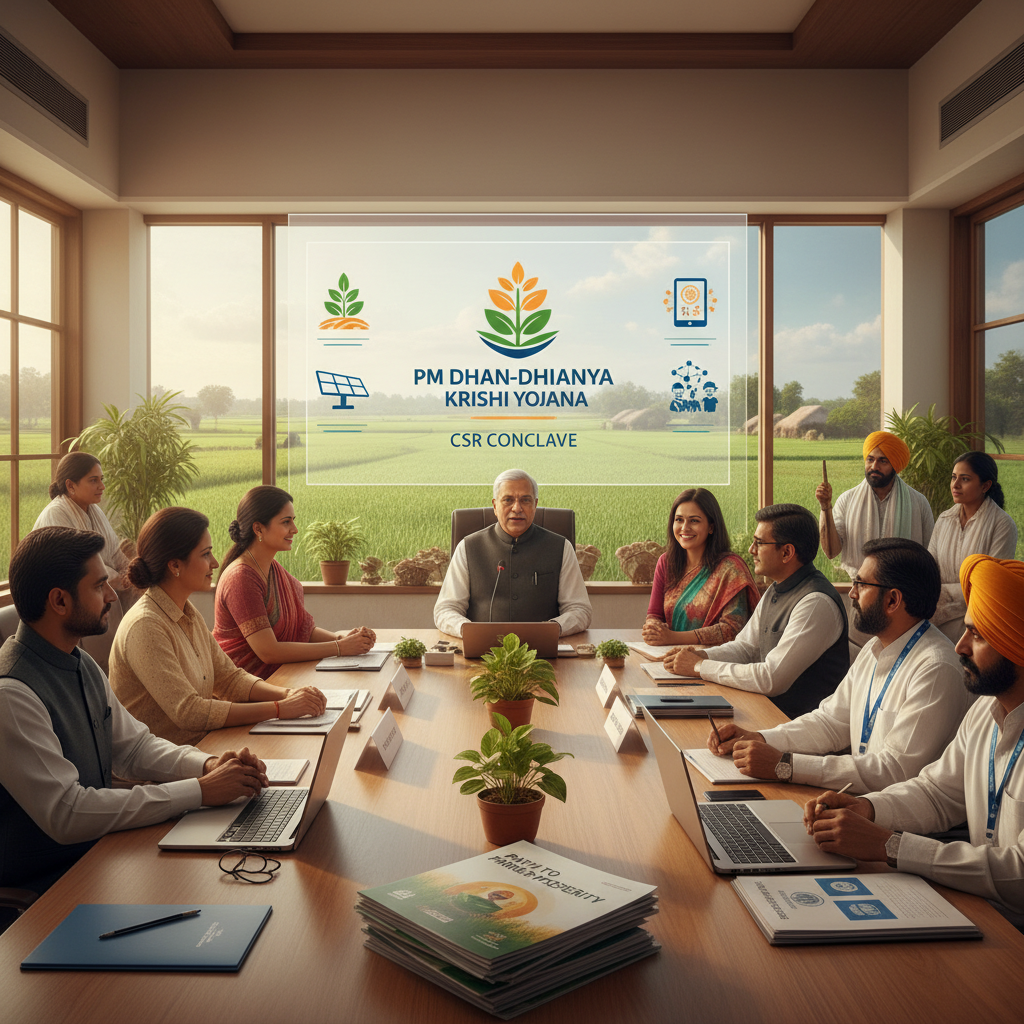
Overview of the CSR Conclave
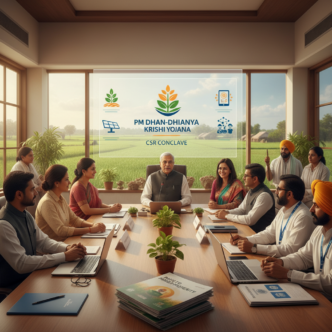
On 14 February 2026, the Department of Agriculture & Farmers Welfare, UNDP India, and the Bill & Melinda Gates Foundation convened a high‑level Corporate Social Responsibility (CSR) conclave to chart a roadmap for unlocking the full potential of the PM Dhan‑Dhaanya Krishi Yojana (DDKY). The event, held at the India Habitat Centre in New Delhi, brought together policymakers, private sector leaders, development experts, and farmer representatives under one roof to explore how corporate philanthropy can be strategically aligned with the flagship agricultural scheme.
The conclave was positioned as a catalyst for scaling DDKY’s impact, which aims to provide a minimum income support of ₹6,000 per acre per season to small and marginal farmers across 14 states, benefitting over 2.5 crore farmer families. By creating a platform for dialogue, the gathering sought to translate policy intent into concrete, on‑the‑ground interventions that can be funded through CSR budgets, thereby accelerating farmer prosperity and contributing to the broader Sustainable Development Goals (SDGs) for zero hunger and decent work.
Key Participants and Objectives
The opening session featured senior officials from the Ministry of Agriculture & Farmers Welfare, including the Secretary of the Department of Agriculture & Farmers Welfare, who outlined the scheme’s design, eligibility criteria, and implementation status. Representatives from UNDP India’s Country Office highlighted the organization’s role in facilitating multi‑stakeholder platforms that bridge policy and practice, while senior leaders from the Gates Foundation shared insights from their long‑standing agricultural development programmes in India. 
Private sector participation was led by CEOs and CSR heads of major agribusiness firms, renewable energy companies, fintech startups, and cooperative societies. The primary objectives of the conclave were to:
- Identify scalable models for integrating DDKY benefits with corporate CSR funds.
- Showcase successful pilot projects that have enhanced farmer incomes and productivity.
- Define actionable recommendations for policy‑private collaboration.
Highlights of Deliberations
During the inaugural address, the Secretary emphasized that DDKY is designed to supplement the earnings of eligible farmers whose landholdings do not exceed two hectares, ensuring a baseline income of ₹6,000 per acre per cropping season. He noted that the scheme’s coverage has expanded to include 14 states, reaching approximately 2.5 crore families, and that its implementation is overseen by a dedicated joint‑secretary-level committee.
UNDP India’s Country Director underscored the importance of data‑driven interventions and real‑time monitoring, stating that the organization will continue to support the government in building robust impact assessment frameworks. The Gates Foundation pointed to its extensive work in seed‑system strengthening and digital agriculture, stressing that evidence‑based approaches are critical for scaling successes.
A panel discussion explored three thematic pillars:
- Financing Mechanisms: Mechanisms to channel CSR funds into DDKY‑linked irrigation, seed, and credit initiatives, including the creation of a dedicated DDKY‑CSR fund.
- Technology Adoption: Leveraging precision agriculture, mobile advisory services, and digital land records to boost productivity and reduce input costs.
- Market Linkages: Connecting farmers with e‑commerce platforms, APMC reforms, and bulk procurement contracts to ensure remunerative prices.
Pilot Projects Showcased
Four pilot initiatives were presented as case studies, illustrating how CSR capital can be leveraged to amplify DDKY outcomes:
- Solar‑Powered Irrigation for Maharashtra Farmers: A partnership between a renewable energy firm and a state cooperative deployed solar pumps to 1,200 smallholders, resulting in a 30 % increase in crop yield and a 12 % reduction in irrigation costs.
- Seed‑Bank Digital Marketplace: Developed with a fintech startup, an online portal enables farmers to access certified seeds directly, cutting procurement time by 45 days and reducing input costs by approximately 12 %.
- Mobile Extension Service: A voice‑based advisory platform delivers weather forecasts, pest alerts, and best‑practice tips to 50,000 farmers in Uttar Pradesh, improving decision‑making and reducing post‑harvest losses.
- Collective Marketing Hub: A cooperative model aggregates produce from 200 villages, negotiates bulk contracts with processors, and guarantees minimum support prices, thereby improving net returns for participating farmers.
Impact metrics from these pilots indicate that integrating CSR resources with DDKY can accelerate income growth. Districts where solar irrigation was introduced reported an 18 % rise in average household earnings within the first harvest cycle, while participation in the seed‑bank marketplace translated into a 12 % cost saving on inputs, directly boosting net farm profitability.
Policy Recommendations and Implications for Farmer Prosperity
The conclave concluded with a set of policy recommendations aimed at scaling impact across the country:
- Establish a dedicated DDKY‑CSR fund, managed by a joint steering committee comprising government officials, CSR officers, and civil‑society experts.
- Introduce tax incentives for private companies that allocate a minimum percentage of their CSR budget to DDKY‑aligned projects.
- Mandate impact reporting standards for CSR initiatives linked to agricultural schemes, with independent verification to ensure transparency.
- Promote public‑private research consortia to develop climate‑resilient crop varieties suited for DDKY‑beneficiary regions.
Experts argue that replicating these models nationwide could lift millions of smallholder families out of poverty, aligning with the SDGs for zero hunger and decent work. Early data suggest that integrating CSR capital with DDKY can accelerate income growth, improve productivity, and enhance market access for farmers, thereby creating a virtuous cycle of prosperity.
Furthermore, the recommendations are expected to foster stronger collaboration between the Ministry of Agriculture, UNDP India, the Gates Foundation, and the private sector, paving the way for a more coordinated and evidence‑based approach to agricultural development.
Next Steps and Call to Action
Following the conclave, the Department of Agriculture & Farmers Welfare announced a roadmap for the next phase of DDKY implementation, which includes:
- Expanding the scheme to cover an additional 5 million farmer families by 2028.
- Launching a national DDKY‑CSR portal to match corporate projects with community needs, facilitating seamless proposal submissions and project tracking.
- Conducting a mid‑term review in collaboration with UNDP and the Gates Foundation to assess progress, refine strategies, and disseminate best practices.
Stakeholders are urged to submit proposals for CSR‑linked DDKY projects through the upcoming portal, with priority given to initiatives that demonstrate measurable socioeconomic impact. In this regard, the Ministry has partnered with the National e‑Governance Division to develop a user‑friendly digital interface that streamlines application processing and ensures real‑time monitoring of project outcomes.
By harnessing corporate philanthropy, technological innovation, and robust public‑private partnerships, the DDKY scheme is poised to become a cornerstone of India’s agricultural transformation, delivering tangible benefits to millions of smallholder farmers and contributing to the nation’s broader development agenda.
Stay updated with the latest Yojana schemes and government initiatives for better awareness and eligibility. For personalized guidance on accessing these benefits, reach out to us.