




PM Awas Yojana Urban 2.0: 2.88 Lakh Houses Sanctioned
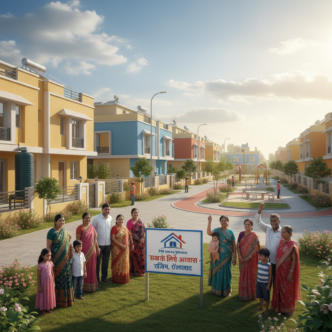
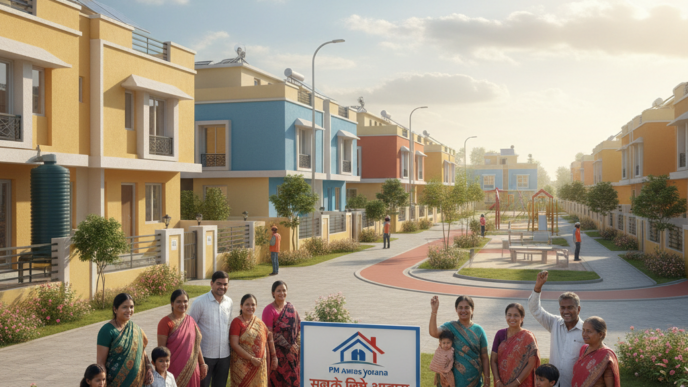
The Ministry of Housing and Urban Affairs announced on 15 September 2025 that more than 2.88 lakh houses have been sanctioned under the Pradhan Mantri Awas Yojana – Urban 2.0 tranche, marking a decisive acceleration in affordable‑housing delivery across India’s metropolitan corridors. This batch of approvals follows the earlier rollout that targeted low‑income families in congested zones of Delhi, Mumbai, Bengaluru, Kolkata and Hyderabad. With each sanctioned unit linked to a dedicated funding stream, the government projects that construction activity will intensify, shortening the timeline for families awaiting formal ownership titles.
These approvals are not merely statistical milestones; they represent a concrete step toward reducing the nation’s housing deficit, which the United Nations estimates at over 19 million units. By prioritising high‑density urban cores, the scheme aligns with the broader objective of Sustainable Development Goal 11, which calls for inclusive, safe and resilient cities. Stakeholders anticipate that the momentum generated by this tranche will ripple through related sectors—banking, infrastructure and construction—creating a multiplier effect on employment and economic activity.
To underscore the significance, the Minister of Housing remarked that “the scale of this sanction underscores the government’s unwavering commitment to ensure that every citizen, regardless of income, can aspire to own a dignified home.” This sentiment resonates with the aspirations of millions of urban dwellers who have long navigated the precarious balance between rent and stability. 
- Sanctioned houses: 2.88 lakh
- Covered cities: Delhi, Mumbai, Bengaluru, Kolkata, Hyderabad
- Focus: low‑income families in informal settlements
Read more on Pradhan Mantri Awas Yojana (Wikipedia)
Funding and Allocation Details
The financial backbone of the latest tranche rests on an earmarked allocation of INR 9,800 crore from the central budget, distributed across states in proportion to their urban housing deficits. States such as Maharashtra and Tamil Nadu receive a larger slice of the pie, reflecting the sheer scale of slum populations within their metropolitan regions. This state‑wise financing model is designed to fast‑track land acquisition, clear bureaucratic bottlenecks and ensure that projects move from blueprint to brick within a compressed timeframe—often as short as 18 months from approval to completion.
In addition to direct grants, the Ministry encourages public‑private partnerships (PPPs) wherein private developers can leverage the government’s capital to build multi‑storey affordable housing complexes, provided they adhere to strict affordability caps and quality standards. The infusion of private expertise is expected to inject best‑in‑class construction techniques, accelerate schedules and enable the integration of green building practices.
Key components of the allocation strategy include:
- State‑wise funding: Maharashtra – INR 2,100 crore, Tamil Nadu – INR 1,800 crore
- PPP incentives: 10 % concession on land rates for approved developers
- Green certification: mandatory LEED‑Gold rating for projects exceeding 5 MW built‑up area
Ministry of Housing & Urban Affairs – Official Portal
Eligibility Criteria and Target Beneficiaries
Eligibility under the Urban 2.0 iteration is anchored on a transparent, income‑based framework that aligns with the socio‑economic profile of urban India. Families whose annual household income does not exceed INR 12 lakh are classified as eligible, while those earning between INR 12 lakh and INR 18 lakh are placed in the “Economically Weaker Section” (EWS) bracket, which enjoys a separate quota. Applicants must also demonstrate that they currently lack pucca (permanent) housing or are residing in rented accommodations that lack basic amenities.
The criteria extend beyond income to incorporate social vulnerability indicators. Women‑head households, senior citizens above 60 years, and families residing in notified slums receive priority weighting. Additionally, the scheme offers a special “Re‑habilitation” category for displaced families from demolition drives, ensuring that those rendered homeless by urban renewal projects are captured in the beneficiary pool.
Eligibility documentation typically includes:
- Proof of income (latest income tax return or salary slips)
- Land or property ownership records
- Residence proof (ration card, voter ID, or utility bill)
- Affidavit confirming present housing status
According to the Ministry, over 62 % of approved applicants fall within the EWS and low‑income categories, underscoring the scheme’s focus on the most vulnerable segments of the urban populace.
Implementation Strategy and State‑Level Execution
Execution of the Urban 2.0 initiative is a collaborative effort between the Ministry and state execution agencies, each of which plays a pivotal role in land pooling, approval routing and construction monitoring. The agencies are empowered to adopt a “fast‑track” permitting process, cutting down review times for building plans from an average of 90 days to under 30 days where possible. This streamlined approach is complemented by the introduction of a digital dashboard that aggregates real‑time progress metrics, enabling both central and state authorities to spot delays and deploy corrective measures promptly.
State agencies are encouraged to leverage technology‑driven monitoring tools, such as GIS‑based site mapping and AI‑enabled quality inspections, to ensure that construction adheres to specified design standards and environmental safeguards. Moreover, capacity‑building programmes are being rolled out for municipal officials, focusing on project management, financial oversight and grievance redressal mechanisms.
Key implementation pillars include:
- Land acquisition through government‑owned vacant parcels or through negotiated exchanges with private owners
- Strategic use of PPP models to tap into private capital and expertise
- Integrated beneficiary registration platforms to minimise duplication and fraud
- Continuous evaluation via a centrally monitored KPI framework
These measures collectively aim to reduce project cycles, enhance transparency and safeguard the interests of both beneficiaries and investors.
India.gov.in – Government Portal
Impact on Urban Housing Landscape
The early impact of the sanctioned houses can already be traced in several pilot cities where construction has commenced. Preliminary data released by the Ministry indicate that the housing scarcity index—measured as the ratio of eligible households to available affordable units—has fallen by approximately 12 % in Bengaluru and 9 % in Hyderabad within the first quarter of implementation. These reductions translate into tangible improvements for families who, until now, faced chronic rent burdens and precarious tenure security.
Beyond quantitative metrics, the scheme has generated a ripple effect on local economies. Construction activities have created an estimated 150,000 direct jobs and an additional 300,000 indirect positions in ancillary sectors such as material supply, logistics and hospitality. This employment boost not only stimulates income generation but also contributes to skill development among a largely unskilled urban workforce.
Moreover, the introduction of well‑planned, multi‑storey affordable housing complexes is reshaping city skylines, offering residents access to essential services—schools, health centres and public transport—within walking distance. Urban planners view this as a critical step toward curbing the unchecked expansion of informal settlements and fostering integrated, mixed‑use neighbourhoods.
Long‑term projections suggest that sustained delivery under Urban 2.0 could cut the national urban housing deficit by up to 1.5 million units by 2030, a milestone that would significantly enhance living standards and reduce socioeconomic disparities across metropolitan India.
Public Response and Expert Opinions
Beneficiaries have expressed palpable optimism, describing the allotment of a permanent home as “a transformative milestone that restores dignity and hope.” Many first‑time owners recounted how the security of tenure enabled them to enrol children in better schools and plan for future investments, ranging from small businesses to agricultural plots on peripheral lands.
Urban planning experts, however, caution that delivering bricks alone is insufficient for sustainable urban development. They stress the importance of complementary measures such as robust public transit networks, reliable water and sanitation supplies, and inclusive zoning policies that prevent the emergence of isolated low‑income enclaves. “Housing must be integrated with a holistic urban ecosystem,” noted Dr. Anjali Mehra, Professor of Urban Studies at the Indian Institute of Technology Delhi. “Otherwise, the gains in shelter may not translate into broader improvements in quality of life.”
Economists also highlight the macro‑economic upside. By placing more money in the hands of low‑income households through reduced rent expenditures, consumption patterns are expected to shift, potentially spurring demand in retail, education and healthcare sectors. This demand-side stimulus aligns with the government’s broader agenda of inclusive growth and could act as a catalyst for post‑pandemic economic recovery.
Civil society organisations have welcomed the initiative but have also called for stronger grievance redressal mechanisms and continuous monitoring to ensure that benefits reach the intended beneficiaries without leakage or corruption.
Future Outlook and Next Steps
Looking ahead, the Ministry has outlined a roadmap that includes refining eligibility parameters to accommodate evolving income landscapes, expanding the approved unit pool to meet rising demand and streamlining loan disbursement procedures for faster capital flow. Plans are underway to integrate the scheme with the national financial inclusion ecosystem, enabling beneficiaries to access micro‑mortgages at preferential rates.
Stakeholder engagement will be deepened through periodic consultative workshops that bring together municipal officials, private developers, beneficiary representatives and NGOs. These forums aim to capture feedback, address emerging challenges and fine‑tune implementation tactics in real time.
Additionally, the government intends to pilot innovative construction technologies—such as prefabricated modular housing and 3‑D‑printed building components—to further compress timelines and lower costs. Such pilots are slated to commence in early 2026 in select cities, with the intention of scaling successful models nationwide.
Overall, the trajectory of the Pradhan Mantri Awas Yojana – Urban 2.0 reflects a strategic convergence of policy ambition, fiscal commitment and collaborative execution, positioning India to make measurable strides toward universal housing access.
Stay updated with the latest Yojana schemes and government initiatives for better awareness and eligibility. For personalized guidance on accessing these benefits, reach out to us.