


Introduction
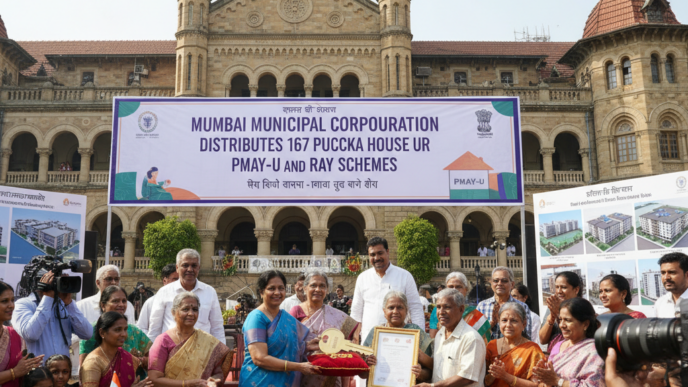
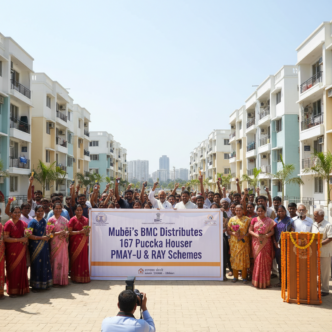
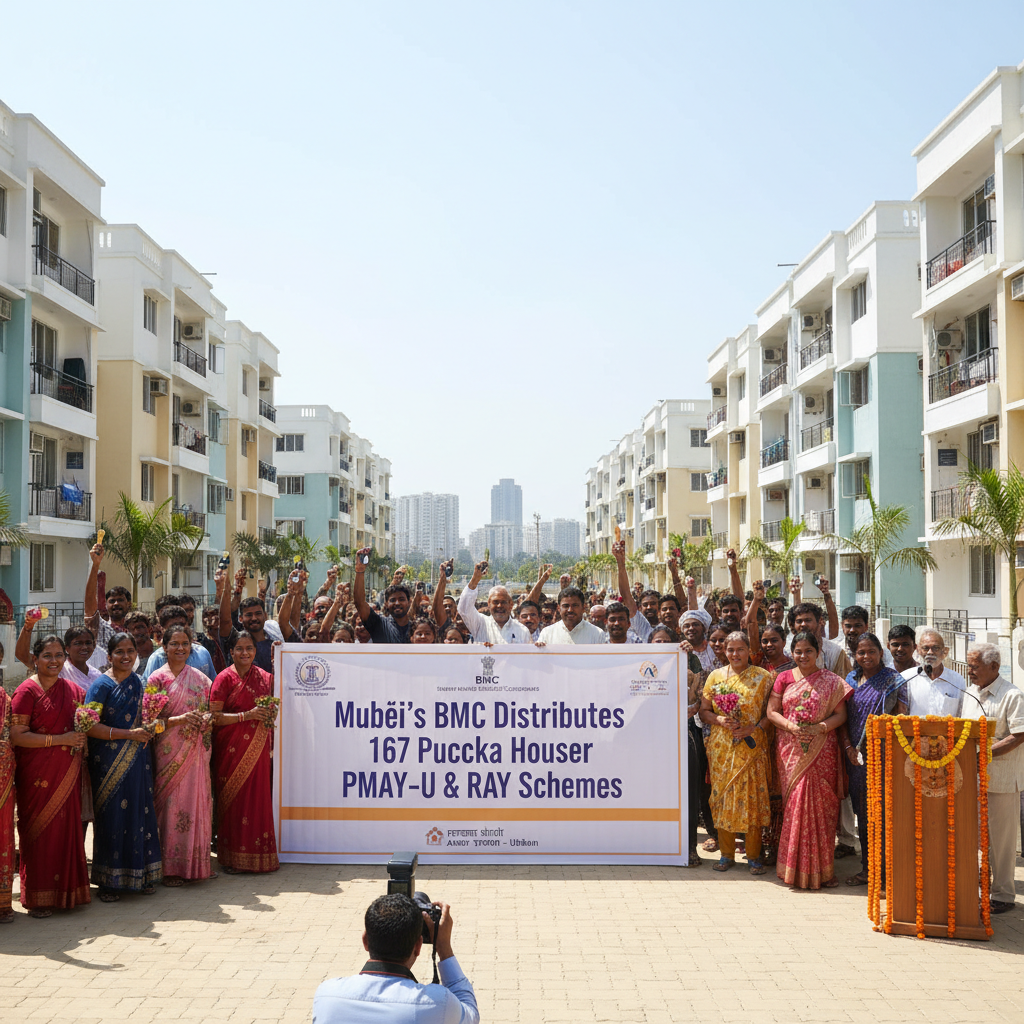
In a landmark move for affordable housing in India’s financial capital, the Brihanmumbai Municipal Corporation (BMC) recently distributed 167 pucca houses to eligible low‑income families under the Pradhan Mantri Awas Yojana‑Urban (PMAY‑U) and the Rural Awaas Yojana (RAY). The hand‑over ceremony, held in early February 2026, marked the first major delivery of fully constructed, fire‑resistant dwellings in urban Mumbai under these central schemes. Each unit, built with cement concrete, durable roofing and essential utilities, aims to replace kutcha (unpaved) shelters that have long plagued informal settlements across the city. The initiative underscores a coordinated effort between the Ministry of Housing and Urban Affairs, the BMC, and local corporators to accelerate the “Housing for All by 2022” agenda, providing a tangible step toward safer, healthier living conditions for Mumbai’s urban poor.
Background of PMAY‑U and RAY
Launched in 2015, PMAY‑U targets the urban poor, defined as households living in notified slums or lacking basic amenities, and seeks to achieve “Housing for All” by the end of 2022 through three verticals: slum redevelopment, affordable housing in partnership with private developers, and individual house construction assistance. The scheme offers an interest subsidy of up to 6.5 % on home loans, a cash assistance of ₹2.5 lakh for beneficiaries constructing their own pucca houses, and direct allotment of ready‑made units where feasible. Complementing this, RAY, introduced in 2016, extends similar benefits to the rural poor, emphasizing the construction of durable, weather‑proof homes using locally sourced materials. Both schemes operate on a beneficiary‑centric model, requiring rigorous verification of income, land records and Aadhaar details to prevent duplication. Over the past few years, the central government has allocated more than ₹40,000 crore to these initiatives, reflecting a strong political commitment to address the housing deficit of over 20 million urban households.
Details of the Recent Distribution
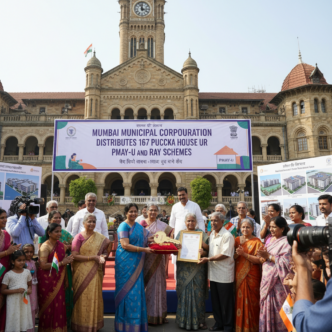
The latest distribution involved the allotment of 167 fully constructed pucca houses spread across multiple wards in Mumbai, from the bustling suburbs of Andheri to the industrial corridors of Mulund. These houses were built using resilient materials that meet the National Building Code, featuring reinforced cement concrete walls, fire‑rated roofing, and pre‑installed electricity and water connections. Each unit includes a basic sanitation kit, a small balcony and a dedicated space for a cooking stove, designed to improve daily living standards. Selection criteria were stringent: families had to demonstrate an annual income below ₹3 lakh, reside in a notified slum, and own no other pucca property. A multi‑stage verification process cross‑checked Aadhaar, income certificates, land tenancy records and prior housing ownership to ensure transparency and curb fraud. The distribution ceremony, attended by BMC’s Housing Department officials, municipal corporators and representatives from the Ministry of Housing, featured the formal handing over of keys, title deeds and subsidy disbursement letters, symbolising a seamless transfer of ownership from the state to the beneficiaries. 
- Number of houses distributed: 167
- Distribution date: Early February 2026
- Location: Various wards across Mumbai
- Funding source: Central government under PMAY‑U and RAY
Impact on Beneficiaries
For the newly settled families, the arrival of pucca homes translates into immediate improvements in health, safety and socioeconomic prospects. Residents reported a sharp decline in monsoon‑related illnesses such as leptospirosis and dengue, attributing the change to better ventilation, damp‑proof walls and secure roofing that mitigate water ingress. Access to reliable electricity and piped water has also reduced reliance on costly temporary connections and informal water vendors. Beyond rudimentary shelter, the new addresses enable beneficiaries to open bank accounts, apply for micro‑enterprise loans and enrol their children in formal schools without the stigma often attached to informal settlements. Women in the community, in particular, have expressed a heightened sense of security and agency, citing the permanent structure as a foundation for personal and economic empowerment. Moreover, the stable housing environment has spurred local entrepreneurship, with several beneficiary families starting small‑scale enterprises such as tailoring units and street‑food stalls, thereby contributing to the broader urban economy.
Government’s Commitment and Future Outlook
The successful rollout of 167 houses reaffirms the Indian government’s unwavering commitment to the “Housing for All” mission. In the 2025‑26 budget, the Ministry of Housing and Urban Affairs earmarked an additional ₹12,500 crore to accelerate housing construction under PMAY‑U, with a focus on public‑private partnerships and the adoption of innovative building technologies such as prefabricated panels and 3‑D‑printed structures. Policy reforms are also streamlining the approval process, cutting down the time required for land acquisition and building plan sanctions by up to 40 %. Looking ahead, BMC officials have announced plans to identify and develop at least three more sites across the city, each slated to deliver between 200 and 500 pucca units by 2028. These projects will leverage renewable energy sources, rain‑water harvesting systems and modular construction methods to reduce costs and environmental impact. By scaling up the model pioneered in Mumbai, other metropolitan municipalities can replicate the integrated approach, thereby extending the benefits of secure, affordable housing to millions of urban poor across India.
Role of Citizens and NGOs
Community participation has been a cornerstone of the scheme’s implementation, with citizens playing an active role in identifying eligible families and ensuring equitable distribution. Non‑governmental organizations (NGOs) partnered with BMC to conduct door‑to‑door surveys, host awareness workshops and provide legal assistance to applicants navigating the complex documentation requirements. These collaborations have enhanced outreach to marginalized groups, including migrant workers and informal sector laborers, who might otherwise be excluded from the formal selection process. Transparency portals installed on the BMC website allow the public to track the status of applications, grievance redressal and fund allocation, fostering accountability and trust. Furthermore, citizen volunteer groups have organized “housing walks” to monitor construction progress and report any deviations from quality standards, thereby acting as watchdogs that uphold the integrity of the program. Such synergistic efforts not only streamline the delivery of housing units but also embed a sense of ownership among beneficiaries, strengthening the social fabric of the communities being transformed.
Conclusion
The recent distribution of 167 pucca houses by the Brihanmumbai Municipal Corporation under PMAY‑U and RAY exemplifies how coordinated action between central and municipal authorities can translate national housing policy into concrete, on‑the‑ground results for the urban poor. By delivering safe, durable and amenity‑rich homes, the scheme not only improves living standards but also unlocks economic opportunities and social inclusion for thousands of families. As BMC prepares to scale up its housing pipeline, the success of this initial batch serves as a blueprint for other cities seeking to replicate an integrated, transparent and citizen‑centric approach to affordable housing. Continued collaboration among government agencies, NGOs and the public will be essential to sustain momentum, ensure quality, and ultimately achieve the vision of “Housing for All” across India.
Stay updated with the latest Yojana schemes and government initiatives for better awareness and eligibility. For personalized guidance on accessing these benefits, reach out to us.