


MMTY Yojana Bus Service Expansion in Amritsar
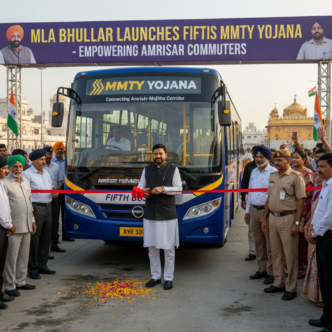
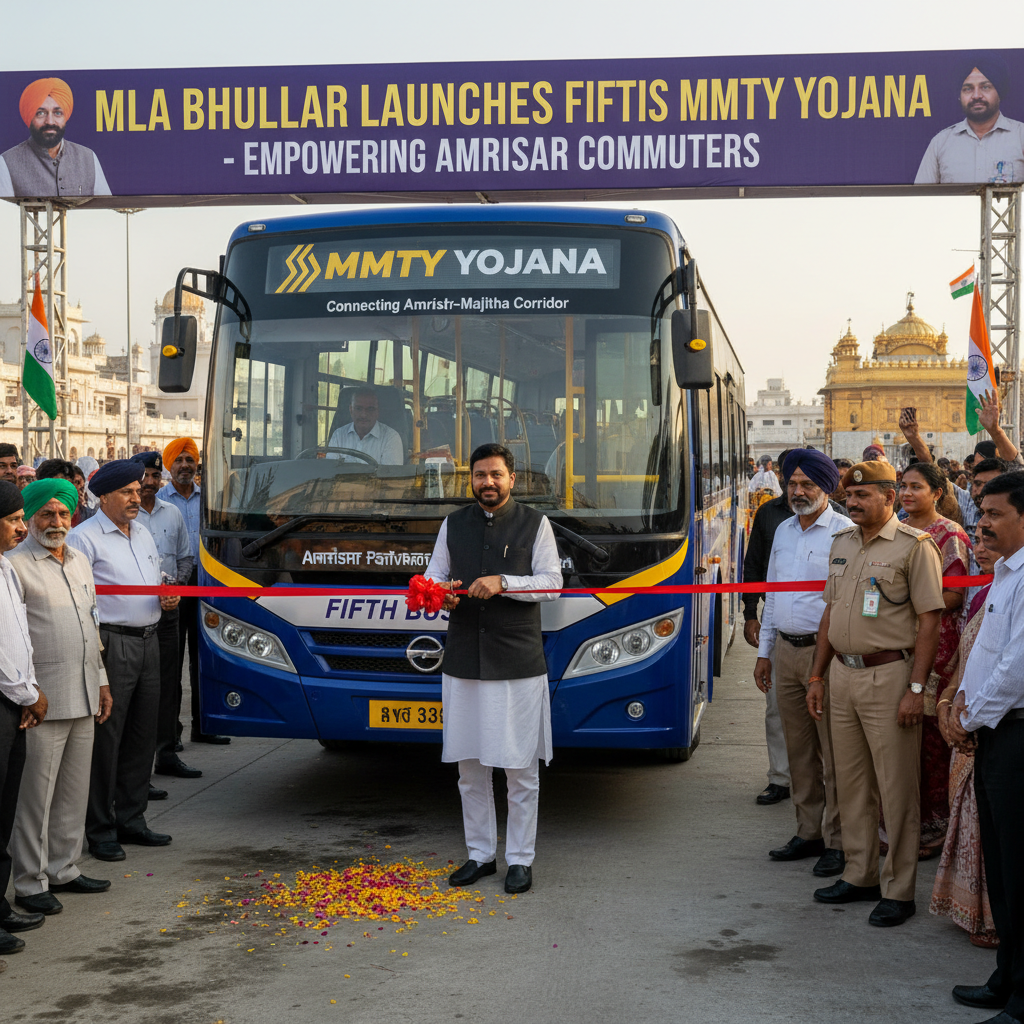
Amid rising urban congestion and growing commuter demand, the Punjab government’s MMTY Yojana bus initiative took a decisive step forward with the inauguration of its fifth dedicated bus in Amritsar on February 15, 2026. Member of the Legislative Assembly (MLA) Harjit Singh Bhullar flagged off the new vehicle in a ceremony attended by senior officials from the Punjab State Road Transport Corporation (PSRTC), local community leaders, and media representatives. The event underscored the administration’s commitment to revamping public transportation connectivity across key urban corridors, particularly the Amritsar‑Majitha route that links suburban pockets to the city’s commercial hub.
This fifth bus is part of a broader strategy to augment the existing fleet under the MMTY Yojana, a state‑level scheme launched in 2022 to improve last‑mile connectivity, reduce travel wait times, and curb vehicular emissions. According to the official Public Transport in India overview, the scheme is modeled after successful urban transport upgrades in cities like Chandigarh and Delhi, emphasizing high‑frequency service, modern amenities, and environmentally sustainable operations.
Fifth Bus Flagged Off – Details and Features
The newly commissioned bus, a 45‑seat Mercedes‑Benz model compliant with Bharat Stage VI emission norms, brings a suite of contemporary features to the Amritsar‑Majitha corridor. Passengers can expect air‑conditioned seating, ergonomic interiors, and real‑time tracking via a dedicated smartphone application. The bus operates on a tight schedule, arriving approximately every 15 minutes during peak hours, a frequency designed to significantly cut down commuter waiting periods. 
Equipped with low‑emission technology, the vehicle aligns with national goals to transition public fleets toward cleaner fuels. Its procurement was executed through a public‑private partnership that involved local manufacturers, ensuring cost‑effective acquisition while supporting regional industry. The bus also integrates with the upcoming mobile ticketing platform, enabling seamless fare payment and route information for users.
Benefits for Citizens and Economic Ripple Effects
Transport analysts highlight a multitude of advantages resulting from the expanded MMTY Yojana bus service. First, daily commuters experience reduced travel time; the 15‑minute interval cuts average waiting periods by nearly half compared to the previous schedule. Second, the modern fleet encourages a shift from private vehicles to public transit, contributing to lower carbon emissions. Early data from the Punjab Pollution Control Board suggests that increased bus usage on the Amritsar‑Majitha corridor could reduce particulate matter concentrations by up to 8%, yielding measurable health benefits for residents.
From an economic perspective, the improved connectivity has sparked activity in peripheral commercial zones. Small businesses near bus stops have reported a 10% surge in footfall, translating into higher revenues and new job opportunities. Moreover, enhanced mobility supports tourism by providing reliable access to heritage sites such as the Golden Temple and Jallianwala Bagh, bolstering local economies. Community surveys conducted by the municipal corporation reveal that 78% of respondents anticipate a noticeable improvement in travel comfort and punctuality, reflecting strong public endorsement of the initiative.
Government’s Commitment and Future Roadmap
During the inauguration, MLA Harjit Singh Bhullar emphasized that the MMTY Yojana transcends mere fleet expansion; it is a cornerstone of a sustainable mobility ecosystem that empowers every citizen. “Our vision is to create a transport network that is efficient, affordable, and environmentally responsible,” he stated. The government has earmarked an additional INR 120 crore in the current fiscal budget for the scheme, marking a 15% increase over the previous year. This funding will support not only the procurement of more buses but also infrastructure upgrades such as dedicated bus lanes and enhanced depot facilities.
Looking ahead, the transport department has laid out a phased roadmap that includes expanding service to 15 additional routes by the end of 2027, introducing a real‑time ticketing mobile app, and integrating the fleet with the state’s Intelligent Transport System. Pilot projects for electric buses have already begun in Ludhiana, and lessons learned will be applied to future acquisitions in Amritsar, aligning with Punjab’s goal to convert 30% of the MMTY fleet to electric vehicles by 2030. These efforts dovetail with national commitments under the Paris Agreement to curb greenhouse gas emissions.
Implementation Details, Financial Allocation, and Performance Metrics
The procurement model for the fifth bus exemplifies a collaborative approach: the state transport department partnered with local vehicle manufacturers to secure a cost‑effective deal, while a private operator handles day‑to‑day maintenance. The bus, a 45‑seat Mercedes‑Benz model, adheres to Bharat Stage VI norms, ensuring compliance with the latest emission standards. Financial allocations underscore the scheme’s priority, with INR 120 crore dedicated to bus purchases, infrastructure improvements, and operational subsidies, reflecting a year‑on‑year increase of 15% compared to the prior fiscal cycle.
Performance metrics released by the PSRTC indicate promising early results. Within the first month of operation, average daily ridership on the Amritsar‑Majitha corridor rose by 12%, and seat utilisation climbed from 68% to 81% during peak intervals. These figures are tracked on a publicly accessible dashboard, allowing policymakers and stakeholders to monitor progress in real time. Additional performance indicators include reduced average journey time by 7 minutes and a 5% decline in fuel consumption per kilometre, attributing to the low‑emission technology deployed.
Challenges, Mitigation Strategies, and Community Engagement
Despite the optimistic outlook, the MMTY Yojana faces hurdles such as peak‑hour congestion, driver shortages, and the need for continuous driver training. To address these, the transport department has launched an intensive driver‑training programme and introduced performance‑linked bonus schemes to incentivise overtime and maintain service quality. Additionally, trial runs of dedicated bus lanes on select stretches of the Amritsar‑Majitha corridor aim to expedite journey times and improve reliability.
Stakeholder engagement remains a priority. Regular consultative meetings with commuter associations, labour unions, and urban planners facilitate continuous feedback loops, enabling the scheme to adapt to evolving community needs. This participatory model ensures that service parameters—such as frequency, route adjustments, and fare structures—remain responsive and inclusive, particularly for senior citizens, students, and low‑income groups who rely heavily on public transport.
Conclusion and Outlook
The launch of the fifth MMTY Yojana bus in Amritsar marks a tangible milestone in the state’s quest to modernise public transportation. By combining modern fleet deployment, robust financial backing, and a forward‑looking sustainability agenda, the initiative is poised to deliver lasting socio‑economic benefits. Continued investment, coupled with active community participation, will enable the scheme to expand its reach, enhance service quality, and set a benchmark for similar initiatives across India.
Stay updated with the latest Yojana schemes and government initiatives for better awareness and eligibility. For personalized guidance on accessing these benefits, reach out to us.