


Overview of the Meghalaya Labour Welfare Scheme
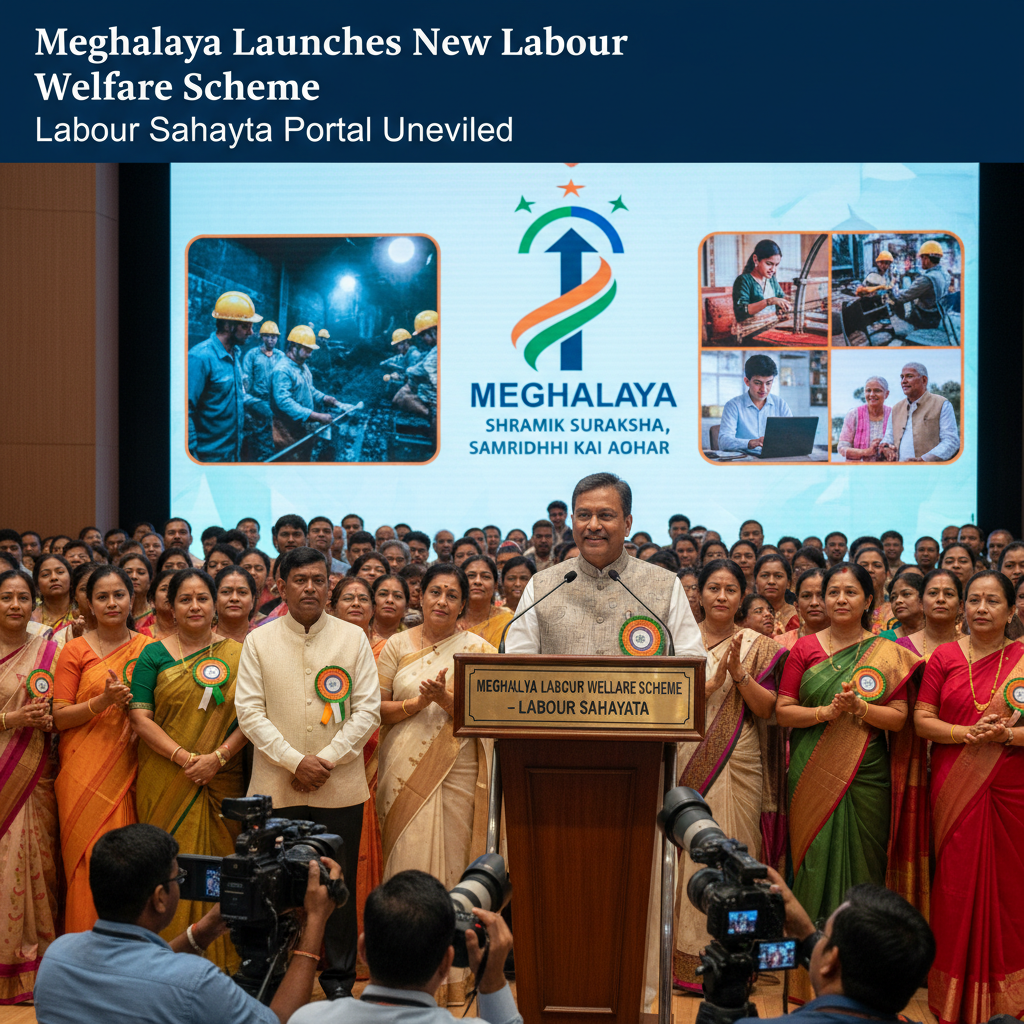
The Meghalaya Labour Welfare Scheme was officially launched in January 2026 as a flagship initiative of the state government to provide a comprehensive safety net for both formal and informal workers across the region. Backed by a detailed audit framework from the Comptroller and Auditor General (CAG) of India, the scheme consolidates accident insurance, health coverage, pension benefits, and skill‑development programmes under a single digital platform called Labour Sahayata. By leveraging a unified online portal, the state aims to eliminate duplication in welfare delivery, accelerate claim processing, and ensure transparency in every transaction. The rollout coincides with a broader push to formalise the labour market in Meghalaya, where over 30 % of the workforce remains in informal employment, and to align with national objectives of inclusive growth and social protection.
Key Objectives and Benefits
The scheme is designed around five core objectives that directly address the livelihood security of workers:
- Accidental Insurance: All registered beneficiaries receive a life‑insurance cover of up to INR 2 lakh in the event of accidental injury or death, providing immediate financial relief to families.
- Health and Medical Support: A health‑insurance package covers outpatient services, hospitalization, and maternity benefits for workers and their dependents, aiming to reduce out‑of‑pocket health expenditures.
- Skill Development and Employment: Partnerships with vocational institutes and private training providers deliver free courses in emerging sectors such as renewable energy, digital services, and tourism, enhancing employability and entrepreneurial potential.
- Pension Scheme: Workers completing a minimum of five years of continuous service become eligible for a monthly pension, ensuring a basic income security during retirement.
- Cash Assistance for Vulnerable Groups: Special provisions for women, disabled workers, and migrant labourers offer monthly stipends during periods of unemployment, health emergencies, or other crises.
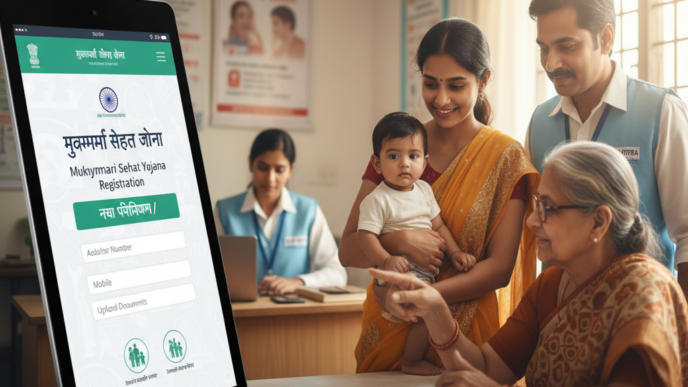
Eligibility is open to any individual aged 18 years or above who has been employed for at least six months in either the formal sector or the informal economy, and who possesses a valid Aadhaar‑linked identity. Registration can be completed online through the Labour Sahayata portal or via mobile registration camps organized by the Labour Department in remote districts. 
Implementation Framework
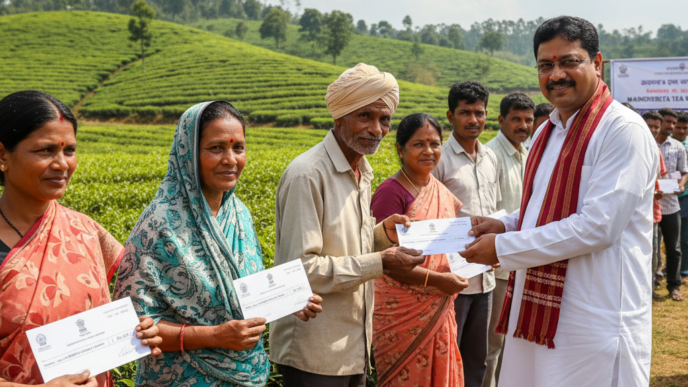
Phase 1 of the implementation focuses on mass registration drives in high‑density industrial zones, including the coal mining belts of Jaintia Hills and the tourism hubs of Shillong and Tawang. To ensure that informal workers—who often lack access to administrative offices—are not left out, the government has deployed mobile registration units equipped with biometric scanners and internet connectivity. These camps capture essential data such as employer declarations, occupational records, and cross‑verification with the National Migration Registry, thereby creating a robust eligibility database.
Phase 2 activates the benefit‑disbursement engine embedded within the portal. Once a worker’s profile is approved, the system automatically generates eligibility codes that trigger payouts for accident insurance, health coverage, skill‑training grants, and pension disbursements. All financial transactions are recorded on a blockchain‑based ledger, enhancing auditability and preventing fraudulent claims. The blockchain infrastructure also enables real‑time monitoring of fund flows, which the CAG uses as a key metric during its quarterly audits.
To facilitate seamless user experience, the portal integrates with existing government systems such as the Aadhaar authentication service and the National Database for Labour Migration. Workers can track the status of their applications, upload supporting documents, and receive automated notifications via SMS or email. In addition, a dedicated help‑desk staffed by trained officers provides on‑the‑spot assistance during registration camps, ensuring that queries related to documentation or eligibility are resolved promptly.
Monitoring and Accountability
Transparency lies at the heart of the scheme’s design, and the Meghalaya Labour Department has instituted a multi‑layered monitoring mechanism. The CAG conducts quarterly audits that scrutinise financial flows, beneficiary data accuracy, and outcome metrics such as claim settlement timelines. These audit reports are published on an open‑access dashboard, allowing civil society organisations, trade unions, and the general public to scrutinise the programme’s performance.
Independent monitors are appointed in each of the state’s 12 districts to carry out field visits, verify beneficiary lists, and assess the impact of skill‑development programmes on employment rates. Their findings feed into a continuous improvement loop, where feedback from workers—submitted directly through the portal’s grievance redressal module—is analysed and acted upon. Automated remedial actions, such as re‑verification of stalled claims or targeted outreach to ineligible groups, are triggered based on predefined thresholds, thereby ensuring that the scheme remains responsive to emerging challenges.
Socio‑Economic Impact and Expected Outcomes
Pilot studies conducted in the East Khasi Hills district indicate that the scheme has the potential to lift approximately 1.8 million workers out of vulnerable conditions within the first two years of implementation. By providing a safety net against accidental injury and health emergencies, the programme is expected to reduce the incidence of debt‑driven labour migration and lower dropout rates in vocational training courses. Moreover, the infusion of health and pension benefits is projected to improve key wellness indicators, including a projected 12 % reduction in out‑of‑pocket health expenditures among beneficiary households.
The skill‑development component, delivered in partnership with institutions such as the Indian Institute of Technology (IIT) Guwahati’s extension centre and local polytechnics, anticipates creating a pipeline of 250,000 skilled workers by 2028. These individuals are expected to transition into higher‑value occupations within sectors like renewable energy installation, digital services, and eco‑tourism, thereby stimulating local entrepreneurship and generating ancillary employment opportunities. Economists from the Meghalaya Planning Commission estimate that the scheme could contribute an additional INR 1,200 crore to the state’s gross domestic product (GDP) through increased consumer spending and formalisation of the labour market.
Government’s Vision and Stakeholder Engagement
Chief Minister Conrad K. Sangma has described the Labour Welfare Scheme as a “milestone in our commitment to empower the workforce that fuels Meghalaya’s growth.” During a state‑wide launch event, he underscored that the programme reflects a people‑centric approach, prioritising the welfare of those who drive the state’s economic engine—from miners in the Jaintia Hills to hospitality workers in Shillong’s bustling markets.
Stakeholder consultations were carried out with a broad spectrum of groups, including the Meghalaya Labour Federation, the Confederation of Indian Industry (CII) Meghalaya chapter, and various non‑governmental organisations focused on workers’ rights. Feedback from these consultations led to the inclusion of gender‑sensitive provisions such as maternity‑leave subsidies, safe‑workplace guarantees, and targeted cash assistance for women engaged in informal caregiving roles. Employers’ organisations welcomed the scheme’s emphasis on skill development, noting that it would enhance workforce productivity and enable compliance with national labour standards.
Conclusion
The Meghalaya Labour Welfare Scheme represents a transformative step toward comprehensive labour protection in the state, integrating accident insurance, health coverage, pension benefits, and skill‑development under a unified digital platform. By leveraging blockchain‑based transaction logging, rigorous CAG monitoring, and active stakeholder engagement, the initiative not only safeguards workers but also cultivates a more skilled, resilient labour force. Early indicators suggest that the scheme will significantly reduce vulnerability among informal workers, improve health and financial security, and contribute to broader socio‑economic development across Meghalaya. As the programme scales up, continued transparency, community participation, and adaptive management will be essential to realise its full potential and ensure that every worker in the state can benefit from a dignified and secure livelihood.
Stay updated with the latest Yojana schemes and government initiatives for better awareness and eligibility. For personalized guidance on accessing these benefits, reach out to us.