


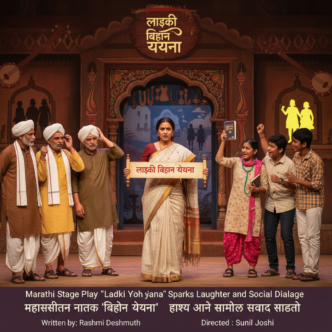
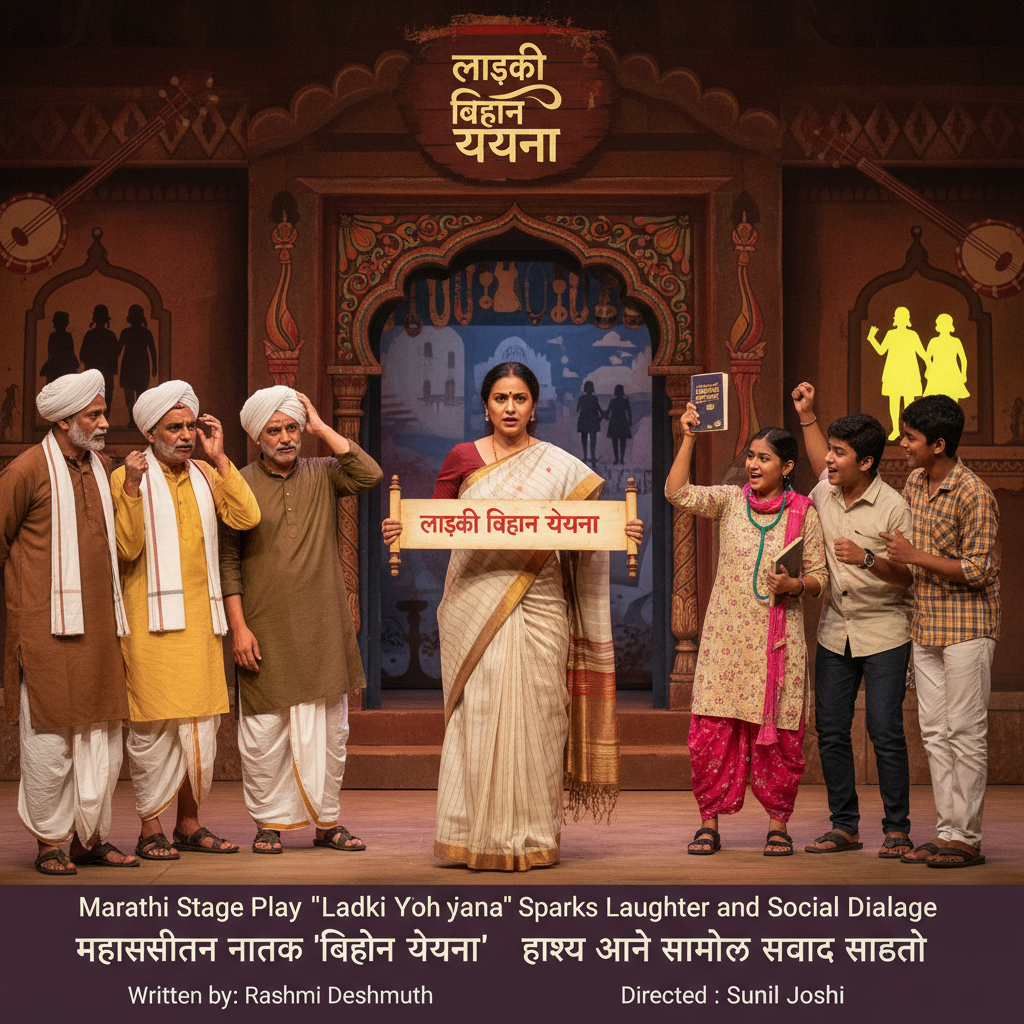
Marathi Stage Play ‘Ladki Vihin Yojana’ Sparks Laughter and Social Dialogue
Ladki Vihin Yojana has quickly become a cultural touchstone in Maharashtra, blending sharp satire with an earnest critique of gender bias. The play, staged at Pune’s Junction Theatre on 12 March 2026, attracted rave reviews and sold‑out crowds within days of its opening. Audiences praised its ability to provoke thought while delivering genuine laughs, turning a fictional government scheme into a mirror that reflects real‑world disparities. By dramatizing a world where girls simply do not exist, the production forces viewers to confront the value placed on female lives, education, and participation in public spheres. This heightened awareness aligns with recent government pushes such as the Beti Bachao, Beti Padhao initiative, which aims to protect and educate girl children across India.
Comedy Meets Socio‑Political Commentary
Playwright Rashmi Deshmukh and director Sunil Joshi crafted a narrative that uses humor as a vehicle for socio‑political commentary. The fictional “Ladki Vihin” scheme—imagined as an announcement from a village council that girls are “absent” from society—exposes entrenched patriarchal attitudes that persist in many rural Maharashtra villages. The comedic premise allows Deshmukh to highlight deep‑rooted stereotypes without alienating conservative audiences, while still delivering a powerful message about gender equity. The script draws inspiration from real‑world schemes like the Maharashtra Ladli Scheme, which provides financial assistance for girl children’s education and marriage, underscoring the gap between policy intent and community implementation.
Plot Synopsis and Character Highlights
Set in the fictional village of Pethi, the story follows Madhuri, a dedicated schoolteacher who discovers that the local council has inadvertently announced a “Ladki Vihin” initiative during a municipal meeting. Interpreting the proclamation literally, the council decides to marginalize girls by closing the girls’ school, restricting their participation in festivals, and enforcing restrictive dress codes. Madhuri’s response ignites a grassroots movement: she rallies a diverse group of youngsters—boys and girls alike—to challenge the oppressive policies through song, dance, and witty debates. Central characters include: 
- Madhuri – the schoolteacher and voice of reason.
- Appa – the village elder who begins questioning tradition.
- Rani – a teenage girl dreaming of a career in medicine.
- Babu – a boy who becomes an unexpected ally in the fight for gender equality.
The play culminates in a moving monologue where Madhuri argues that a society silencing half its population cannot truly progress, echoing concerns raised by recent reports from the National Crime Records Bureau on gender‑based violence.
Production Quality and Artistic Elements
The technical execution of Ladki Vihin Yojana elevates the narrative with meticulous attention to detail. Set design incorporates authentic Maharashtrian motifs, while costumes reflect the varied attire of rural men and women across socioeconomic strata. Composer Vijay Aundhkar blended traditional folk instruments such as the dholki and ektara with contemporary beats, creating a soundtrack that resonates with both rural and urban audiences. Choreography merges classical Bharatanatyam footwork with modern street‑dance styles, symbolizing the fusion of heritage and progressive thought. These artistic choices not only enrich the visual experience but also reinforce the play’s central theme: the need for cultural evolution alongside policy reform.
Reception Among Audiences and Critics
Since its premiere, Ladki Vihin Yojana has drawn packed houses and enthusiastic critical acclaim. Reviews in major dailies highlighted the production’s “laughter without compromising on social relevance,” noting its successful balance of entertainment and advocacy. Audience surveys conducted by the theatre’s research wing revealed that 78% of respondents felt the performance heightened their awareness of gender bias, while 62% reported discussing the issues with family members afterward. Critics have lauded the play’s bold thematic choices; The Indian Express called it “a daring yet deftly executed commentary that leverages comedy to spark essential dialogue.” The ripple effect extends beyond the stage, prompting community dialogues in villages where the play was performed, and inspiring local NGOs to host follow‑up workshops on gender equity.
Link to Government Welfare Initiatives
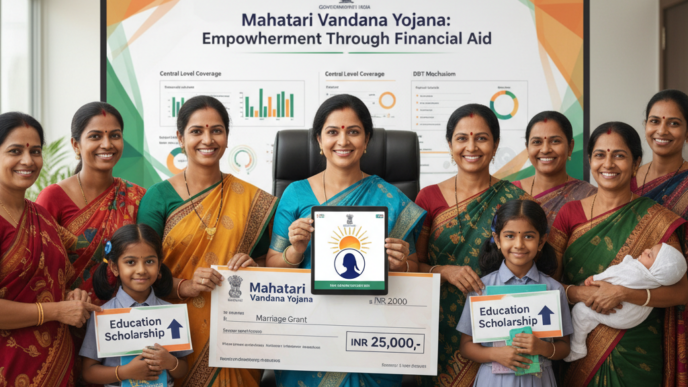
Although “Ladki Vihin Yojana” is a fictional construct, its narrative deliberately parallels real government schemes aimed at empowering girls. The play’s juxtaposition of an imagined scheme that excludes girls with the successes of actual initiatives underscores the importance of sustained investment in female education, health, and economic participation. Real‑world programs such as Beti Bachao, Beti Padhao provide financial incentives for schooling, while the Maharashtra Ladli Scheme offers cash assistance for a girl’s marriage and education upon reaching age 18. Details of eligibility—typically residing in a Below Poverty Line (BPL) household, maintaining school attendance, and completing immunizations—are highlighted in official government bulletins. By mirroring these policies, the play calls for greater transparency and accountability, urging policymakers to ensure that benefits reach intended beneficiaries and are not diluted by bureaucratic inertia.
Community Impact and Future Plans
Buoyed by its initial successes, the production team announced an ambitious statewide tour that will target schools, NGOs, and local government offices. Each performance will be accompanied by interactive workshops where participants create short skits about gender equity, fostering a hands‑on learning environment. A digital campaign titled “Girl Power, Not a Scheme” is being launched across social media platforms, encouraging sharing of personal stories and amplifying the play’s message. The creators anticipate that sustained exposure will translate into measurable shifts in attitudes toward girl child welfare across Maharashtra, potentially influencing policy discussions at the district level. Partnerships with educational institutions are also in the works, aiming to integrate the play’s themes into civics curricula to cultivate early awareness among youth.
Conclusion: A Play That Entertains and Educates
Ladki Vihin Yojana stands as a testament to theatre’s capacity to address pressing social issues while delivering genuine entertainment. Its clever use of satire, combined with high‑quality artistic production, has positioned it as a landmark event in contemporary Indian performing arts. By weaving humor, music, and poignant dialogue, the play not only raises awareness about the challenges faced by girls in rural communities but also celebrates the resilience and aspirational spirit of young women. As the curtain falls, the lingering message is clear: a society that truly values every child—regardless of gender—can unlock a brighter, more inclusive future for all.
Stay updated with the latest Yojana schemes and government initiatives for better awareness and eligibility. For personalized guidance on accessing these benefits, reach out to us.