


Introduction
A coordinated police operation in Delhi has exposed a disturbing pattern where fraudsters are exploiting government welfare programs intended for vulnerable women. The suspect, a 38‑year‑old male identified as Rajesh Kumar, allegedly engineered a counterfeit initiative that mimicked real schemes such as the Mahila Kisan Sashaktikaran Yojana. By promising cash transfers, skill‑training modules, and direct benefit transfers (DBTs), the fake program attracted dozens of applicants from low‑income neighborhoods who were desperate for financial relief. The case has prompted a nationwide conversation about the security gaps in social assistance schemes and the ways unscrupulous individuals can weaponise official‑looking documentation to siphon off funds.
How the Fraud Operated
According to statements from the Delhi Police Cyber Crime Cell, the scam was propagated through WhatsApp groups and impromptu community meetings held in slum clusters across East Delhi and Noida. The perpetrator presented fabricated application forms that closely resembled those used by the Ministry of Women and Child Development, complete with counterfeit letterheads, the ministry’s logo, and a fake “Aadhaar verification” banner. Prospective beneficiaries were instructed to remit a processing fee of ₹500 before their enrollment could be confirmed, under the pretext that this fee covered “administrative costs”. Once the fee was paid, the fraudster vanished, leaving victims without any recourse or the promised assistance.
Forensic analysis of the recovered digital assets revealed a set of templates that the accused used to generate “official” letters, complete with an erroneous Ministry seal that bore a slightly different font and colour gradient from the genuine version. The scheme also incorporated a fake bank account number format that matched the structure of the Pradhan Mantri Jan Dhan Yojana accounts, lending an illusion of authenticity that convinced many applicants to part with their money. 
Victims’ Experiences
Interviews with several of the affected women illustrate a common trajectory from hope to disillusionment. Anita Sharma, a 29‑year‑old mother of two from East Delhi, recounted how she was told the scheme would deliver a monthly stipend of ₹2,000 to support her children’s education. “I sold my gold bangles to pay the fee because I believed this was a lifeline for my family,” she said, her voice trembling as she described receiving only a printed receipt that turned out to be a template generated on a home printer.
Another participant, Priya Deshmukh, explained that the fraudster assured her that the funds would be transferred directly to her bank account within 48 hours. When the money never arrived, Priya visited the nearest police station and discovered that the contact number used by the fraudster was a disposable VoIP line linked to a residential address in Noida. Their testimonies underscore the emotional and financial toll such scams exact on marginalized families, eroding trust not only in the specific fraudulent scheme but also in legitimate government initiatives.
Police Investigation and Arrest
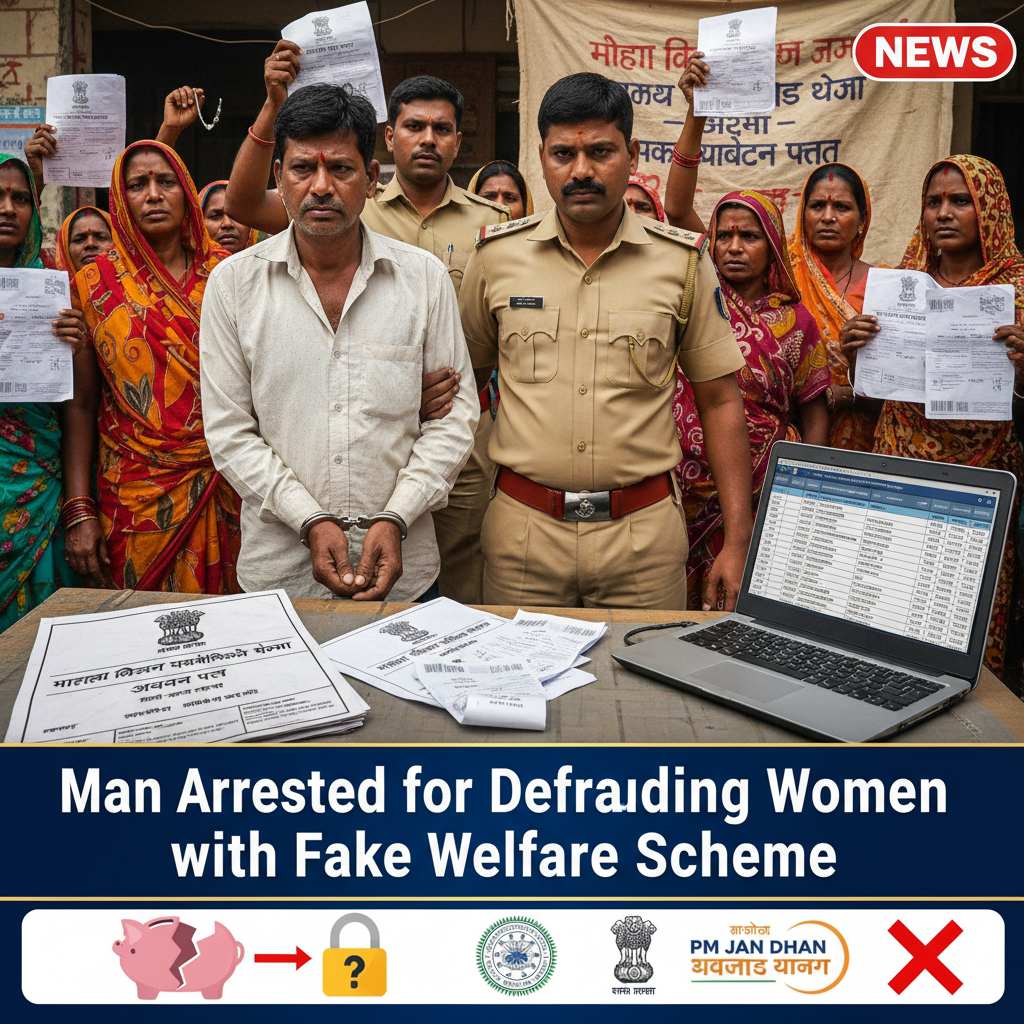
Acting on a complaint lodged by a local non‑governmental organization, the Delhi Police Cyber Crime Cell traced the origin of the bogus communications to a cluster of IP addresses linked to a residential apartment in Sector 18, Noida. A preliminary forensic audit of the attached counterfeit letters highlighted inconsistencies in font styling, mismatched colour codes, and an incorrectly rendered Ministry seal—a key indicator of forgery. A coordinated raid, executed early on a Monday morning, led to the arrest of Rajesh Kumar, who confessed to orchestrating the scheme to siphon money from unsuspecting participants.
During the search, investigators recovered a laptop containing a database of over 300 potential victims, along with templates for future fraudulent campaigns targeting other welfare programmes such as the Beti Bachao, Beti Padhao initiative and the Pradhan Mantri Mahila Kosh. The police have also seized digital evidence that reveals the accused had previously attempted similar scams targeting pension schemes for senior citizens, indicating a broader pattern of opportunistic fraud across multiple social assistance programmes.
Legal Ramifications, Broader Impact and Prevention
The case has invoked several provisions of the Indian Penal Code, notably Section 420 (cheating) and Section 463 (forgery), each carrying a maximum penalty of seven years’ imprisonment and a fine proportionate to the total amount collected. Legal experts note that this prosecution could set a precedent for pursuing similar scams that target other government‑run welfare programmes, potentially prompting stricter verification mechanisms at the application stage. However, recovery of the collected funds remains challenging, as many victims have already spent the processing fees, and the perpetrator’s assets are reportedly limited.
Policy analysts such as Dr. Meera Nair of the Centre for Social Research argue that a multi‑layered approach is essential to prevent future frauds. “Implementing Aadhaar‑based OTP verification, cross‑checking beneficiary bank accounts with the National Payments Corporation of India’s (NPCI) database, and deploying AI‑driven anomaly detection can dramatically reduce the risk of fraudulent enrolments,” she suggests. Dr. Nair also advocates for public awareness campaigns that educate citizens about red flags—such as unsolicited communications, demands for upfront payments, and the use of unofficial channels—to empower potential beneficiaries to verify the legitimacy of any scheme.
The fallout from this case extends beyond individual victims, affecting community perception of government programmes. Local leaders in the affected neighborhoods report a noticeable decline in enrollment for legitimate schemes, as word of the scam spreads quickly. “When people hear about a fake scheme, they become skeptical of any new initiative, even those that are genuine,” explained Ramesh Patel, a community organizer in West Delhi. Rebuilding trust will require transparent communication from authorities, swift investigative actions, and visible measures to protect beneficiaries, such as publishing real‑time verification portals and offering hotlines for reporting suspicious activities.
For citizens seeking reliable information on legitimate schemes, reputable sources such as the Ministry of Women and Child Development’s official portal (wcd.gov.in) and the National e‑Governance portal (egov.nic.in) provide up‑to‑date details on eligibility criteria, application procedures, and contact information. Additionally, authoritative encyclopedic entries like the Wikipedia page on Mahila Kisan Sashaktikaran Yojana can help users understand the scope and benefits of genuine initiatives.
Stay updated with the latest Yojana schemes and government initiatives for better awareness and eligibility. For personalized guidance on accessing these benefits, reach out to us.