


Overview
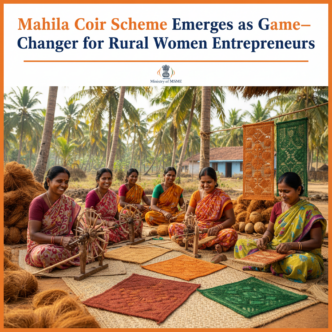
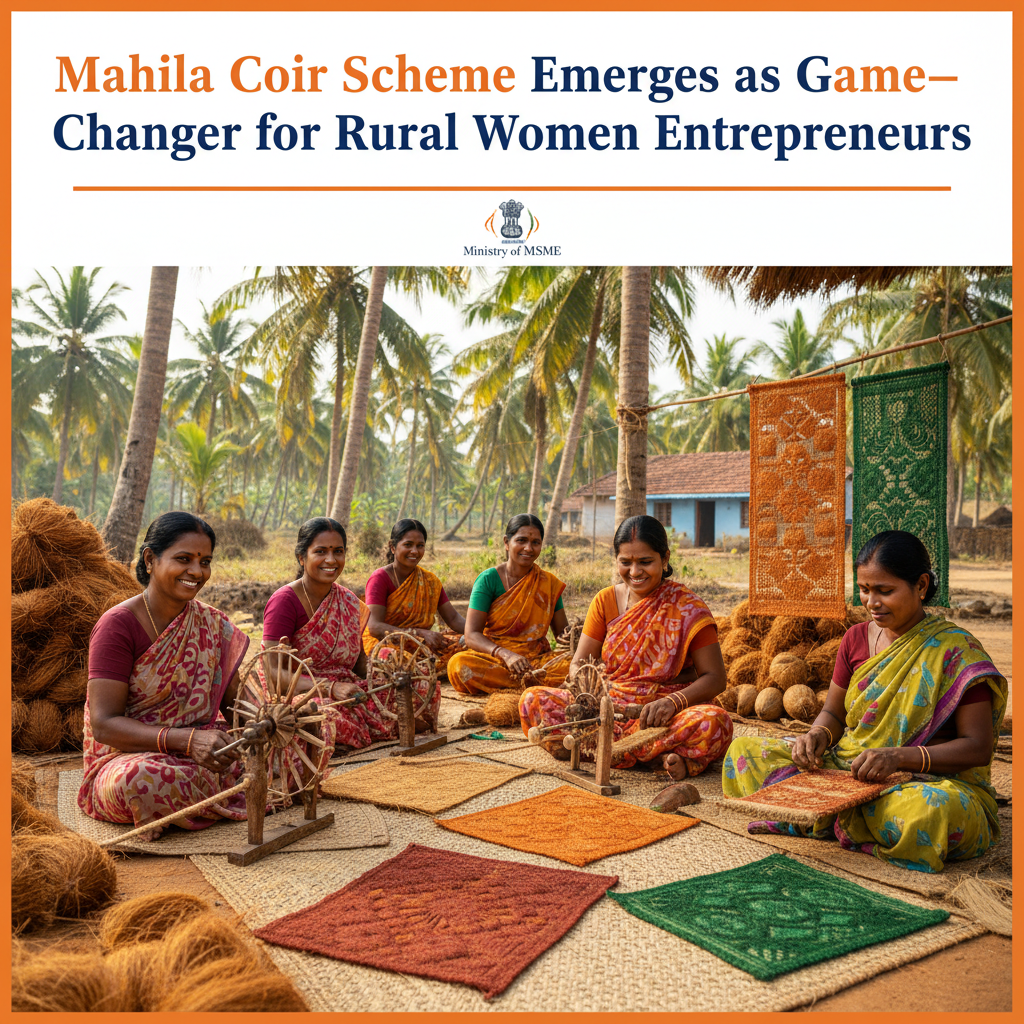
The Mahila Coir Scheme, introduced by the Ministry of Micro, Small and Medium Enterprises (MSME) in partnership with the Ministry of Environment, Forest and Climate Change, targets the abundant coconut fiber resources of India’s coastal and Northeastern states to create sustainable livelihoods for rural women. By offering skill‑development workshops, raw‑material subsidies, and direct market linkages, the programme seeks to convert raw coir into high‑value handicrafts, textiles, and décor items. According to a recent investigative feature in The Hindu, the initiative has already benefited more than 15,000 households across Kerala, Tamil Nadu, and the Northeast, marking a notable shift toward gender‑inclusive rural development.
Since its pilot launch in early 2023, the scheme has been rolled out in three phases: an initial awareness drive, a hands‑on training module, and a market‑access phase that connects artisans with e‑commerce portals and government‑run trade fairs. Funding is sourced from the MSME flagship “Self‑Employment & Talent Development” budget, with additional support from state‑level vocational training institutes. The programme’s design emphasizes environmental sustainability by utilising coconut husk waste that would otherwise be discarded, thereby contributing to cleaner agricultural practices.
Objectives
The Mahila Coir Scheme is built around four core objectives that guide its implementation and evaluation: 
- Empowerment through skill development: Train women in coir extraction, spinning, weaving, and product design to enhance entrepreneurial capabilities.
- Income generation: Enable participants to earn supplementary revenue by selling coir‑based products domestically and internationally.
- Environmental stewardship: Promote the reuse of coconut waste, reducing agricultural residues and supporting circular‑economy principles.
- Market integration: Facilitate access to online marketplaces, government e‑ Catalog, and regional craft exhibitions to broaden market reach.
Eligibility criteria prioritise women aged 18‑55 residing in households that own or cultivate coconut trees, with a preference for those belonging to Scheduled Castes, Scheduled Tribes, or marginal farmer categories. Applicants must possess a basic proficiency in local language communication and demonstrate commitment to forming or joining a self‑help group (SHG).
Implementation Model
The scheme operates on a three‑tier structure designed to ensure efficient governance and grassroots execution. At the top, state‑level nodal agencies, often the State MSME Development Corporations, coordinate funding allocation, policy formulation, and inter‑departmental liaison. District‑level cooperatives manage the distribution of raw coir material, organise training camps, and monitor progress on the ground. Finally, local SHGs serve as the primary implementation units, where beneficiaries receive toolkits, micro‑credit facilities, and certification upon successful completion of the curriculum.
Training modules, developed in collaboration with the Indian Institute of Coir Research (IICR), span eight weeks and cover topics such as fibre extraction, quality control, product diversification, and basic financial literacy. Upon certification, participants gain access to a revolving fund that provides low‑interest loans up to INR 50,000 for scaling production. The Ministry conducts quarterly audits and independent impact assessments, with findings published on the Press Information Bureau portal to ensure transparency and accountability.
Economic Impact
Early evaluation reports reveal a 35 % uplift in average monthly earnings for scheme participants, translating to an additional INR 2,500 per household. This financial boost has driven a measurable rise in bank account penetration among women beneficiaries, increasing from 48 % to 73 % within the first year of implementation. The ripple effects extend beyond individual incomes: ancillary sectors such as packaging, logistics, and product design have witnessed a 12 % surge in activity, creating peripheral employment opportunities for both men and women in rural communities.
Beyond monetary gains, the programme has fostered social empowerment by enhancing decision‑making roles for women within families and community organisations. Survey data indicate a 68 % improvement in women’s confidence levels concerning entrepreneurship and a 54 % increase in participation in local governance forums. The scheme’s emphasis on environmentally friendly practices has also contributed to a modest reduction in agricultural residue burning in pilot districts, aligning with national climate‑action targets.
Challenges and Future Outlook
Despite its promising trajectory, the Mahila Coir Scheme confronts several challenges that require adaptive policy responses. Infrastructure gaps in remote regions hinder timely delivery of raw materials and tools, while limited awareness among target communities can delay enrollment. Seasonal fluctuations in coconut harvests occasionally disrupt supply chains, affecting production schedules. Market volatility for coir‑based goods, especially in the face of global competition, poses a risk to revenue stability. To address these issues, the Ministry is exploring strategic partnerships with NGOs, private investors, and technology firms to establish permanent processing hubs and develop a diversified product portfolio that includes eco‑friendly furniture and fashion accessories.
Expert commentary underscores the scheme’s replicability and scalability. Dr Anjali Menon, senior researcher at the Indian Institute of Rural Development, remarked that “the integration of skill‑building with micro‑enterprise financing offers a replicable model for other states seeking to uplift women in agrarian peripheries.” Building on this endorsement, the Ministry plans to expand the programme to an additional twelve states in the upcoming fiscal year, increase its budgetary allocation by 20 %, and launch a national digital marketplace that connects artisans directly with domestic and international buyers. Continuous monitoring, community feedback loops, and iterative policy adjustments are expected to bolster resilience and amplify socio‑economic impact.
Stay updated with the latest Yojana schemes and government initiatives for better awareness and eligibility. For personalized guidance on accessing these benefits, reach out to us.