


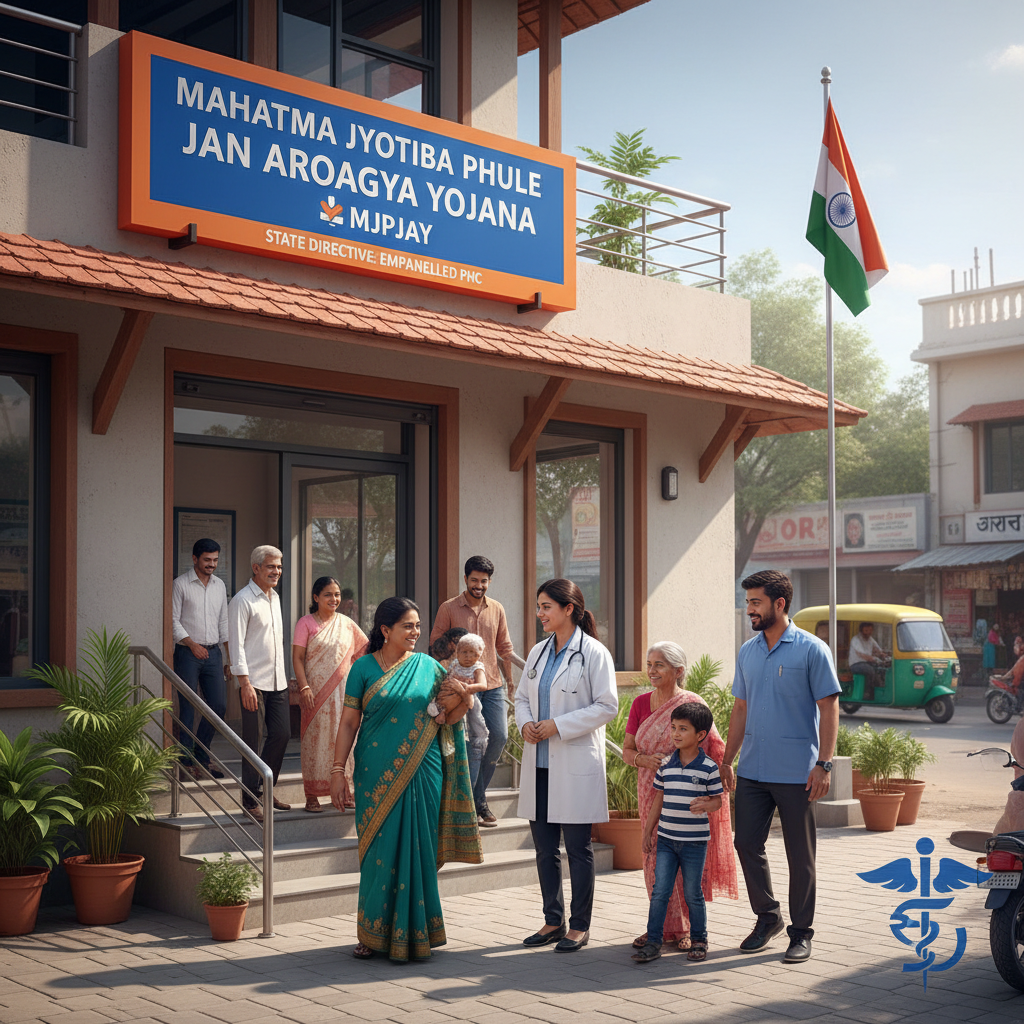
State Directive to Empanel All Primary and Urban Primary Health Centres under Mahatma Jyotiba Phule Ja
The state health department has issued a comprehensive order requiring every primary health centre (PHC) and urban health post to be Mahatma Jyotiba Phule Ja empanelment across the region. This directive, announced on 23 April 2025, mandates that all government‑run PHCs, sub‑centres and urban health posts meet the accreditation standards of the National Health Mission before being listed under the scheme. The move is part of a larger strategy to create a seamless network of affordable, free‑of‑cost healthcare that can deliver diagnostics, essential medicines and routine check‑ups without financial barriers. By extending the empanelment to every rural and urban primary facility, the government aims to reduce pressure on district hospitals, streamline patient referrals and ensure that every household, irrespective of geography, can access basic curative and preventive services.
Objectives of the Empanelment Drive
The primary objective of the Mahatma Jyotiba Phule Ja empanelment initiative is to expand the accredited health‑provider network, thereby alleviating the chronic overload on tertiary institutions. By integrating PHCs and urban health centres into the scheme, the state intends to bring specialised services such as maternal‑child health, immunisation, and chronic disease management closer to the doorstep of citizens. A secondary goal is to generate a robust, real‑time data repository that can monitor health outcomes, resource utilisation and expenditure patterns. This data will feed into evidence‑based policymaking, allowing the government to allocate funds more efficiently and intervene promptly during disease outbreaks. Moreover, the drive seeks to foster public‑private collaboration by inviting eligible private clinics and non‑profit organisations to join the empanelment, thereby widening choice while maintaining quality benchmarks.
Scope and Eligibility Criteria
Under the latest order, all government‑run PHCs, sub‑centres and urban health posts that satisfy the infrastructure and staffing benchmarks stipulated by the National Health Mission will be automatically included in the Mahatma Jyotiba Phule Ja empanelment. Eligibility criteria encompass: 
- Functional laboratory equipment meeting Indian Public Health Standards (IPHS);
- Availability of qualified medical officers and auxiliary staff;
- Adherence to prescribed drug‑procurement protocols;
- Documentation of patient‑flow and referral processes.
Private clinics wishing to participate must undergo a verification process that includes submission of accreditation certificates, proof of compliance with State Quality Benchmarks, and an audit of clinical records. Non‑profit organisations operating community health initiatives are also eligible, provided they register with the health authority and demonstrate financial transparency. The scheme explicitly excludes facilities that have a history of malpractice or repeated regulatory violations, ensuring that only reputable providers can offer services under the empanelment.
Financial Incentives and Reimbursement Model
To encourage rapid enrolment, the state has earmarked a dedicated fund that reimburses empanelled centres for each eligible service rendered. The reimbursement rates are aligned with the central Ayushman Bharat scheme, guaranteeing parity and financial viability for participating facilities. Specifically, the state will pay INR ₹ 1,200 per outpatient consultation, INR ₹ 2,500 per basic diagnostic test, and INR ₹ 4,000 per antenatal care visit, among other items. In addition, performance‑linked incentives are offered for achieving targets such as 90 % immunisation coverage, 85 % antenatal care attendance, and 95 % medication adherence. These financial incentives are designed not only to attract providers but also to motivate them to maintain high standards of care, thereby enhancing the overall quality of services delivered under the Mahatma Jyotiba Phule Ja empanelment.
Stakeholder Reactions and Implementation Timeline
Health activists have widely praised the decision, noting that it directly addresses the long‑standing demand for a more inclusive primary‑care network. Dr. Ayesha Khan, director of the State Health Rights Forum, remarked that “the Mahatma Jyotiba Phule Ja empanelment is a watershed moment that will democratise access to primary healthcare across the state.” Municipal corporations, however, have voiced concerns about the readiness of certain urban centres to meet the required standards within the stipulated three‑month window. In response, the health ministry has deployed technical support teams to conduct rapid audits and provide on‑site training to upgrade infrastructure and staffing where deficiencies exist. The rollout is structured in phases: the first wave will cover 60 % of PHCs by the end of April 2025, with the second wave aiming for 90 % coverage by June, and full coverage slated for completion by the close of the fiscal year in March 2026.
Expected Impact on Public Health
Experts predict that the comprehensive Mahatma Jyotiba Phule Ja empanelment will markedly reduce outpatient department (OPD) congestion at tertiary hospitals. Pilot projects conducted in the neighboring districts of Aurangabad and Nashik demonstrated a 25 % decline in referrals for basic diagnostic tests, translating into an estimated INR ₹ 150 crore savings for the state health budget. Early data also indicate a 12 % increase in antenatal care visits and a 9 % rise in immunisation rates within the first six months of implementation. The integrated data platform associated with the scheme will enable real‑time tracking of disease trends, facilitating swift public‑health interventions during outbreaks such as dengue or COVID‑19 surges. By strengthening primary‑care capacity, the initiative is expected to improve health equity, especially in marginalized and remote communities.
Challenges and Mitigation Strategies
Key challenges accompanying the Mahatma Jyotiba Phule Ja empanelment include ensuring uniform quality across rural and urban settings, addressing staffing shortages, and upgrading outdated equipment in many facilities. To mitigate these issues, the state plans to launch a continuous medical education programme that offers credit‑based training for healthcare workers, incentivise rural postings through housing allowances, and allocate a dedicated budget of INR ₹ 500 crore for equipment procurement. Regular monitoring committees will be instituted at the district level to review progress, address grievances from empanelled centres, and ensure compliance with the stipulated quality benchmarks. Additionally, a grievance redressal portal will be made operational to allow providers and citizens to report issues promptly, fostering a culture of accountability and continuous improvement.
Conclusion
The mandate to empanel all primary and urban primary health centres under the Mahatma Jyotiba Phule Ja empanelment represents a pivotal step toward universal health coverage in the state. By expanding the network of accredited providers, enhancing financial incentives, and fostering data‑driven governance, the initiative promises to improve access, affordability and quality of healthcare for millions of residents. Stakeholders—including government officials, civil society groups, and the private sector—are urged to collaborate closely with the health department to realise the full potential of this transformative policy. As the scheme progresses, it is expected to set a benchmark for other states seeking to strengthen primary‑care infrastructure through comprehensive empanelment strategies.
Stay updated with the latest Yojana schemes and government initiatives for better awareness and eligibility. For personalized guidance on accessing these benefits, reach out to us.