


Introduction
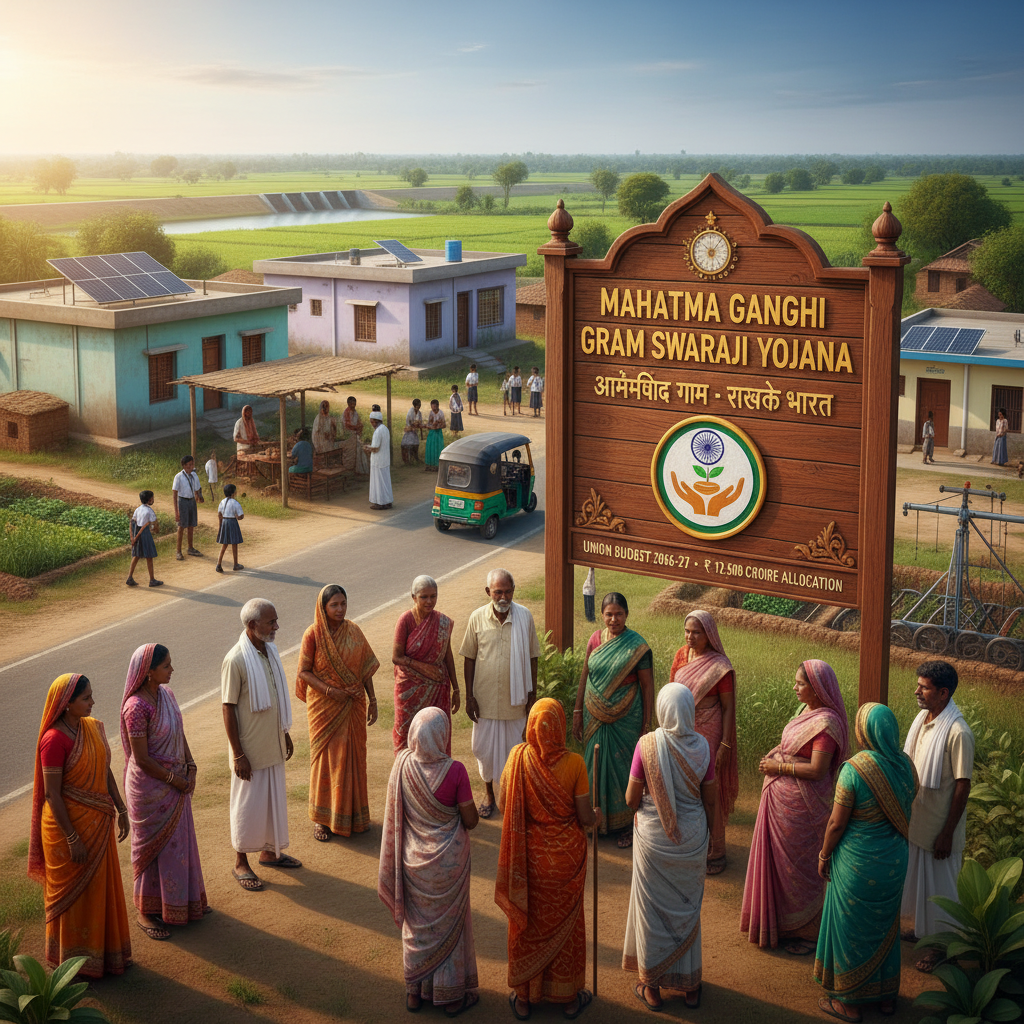
The Union Budget 2026‑27 has ushered in a transformative initiative called the Mahatma Gandhi Gram Swaraj Yojana, a flagship programme designed to revitalise rural economies and promote self‑reliant villages across India. With an unprecedented financial commitment, the scheme seeks to integrate disparate rural development streams under a unified framework that places gram panchayats at the centre of decision‑making. By channelising resources directly to the grassroots level, the Mahatma Gandhi Gram Swaraj Yojana aims to accelerate job creation, improve basic amenities, and foster sustainable livelihoods for millions of rural citizens.
Prime Minister Narendra Modi highlighted the vision during the budget speech, stating that the Gram Swaraj model embodies the core principles of Mahatma Gandhi — decentralisation, empowerment, and inclusive growth. The scheme is positioned as a catalyst for bridging the urban‑rural divide, ensuring that the benefits of India’s economic expansion reach every corner of the countryside.
For policymakers, development practitioners, and citizens alike, understanding the Mahatma Gandhi Gram Swaraj Yojana is essential. This article unpacks the historical roots, strategic objectives, budgetary muscle, implementation mechanics, and the reactions of various stakeholders, providing a comprehensive roadmap of how the programme will reshape rural India. 
Historical Context
The concept of Gram Swaraj dates back to the 1940s when Mahatma Gandhi advocated for villages to become self‑sufficient units capable of meeting their own economic, social, and cultural needs. While early post‑independence programmes such as the Integrated Rural Development Programme (IRDP) and the Mahatma Gandhi National Rural Employment Guarantee Act (MGNREGA) laid the groundwork for rural upliftment, they operated largely as isolated interventions. The Mahatma Gandhi Gram Swaraj Yojana marks a strategic shift by consolidating multiple ministries — including Rural Development, Agriculture, Health, and Education — into a single, convergent effort.
Historical precedents show that integrated rural development can yield significant dividends when funds are judiciously allocated and monitored. The Ministry of Rural Development cited a 2023 impact study that revealed a 12% increase in household income in districts where similar integrated models were piloted. Building on these lessons, the new scheme aspires to replicate and scale up successful practices, embedding them within a robust monitoring ecosystem.
Moreover, the timing of the announcement aligns with India’s broader agenda of “Sabka Saath, Sabka Vikas,” which emphasizes equitable growth across regions and demographics. By reviving the Gandhian ideal of village self‑reliance, the Mahatma Gandhi Gram Swaraj Yojana seeks to address contemporary challenges such as agrarian distress, migration to urban centres, and inadequate rural infrastructure.
Objectives and Budget Allocation
The Mahatma Gandhi Gram Swaraj Yojana is anchored on four pivotal objectives that collectively aim to transform rural ecosystems:
- Livelihood Enhancement: Generate over 5 million new employment opportunities within the first two years through skill‑development and micro‑enterprise support.
- Infrastructure Upgradation: Improve access to safe drinking water, sanitation, and electrification for more than 10 million households.
- Agricultural Sustainability: Promote climate‑resilient farming practices and water‑conservation techniques to boost crop yields.
- Social Inclusion: Empower women, scheduled castes, scheduled tribes, and other marginalised groups via targeted financial assistance and capacity‑building programmes.
Financially, the scheme represents a significant boost to the rural development budget. The Ministry of Rural Development has earmarked ₹ 12,500 crore for the inaugural phase, supplemented by an additional ₹ 4,000 crore allocated to state governments for pilot projects. This represents a 27% increase over the previous fiscal year’s rural development outlay, underscoring the government’s commitment to grassroots empowerment.
Eligibility for benefits is determined at the gram panchayat level, with priority given to villages that demonstrate a clear need for infrastructure upgrades or livelihood programmes. Project proposals must align with the scheme’s convergence framework, ensuring that each investment contributes to the broader vision of self‑sufficient villages.
Key performance indicators (KPIs) have been defined to track progress, including the number of households receiving direct benefit transfers, the volume of water‑conservation structures constructed, and the increase in farmer incomes. Real‑time data will be streamed to a digital dashboard accessible to policymakers, civil society, and the public, fostering transparency and accountability.
Implementation Framework and Expected Benefits
At the heart of the Mahatma Gandhi Gram Swaraj Yojana lies a three‑tier implementation architecture designed to ensure efficient execution and convergence:
- Gram Panchayat Level: Local bodies identify priority projects, mobilise community participation, and disburse funds directly to beneficiaries.
- Block Development Office: Provides technical oversight, facilitates inter‑departmental coordination, and conducts periodic audits to maintain fiscal discipline.
- State Rural Development Department: Offers capacity‑building support, mentorship for micro‑enterprise development, and a grievance redressal mechanism.
These layers work in concert to translate high‑level policy directives into tangible outcomes on the ground. For instance, a gram panchayat may propose a rain‑water harvesting system, which the block office reviews for technical feasibility, and the state department approves funding and monitors implementation.
Stakeholders can anticipate a suite of direct benefits:
- Creation of sustainable employment avenues through skill‑training hubs and support for women‑led enterprises.
- Enhanced access to clean water and sanitation, reducing water‑borne diseases and improving overall health outcomes.
- Strengthened market linkages for small‑scale farmers, enabling them to command higher prices and increase incomes by an estimated 15‑20%.
- Financial inclusion via direct benefit transfers to eligible households, reducing leakages and ensuring timely assistance.
Beyond immediate socioeconomic gains, the scheme is expected to generate multiplier effects. Improved infrastructure can attract private investment, while empowered communities may adopt innovative agricultural practices that boost regional food security. Moreover, the emphasis on women’s empowerment is projected to accelerate gender‑equitable development, aligning with India’s Sustainable Development Goal (SDG) commitments.
Stakeholder Reactions and Implementation Challenges
Industry experts and development analysts have lauded the integrated approach of the Mahatma Gandhi Gram Swaraj Yojana, noting that pooling resources across ministries can curtail duplication and expedite impact. Dr. Rajesh Verma, a senior fellow at the Observer Research Foundation, remarked that “the scheme’s multi‑ministerial convergence is a game‑changer, provided that robust monitoring mechanisms are put in place.”
However, opposition parties and civil society organisations have voiced concerns regarding transparency and political misuse of funds. Critics argue that without stringent audit trails, the scheme could become a conduit for patronage, especially in politically volatile regions. To mitigate these risks, the Ministry has pledged to publish audited expenditure reports quarterly and to subject all project proposals to independent third‑party evaluation.
Implementation challenges also include the need for accurate data collection to assess progress, equitable distribution across gender and caste lines, and maintaining fiscal discipline as the programme scales. The digital dashboard mentioned earlier is expected to play a pivotal role in addressing these issues by offering real‑time visibility into fund utilisation and project milestones.
Capacity‑building remains another critical frontier. Many gram panchayats lack the technical expertise required to design and manage complex infrastructure projects. The state rural development departments will therefore invest in training programmes for panchayat members, focusing on project appraisal, financial management, and participatory planning.
In summary, while the Mahatma Gandhi Gram Swaraj Yojana presents a visionary blueprint for rural transformation, its success hinges on collaborative governance, transparent execution, and sustained community engagement. If these pillars are upheld, the scheme could set a benchmark for inclusive development not only within India but also in global discourse on rural empowerment.
Stay updated with the latest Yojana schemes and government initiatives for better awareness and eligibility. For personalized guidance on accessing these benefits, reach out to us.