



Overview of the Mahatma Gandhi Gram Swaraj Yojana
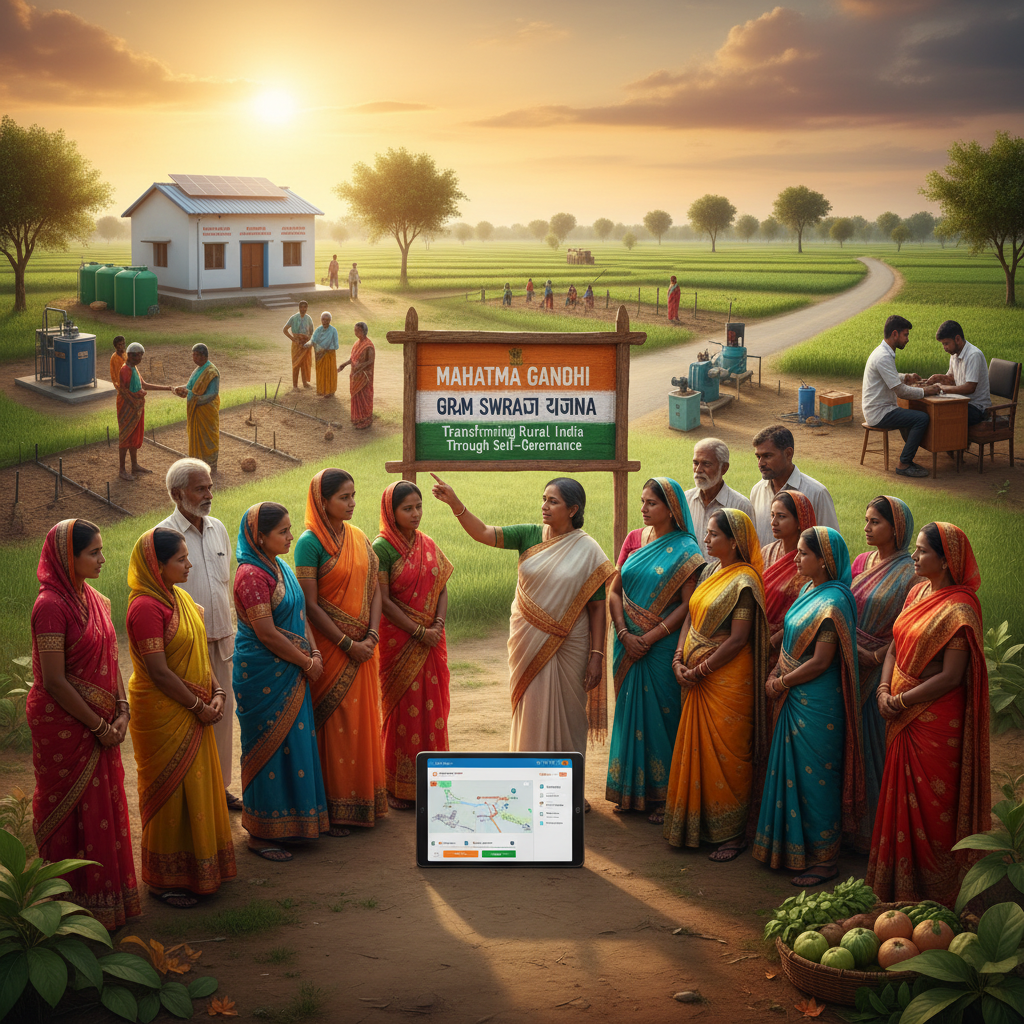
The Mahatma Gandhi Gram Swaraj Yojana is a flagship initiative of the Ministry of Rural Development aimed at energizing rural governance through self‑reliant village ecosystems. Launched in the fiscal year 2023‑24, the scheme provides a dedicated grant to each eligible gram panchayat to execute locally‑prioritized projects that align with national priorities such as agricultural modernization, renewable energy adoption, and social inclusion. By coupling financial resources with capacity‑building support, the program empowers elected representatives to translate community aspirations into tangible development outcomes, thereby reinforcing the decentralized governance model championed by Mahatma Gandhi.
Under the scheme, a total outlay of INR 5,000 crore has been earmarked for the first three years, targeting over 5,000 gram panchayats across high‑need states including Uttar Pradesh, Bihar, Madhya Pradesh, and Odisha. The allocation is dynamic, with larger grants granted to villages with higher populations or more complex development needs, ensuring that fiscal resources are directed where they are most required.
- Financial assistance is disbursed in tranches after independent verification of milestone completion.
- Digital accounting and public expenditure tracking tools are mandatory for transparency.
- Special provisions exist for women‑led self‑help groups and scheduled caste communities.
Citizens can access detailed project proposals and real‑time fund flow data through the official portal, fostering greater accountability and encouraging participatory oversight. 
Historical Context and Policy Foundations
The conceptual roots of the Mahatma Gandhi Gram Swaraj Yojana lie in the constitutional mandate to strengthen Panchayati Raj institutions, further solidified by the 73rd and 74th Amendments of 1992. While these amendments decentralized planning powers to local bodies, many gram panchayats continue to face chronic constraints, including limited fiscal autonomy, inadequate infrastructure, and fragmented development planning.
Since independence, successive governments have pursued varied rural development programs, yet the lack of a cohesive, locally‑driven framework has hampered holistic progress. The Mahatma Gandhi Gram Swaraj Yojana was therefore conceived as a response to these persistent challenges, aiming to institutionalize participatory planning, enhance fiscal devolution, and create an enabling environment for rural enterprises to flourish. The scheme draws heavily from Mahatma Gandhi’s vision of “Gram Swaraj,” where villages achieve economic self‑sufficiency through local production and sustainable practices.
For a deeper dive into the evolution of rural governance in India, refer to the comprehensive overview on Panchayati Raj and the historical analysis of Mahatma Gandhi’s village-centric philosophy.
Core Objectives and Expected Outcomes
The Mahatma Gandhi Gram Swaraj Yojana is built around four principal objectives:
- Strengthening Financial and Administrative Capacity: Gram panchayats receive grant-based funding contingent on predefined performance milestones, enabling them to manage resources autonomously.
- Promoting Sustainable Livelihoods: The scheme catalyzes income‑generating activities such as organic farming, handicraft cooperatives, and renewable‑energy projects that are environmentally sound and socially inclusive.
- Improving Access to Basic Services: Investments are directed toward water‑sanitation infrastructure, rural electrification, and digital connectivity, directly enhancing quality of life.
- Ensuring Social Inclusion: Targeted interventions prioritize women, scheduled castes, and tribal communities, facilitating equitable development.
Expected outcomes include a measurable rise in rural employment, enhanced rural‑urban linkages, and a reduction in poverty incidence across targeted blocks. Early impact assessments indicate that villages participating in the scheme have witnessed a 12 % increase in household incomes and a 9 % decline in out‑migration rates within the first two years of implementation.
Implementation Framework and Financial Assistance Mechanism
Implementation of the Mahatma Gandhi Gram Swaraj Yojana follows a three‑tier architecture:
- National Level: The Ministry of Rural Development provides policy direction, allocates the budget, and monitors overarching performance.
- State Level: Rural Development Departments coordinate with district administrations, facilitating the rollout and ensuring alignment with state‑specific priorities.
- Grassroots Level: Gram panchayats execute projects in partnership with local NGOs, community‑based organizations, and technical experts.
Each eligible panchayat submits a detailed project proposal that outlines priority needs, proposed interventions, and a realistic implementation timeline. Based on this proposal, the central government sanctions a grant that varies from INR 5 lakh to INR 50 lakh, depending on village population and project complexity. Disbursements occur in installments after independent verification of progress by state‑level monitoring agencies, with a strong emphasis on digital accounting to ensure transparency.
To illustrate the financial flow, consider the following simplified tranche schedule:
- First installment (30 %): Released upon plan approval.
- Second installment (40 %): Released after completion of 50 % of identified milestones.
- Final installment (30 %): Released after full project completion and audit clearance.
This mechanism not only safeguards public funds but also incentivizes timely execution and results‑oriented governance.
Monitoring, Evaluation, Success Stories, and Future Outlook
A robust Monitoring and Evaluation (M&E) framework underpins the Mahatma Gandhi Gram Swaraj Yojana, ensuring that achievements are measurable and lessons are iteratively integrated. Key Performance Indicators (KPIs) encompass the number of completed infrastructure assets, increase in household incomes, improvement in service delivery metrics, and participation rates of marginalized groups. Independent audit reports, social audits, and citizen feedback loops are employed to verify compliance and capture ground‑level realities.
Illustrative success stories highlight the scheme’s tangible impact:
- Rajasthan – Solar‑Powered Irrigation: Installation of solar pumps has enabled smallholder farmers to double crop yields, reducing dependence on erratic monsoon rains and cutting agricultural input costs by 25 %.
- Odisha – Community Health Centres: Construction of primary health centres has contributed to a 15 % decline in maternal mortality rates within targeted blocks.
- Madhya Pradesh – Women’s Cooperatives: Training programs for women’s self‑help groups have facilitated the marketing of organic produce, leading to a 20 % rise in average household earnings.
Looking ahead, the Ministry envisions expanding coverage to all rural habitations by 2030, with strategic priorities centered on climate‑smart agriculture, renewable energy integration, and digital governance tools. Future roll‑outs will emphasize public‑private partnerships, innovation hubs in rural clusters, and scalable capacity‑building programs that empower local communities to design and manage their own development pathways. By embedding a participatory ethos at the heart of rural governance, the Mahatma Gandhi Gram Swaraj Yojana aspires to realize a vision of inclusive, sustainable, and prosperous villages across India.
Stay updated with the latest Yojana schemes and government initiatives for better awareness and eligibility. For personalized guidance on accessing these benefits, reach out to us.