


Overview of Ladki Bahin Yojana
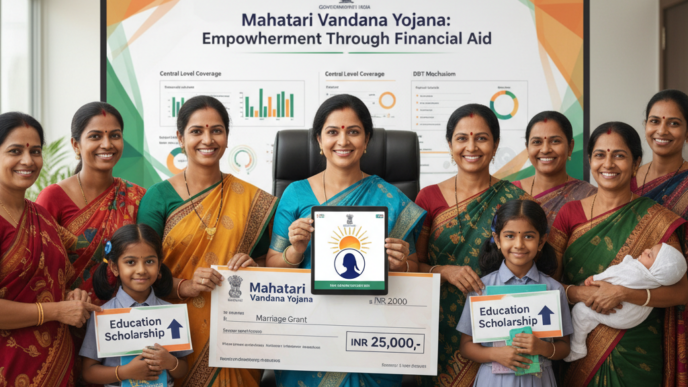
The Ladki Bahin Yojana is a flagship welfare programme launched by the Government of Maharashtra in 2023 to provide direct cash assistance to women from economically vulnerable households. The scheme targets married women, widows and single mothers who fall below the poverty line, aiming to improve their financial security, support children’s education and promote overall well‑being. By delivering a monthly stipend through the Direct Benefit Transfer (DBT) system, the programme reduces leakages and ensures that funds reach the intended beneficiaries promptly. According to official statements, over 1.2 million women across the state are currently enrolled, with a concentration in rural and semi‑urban districts where poverty rates remain higher than the state average [1]. The initiative forms part of Maharashtra’s broader strategy to empower women, close gender gaps and stimulate inclusive economic growth.
State officials have described the Ladki Bahin Yojana as a “cash‑first” approach that recognises the pivotal role women play in household decision‑making. The cash transfer is intended to be used for essential expenses such as nutrition, health care and school fees, thereby indirectly encouraging investment in human capital. The programme also integrates ancillary services – including skill‑development workshops, maternal health camps and legal‑aid clinics – to create a holistic support ecosystem. These complementary measures reflect a growing recognition that financial assistance alone is insufficient; sustained empowerment requires access to education, health services and socio‑legal awareness.
Recent policy briefs from the Maharashtra Department of Women and Child Development highlight the scheme’s alignment with national goals such as the United Nations Sustainable Development Goal 5 on gender equality. By funneling resources directly to women, the state hopes to generate a multiplier effect that benefits entire communities. Early monitoring reports suggest that beneficiary households have experienced modest increases in school enrolment rates and improved health‑seeking behaviour, underscoring the scheme’s potential to catalyse broader socio‑economic upliftment. 
Current Benefit Structure
Under the existing framework, each eligible woman receives a fixed monthly payment of ₹1,500. The amount is transferred directly into the beneficiary’s bank account via the DBT platform, a mechanism that links Aadhaar verification, bank details and the state’s payment gateway to guarantee transparency and minimise fraud. The stipend is disbursed on the first day of each month, and beneficiaries receive a SMS alert confirming the credit. The scheme’s budgetary allocation for the 2024‑25 fiscal year stood at approximately ₹2,100 crore, reflecting the government’s commitment to sustain the programme at scale.
The rollout has been accompanied by a robust enrollment drive that leverages data from the Socio‑Economic Caste Census (SECC) and local panchayat records to identify eligible households. Verification involves cross‑checking income proofs, Aadhaar numbers and bank account details, a process overseen by the Women and Child Development Department in collaboration with the National Bank for Agriculture and Rural Development (NABARD). This rigorous verification system has helped the state achieve a low rejection rate and ensure that nearly all eligible applicants receive benefits without undue delay.
Beyond the cash component, the Ladki Bahin Yojana offers a suite of capacity‑building activities. Monthly skill‑training sessions, delivered through partnerships with NGOs and private training institutes, focus on stitching, digital literacy and entrepreneurship. Maternal health camps, conducted in collaboration with the Public Health Department, provide free check‑ups, nutrition counseling and referral services. Legal‑aid clinics raise awareness about women’s rights, property inheritance and protection against domestic violence. Together, these services aim to transform the stipend from a mere cash handout into a catalyst for holistic empowerment.
Details of the ₹600 Increase
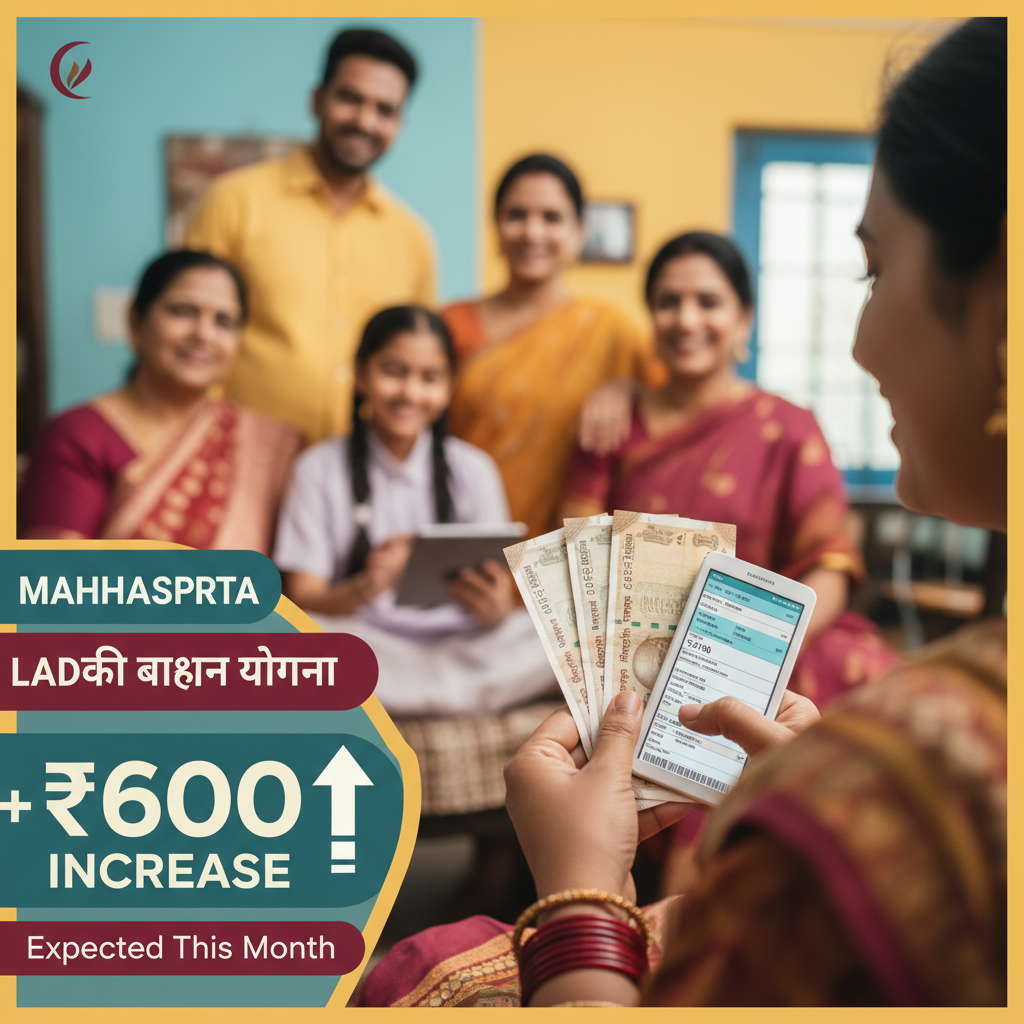
Speculation surrounding a prospective ₹600 augmentation of the Ladki Bahin stipend has gained momentum in recent months, as the Maharashtra government prepares its 2026‑27 budget. If approved, the monthly benefit would rise from ₹1,500 to ₹2,100, marking a 40 percent increase that could significantly improve the living standards of millions of women. The additional ₹600 is expected to be financed through a mix of re‑allocated tax revenues, savings from subsidy rationalisation and targeted expenditures on non‑core programmes, ensuring fiscal prudence while expanding the scheme’s reach.
Finance Ministry officials have indicated that the increment will be rolled out in a phased manner, beginning with high‑need districts identified through the state’s poverty mapping exercise. This approach allows the government to monitor cash‑flow implications, assess implementation challenges and adjust disbursement mechanisms before a statewide launch. Analysts argue that the extra funds could stimulate local economies, particularly in rural markets where women typically reinvest earnings in education and health, thereby generating a multiplier effect that benefits small businesses and service providers.
Economic researchers have modelled the potential macro‑impact of the increase, projecting that a ₹600 rise could boost household consumption expenditure by an average of 8‑10 percent among beneficiary families. Such spending uplift is expected to enhance demand for agricultural produce, retail services and education tutoring, creating ancillary employment opportunities. Moreover, the higher stipend may reduce reliance on informal loan sources, lowering debt burdens and enhancing financial resilience for vulnerable women.
Eligibility Requirements
To qualify for the Ladki Bahin Yojana, applicants must meet a set of clearly defined criteria that combine residency, income and social status parameters. First, the applicant must be a permanent resident of Maharashtra, as verified by a domicile certificate issued by the local revenue office. Second, the household’s annual income must not exceed ₹2 lakh, a threshold determined through the latest SECC data. Third, the beneficiary must be a married woman, a widow, or a single mother who has dependent children under the age of 18, ensuring that the scheme primarily serves caregivers.
Fourth, the applicant must possess a valid bank account linked to the Aadhaar system, a prerequisite that enables seamless DBT transfers. Fifth, the woman must not be employed in a regular‑salary position that pays above the poverty line, thereby focusing the benefit on those without stable formal sector income. Verification of these conditions involves a collaborative effort among the Women and Child Development Department, gram panchayats and scheduled banks, which cross‑check documentation such as income certificates, Aadhaar numbers and passbook copies.
The application process is designed to be accessible: eligible women can submit their claims online through the Maharashtra Social Welfare Portal or offline at the nearest panchayat office. Upon successful verification, the applicant receives a unique beneficiary ID, which is used to track disbursements and prevent duplication. The state government has also established a grievance redressal mechanism, allowing beneficiaries to report delays or irregularities via a toll‑free helpline or an online grievance portal, thereby enhancing accountability.
Implementation Plan and Expert Reactions
Officials have outlined a detailed rollout schedule for the ₹600 increase, pegging the pilot phase to commence in March 2026 across three strategically selected districts – Nanded, Jalgaon and Ratnagiri – representing diverse agro‑climatic zones and poverty profiles. The pilot will test the revised disbursement workflow, assess beneficiary feedback and fine‑tune the monitoring dashboard before a full‑scale launch. If the pilot proves successful, the government aims to extend the enhanced stipend to all eligible districts by July 2026, with the goal of covering 100 percent of the identified beneficiary pool by the end of the fiscal year.
To safeguard implementation quality, the state will establish district‑level monitoring committees comprising representatives from the finance department, local NGOs and beneficiary groups. These committees will review disbursement logs, conduct periodic field visits and publish performance reports on the Social Welfare Portal, promoting transparency and public trust. Additionally, a digital grievance redressal platform will allow beneficiaries to lodge complaints in real time, ensuring swift resolution of issues such as missed payments or documentation errors.
Experts have generally welcomed the proposed increment, while urging the government to complement cash enhancements with targeted skill‑development initiatives. Dr. Anjali Deshmukh, senior researcher at the Centre for Development Studies, noted that “a modest rise in cash transfers can have a multiplier effect, especially in rural markets where women typically reinvest earnings in education and health” [2]. However, she cautioned that the impact will hinge on efficient fund allocation and robust oversight mechanisms to prevent delays or leakages.
Civil society organisations, including the Maharashtra Women’s Forum, have called for the integration of vocational training programmes and micro‑enterprise support to ensure long‑term economic empowerment. Economists from the Indian Institute of Public Administration suggest that the increase could be timed to coincide with the state’s agricultural harvest cycles, maximizing liquidity for beneficiary families during peak spending periods. Overall, the consensus among analysts is that the ₹600 uplift represents a significant policy milestone, provided it is accompanied by strong implementation safeguards and complementary capacity‑building measures.
Stay updated with the latest Yojana schemes and government initiatives for better awareness and eligibility. For personalized guidance on accessing these benefits, reach out to us.