


Overview of Ladki Bahin Yojana
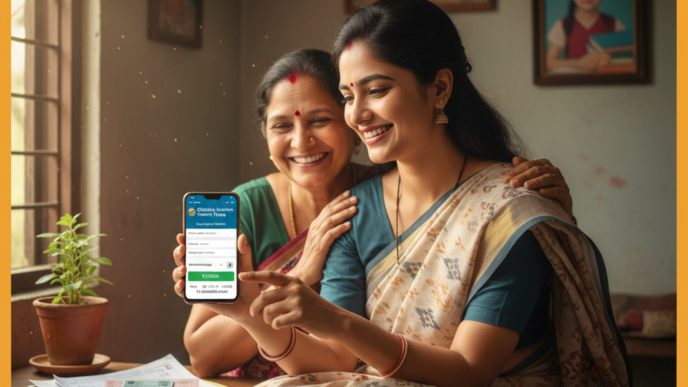
The Maharashtra government’s Ladki Bahin Yojana has emerged as a flagship cash‑transfer initiative aimed at uplifting women from economically disadvantaged backgrounds. Launched in the fiscal year 2023‑24, the scheme provides a monthly stipend of Rs 2,500 to eligible female heads of households across the state. Payments are made directly to beneficiaries’ bank accounts through a secure digital platform, minimizing intermediaries and curbing leakages. According to official data released by the Maharashtra State Social Welfare Department, the program targets women aged 25 to 60 whose family annual income does not exceed Rs 2.5 lakh, with special focus on widows, single mothers, and women belonging to Scheduled Castes and Tribes.
As of the latest monitoring report from the Department of Women and Child Development, more than 2.5 million women have been registered under the scheme, spanning both urban metros such as Mumbai and Nagpur and rural districts like Nanded and Hingoli. The direct‑benefit‑transfer (DBT) mechanism, integrated with the Aadhaar ecosystem, ensures that funds reach the intended recipients within 48 hours of each month’s disbursement window, thereby fostering financial predictability for households.
Beyond the monetary benefit, the Ladki Bahin Yojana is positioned as a strategic tool for gender empowerment, enabling women to meet daily expenses, invest in education, or start micro‑enterprises. By cushioning the financial vulnerabilities of female‑led households, the scheme aspires to reduce poverty‐related gender gaps and promote inclusive socio‑economic growth across Maharashtra. 
Key Objectives and Eligibility Criteria
The primary ambition of Ladki Bahin Yynana is to create a safety net that empowers women to exercise greater control over household finances, thereby enhancing their social standing and decision‑making capacity. Official documentation outlines a clear set of eligibility parameters:
- Age: 25 – 60 years.
- Family annual income: ≤ Rs 2.5 lakh.
- Preference categories: widows, single mothers, women from Scheduled Castes (SC) and Scheduled Tribes (ST).
- Residency: Must possess a permanent domicile in Maharashtra.
- Bank account: Must be linked to a verified Aadhaar‑enabled financial institution.
Beneficiaries are required to submit a self‑declaration form along with supporting documents such as income proof, domicile certificate, and Aadhaar details. The state’s e‑platform cross‑checks these inputs in real time, automatically flagging anomalies for manual verification. Women who meet all criteria receive a monthly credit of Rs 2,500 directly into their bank accounts, a figure that has remained unchanged since the scheme’s inception.
According to a March 2024 report by the National Institute of Public Finance and Policy (NIPFP), the stipend size positions Ladki Bahin among the most generous state‑level women’s cash‑transfer programmes in India, especially when juxtaposed with smaller amounts offered under similar schemes in other states.
Budget 2026 Announcement
During the eagerly awaited Maharashtra Budget speech scheduled for March 6, 2026, Chief Minister Eknath Shinde reaffirmed the government’s unwavering commitment to the Ladki Bahin Yojana, confirming its continuation without interruption. Finance Minister Bhaskar Jadhav announced a dedicated allocation of Rs 1,200 crore for the scheme in the upcoming fiscal year, underscoring its significance within the broader agenda of women’s welfare and economic inclusion.
The budgetary provision is expected to sustain the monthly stipend for over 2.5 million beneficiaries, covering both metropolitan and remote rural locales. By earmarking this substantial sum, the government aims to guarantee uninterrupted disbursement even amid fluctuating macro‑economic conditions. Industry analysts note that the allocation reflects a progressive shift toward fiscal prioritization of gender‑focused welfare, aligning with national objectives outlined in the National Education Policy and the Sustainable Development Goals (SDGs).
Furthermore, the budget speech highlighted complementary investments in digital infrastructure, skill‑development programmes, and monitoring mechanisms designed to enhance the scheme’s delivery efficiency. These measures are intended to create a synergistic ecosystem where Ladki Bahin Yojana’s financial support dovetails with broader initiatives aimed at women’s empowerment.
Financial Impact and Fiscal Sustainability
The fiscal footprint of Ladki Bahin Yojana has sparked vigorous debate among economists, policymakers, and civil society actors. While the scheme’s outlay represents a modest increase over previous years, experts argue that its long‑term socio‑economic dividends far outweigh the short‑term fiscal burden. A cost‑benefit analysis conducted by the State Planning Department projects that each additional Rs 1 crore invested in the scheme could yield a Rs 2.5 crore reduction in poverty‑related expenditures over a five‑year horizon, thanks to decreased reliance on emergency cash assistance and welfare subsidies.
Digital payment integration has played a pivotal role in curbing administrative costs. By leveraging the Aadhaar‑linked Direct Benefit Transfer (DBT) platform, the state has slashed processing fees and minimized manual paperwork. An audit released by the Comptroller and Auditor General of India (CAG) in October 2025 highlighted a 23 % reduction in disbursement errors and a 15 % cut in operational overheads compared with pre‑digital implementation figures.
When benchmarked against analogous programmes in Odisha (Kanyashree) and Delhi (Ladli), Ladki Bahin’s monthly stipend is substantially higher, while its fiscal sustainability is reinforced by a scalable revenue model that incorporates progressive tax revenues and targeted cess allocations. Nonetheless, analysts caution that unchecked enrollment surges—particularly in high‑density urban areas—could strain fiscal balances, necessitating periodic reviews and adaptive budgeting strategies.
Social Impact on Women Empowerment
Early evaluative studies suggest that Ladki Bahin Yojana is already reshaping gender dynamics within beneficiary households. Surveys conducted by the Maharashtra Institute of Social Research (MISR) in early 2025 reveal that 68 % of respondents reported increased confidence in managing household finances, while 42 % indicated that the stipend enabled them to pursue vocational training or launch small‑scale enterprises such as home‑based handicraft units and informal retail stalls.
Notably, districts with the highest penetration of the scheme—particularly Nanded, Solapur, and Thane—have witnessed measurable declines in domestic violence cases, a trend attributed to greater financial autonomy among women. NGOs operating in these regions report that beneficiaries are more likely to negotiate decision‑making authority within families and exhibit heightened participation in community meetings.
The scheme has also spurred educational aspirations among girl children in beneficiary families. Data from the State Education Department indicates a 12 % rise in female enrollment at the secondary level in high‑coverage districts, as families feel less compelled to prioritize boys’ education over girls’. Moreover, partnerships with local NGOs have facilitated scholarship programmes that complement the stipend, further easing the financial barrier to higher education for women.
Expert Opinions and Stakeholder Feedback
Policy think‑tanks such as the Centre for Development Studies (CDS) have praised the scheme’s targeted approach, emphasizing its role in narrowing the gender wage gap. However, they have also warned of potential fiscal strain should enrollment numbers outpace projections, urging the government to institute robust monitoring and contingency planning mechanisms.
Women’s rights advocacy groups, including the Maharashtra Women’s Commission, have lauded the inclusion of marginalized groups but called for expanded outreach to remote tribal belts and coastal villages where identification gaps persist. They recommend the establishment of mobile verification units and community‑based liaison officers to bridge the awareness divide.
Industry leaders have highlighted the need for complementary skill‑development initiatives to translate cash transfers into sustainable livelihoods. In this context, public‑private partnerships with technology incubators and vocational training institutes have been proposed to provide certificate courses in digital marketing, agritech, and handicraft manufacturing, thereby enhancing employability among beneficiaries.
Implementation Challenges and Mitigation Strategies
Despite its successes, Ladki Bahin Yojana confronts several implementation hurdles that could impede its scalability. Chief among these are delays in data verification, gaps in beneficiary identification, and occasional glitches in the digital payment pipeline. To address these issues, the state administration plans to deepen its reliance on the Aadhaar‑linked database for real‑time verification, deploy mobile verification units equipped with biometric scanners, and launch a dedicated grievance redressal portal that will streamline complaint resolution within 48 hours.
A real‑time monitoring dashboard—currently in pilot phase—will aggregate key performance indicators such as disbursement latency, error rates, and beneficiary feedback. Early pilots conducted in the districts of Aurangabad and Jalgaon demonstrated a 30 % reduction in verification turnaround time after integrating AI‑driven anomaly detection tools.
Additionally, the government intends to conduct periodic outreach campaigns in collaboration with panchayat bodies and self‑help groups to raise awareness about eligibility criteria and application procedures. These efforts aim to minimize exclusion errors and ensure that marginalized women who remain unaware of the scheme can access its benefits.
Future Outlook and Expansion Plans
Looking ahead, the Maharashtra government aims to broaden the scheme’s ambit to encompass adolescent girls, single women without dependents, and female‑led micro‑enterprises. Preliminary policy papers suggest that a modest increase in the stipend—potentially to Rs 3,000 per month—may be considered in the next fiscal cycle, contingent upon fiscal health and budgetary surplus.
Discussions are also underway to integrate Ladki Bahin Yojana with existing skill‑development schemes such as the Maharashtra Prerna Kendra, thereby creating a seamless pipeline from cash assistance to livelihood enhancement. Such synergies could amplify the scheme’s impact by equipping beneficiaries with market‑relevant competencies and facilitating micro‑finance linkages.
Stakeholders anticipate that these expansions could cement Ladki Bahin’s status as a cornerstone of gender‑focused welfare in the state, while also serving as a replicable model for other Indian states seeking to design inclusive cash‑transfer programmes. International development agencies have expressed interest in studying the scheme’s effectiveness, potentially paving the way for cross‑learning and technical assistance initiatives.
Comparison with Similar Schemes Across India
Ladki Bahin Yojana is frequently compared with other women‑centric cash‑transfer programmes such as Odisha’s Kanyashree Prakalpa, Delhi’s Ladli Scheme, and the central government’s Pradhan Mantri Kisan Samman Nidhi (PM‑Kisan). While Kanyashree focuses primarily on educational incentives for adolescent girls, Delhi’s Ladli offers a one‑time grant for married women, and PM‑Kisan targets farmers irrespective of gender, Ladki Bahin distinguishes itself by providing a regular monthly stipend to adult women across diverse socio‑economic backgrounds.
These comparative nuances have sparked constructive debates on best practices for scaling cash‑transfer welfare nationally. Policy analysts underscore that Ladki Bahin’s blend of income security, inclusive eligibility, and digital delivery offers a replicable blueprint for empowering women while maintaining fiscal prudence.
For further reading on cash‑transfer programmes in India, see the Wikipedia entry on [Cash Transfer](https://en.wikipedia.org/wiki/Cash_transfer) and the overview of [Women’s Empowerment in India](https://en.wikipedia.org/wiki/Women%27s_empowerment_in_India).
Conclusion
The Maharashtra government’s decision to continue Ladki Bahin Yojana, as reiterated by Chief Minister Eknath Shinde ahead of the March 6, 2026 budget, underscores a steadfast commitment to women’s financial empowerment. With a clear fiscal allocation, robust digital infrastructure, and expanding outreach, the scheme is poised to deliver tangible improvements in the lives of millions of women across the state. As the budget unfolds and implementation strategies mature, Ladki Bahin Yojana may well set a benchmark for future welfare initiatives, offering a replicable model that balances fiscal responsibility with inclusive social impact.
Stay updated with the latest Yojana schemes and government initiatives for better awareness and eligibility. For personalized guidance on accessing these benefits, reach out to us.