


Background of Laadki Bahin Yojana
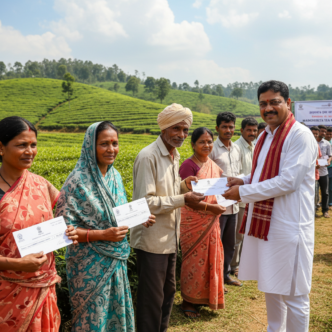
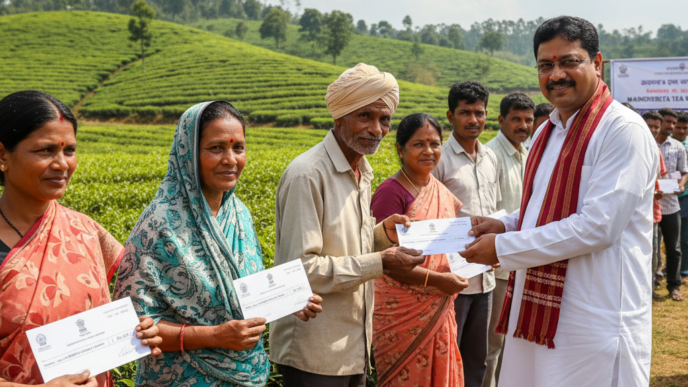
The Maharashtra government launched the Laadki Bahin Yojana in the fiscal year 2023‑24 as a flagship component of its women‑empowerment agenda. The scheme targets female heads of households who are widowed, divorced or single, offering a monthly assistance of Rs 2,500 to alleviate poverty, improve nutrition, support children’s education and ensure better health outcomes. Officials estimate that around 5.5 crore women across urban slums, tribal belts and rural villages were initially identified as eligible beneficiaries. Eligibility criteria include age above 18, possession of a valid Aadhaar card, and proof of residency in Maharashtra. The programme was rolled out through a combination of door‑to‑door surveys and Aadhaar‑based verification, aiming to create a safety net that would enable women to invest in micro‑enterprises and improve household well‑being.
Under the original design, the disbursement was carried out via direct benefit transfer (DBT) to bank accounts linked to the beneficiary’s Aadhaar number. The state highlighted that the scheme would reduce leakage, speed up payments and foster financial inclusion among marginalized women.
Rationale Behind Introducing eKYC
In mid‑2025 the administration introduced an electronic Know‑Your‑Customer (eKYC) protocol to modernise verification and tighten the verification loop. The move was motivated by three key objectives. First, to curb fraudulent claims that had previously inflated government expenditure on welfare payouts. Second, to align the scheme with national digital identity standards and broader government push for data‑driven public services. Third, to streamline the payment pipeline by reducing manual paperwork and enabling real‑time tracking of fund flow. 
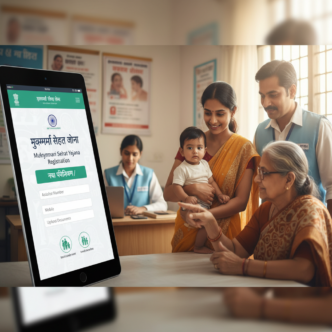
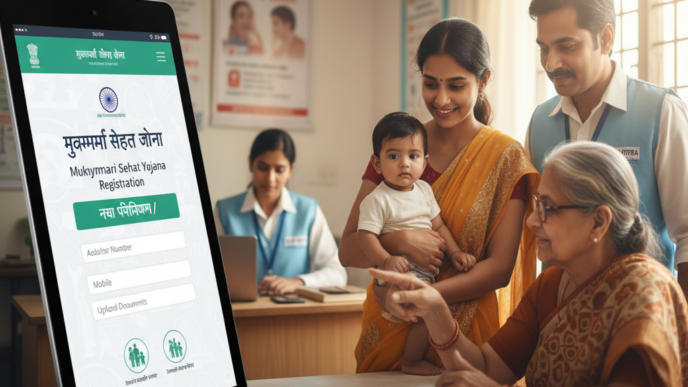
Under the new eKYC requirement, each beneficiary must log into the state‑run portal, upload a recent photograph, submit a live facial scan and link their Aadhaar number to a government‑approved mobile application. Successful validation unlocks the disbursement schedule; failure triggers a temporary hold and a notification to visit the nearest gram panchayat office for manual assistance. Experts note that while such digital rigor can improve transparency, it also introduces barriers for populations with limited digital literacy.
Impact of eKYC on Beneficiary Numbers
A February 2026 report from the Department of Women and Child Development disclosed a sharp contraction in registered beneficiaries: the count fell by 86 lakh, dropping from an estimated 5.5 crore to roughly 4.64 crore – a decline of more than fifteen percent. The steepest falls were recorded in districts with fragile broadband coverage and among women over sixty who struggle with digital interfaces. Many beneficiaries reported that earlier registration details were not automatically carried forward, forcing them to re‑submit photographs and documents that were often misplaced or deteriorated over time.
Local NGOs observed that the abrupt reduction left a significant number of households without the promised Rs 2,500 assistance, jeopardising nutrition programmes for children and undermining the scheme’s core objective of poverty alleviation.
Details of the Verification Process
The eKYC workflow mandated several steps that many users found daunting. Beneficiaries were required to access the state portal, select “Update Details,” enter their Aadhaar number, upload a clear facial image and, if possible, attach a fingerprint scan using a government‑certified mobile device. The system performed an automated match against the Aadhaar database and verified the biometric input. Upon successful validation, the portal released the next tranche of funds; otherwise, payments were paused and the applicant received a message directing them to a nearby gram panchayat office for assistance. Technical glitches, including server time‑outs and delayed responses, further discouraged participation, especially in remote, connectivity‑starved regions.
Key Factors Contributing to the 86‑Lakh Exodus
- Accessibility Issues: Poor broadband coverage in hilly and tribal zones prevented many women from completing the online upload within the stipulated deadline.
- Documentation Gaps: A large segment of the target population lacked recent passport‑size photographs or possessed outdated Aadhaar records, leading to application rejections.
- Language Barriers: The portal is primarily available in English and Hindi, limiting usability for Marathi‑speaking participants.
- Awareness Deficits: Communication campaigns about the mandatory re‑registration were insufficient, leaving many unaware of the upcoming deadline.
- Technical Glitches: Server outages and slow response times caused frequent timeouts, prompting users to abandon the process.
Expert Commentary on the Crisis
Prominent economists specializing in social safety nets have warned that a loss of 86 lakh beneficiaries threatens the intended impact of the Laadki Bahin Yojana. They emphasize that while eKYC can enhance transparency, it must be complemented by inclusive design principles. Recommendations include establishing offline registration kiosks at rural health centres, deploying mobile verification units staffed by trained operators, and providing multilingual support in Marathi, Hindi and English. Policy analysts also suggest instituting a provisional payment pathway that continues benefits while verification is pending, preventing abrupt discontinuation of aid for vulnerable families.
State Government’s Immediate Actions
In response to public outcry, the Maharashtra government announced corrective measures in March 2026. These comprise a two‑month extension of the eKYC submission deadline, the setup of temporary help desks at block development offices, and a statewide outreach programme employing radio jingles and village‑level meetings to explain the new requirements. Additionally, a provisional cash assistance scheme was introduced for families whose payments were paused due to verification failures, ensuring that basic consumption needs are not jeopardised. While these steps have been welcomed as short‑term relief, critics argue that they do not address the structural shortcomings of a fully digital verification model.
Broader Lessons for Nationwide Welfare Digitisation
Maharashtra’s experience mirrors similar teething problems observed in other Indian states that have transitioned to Aadhaar‑centric welfare delivery. The central government’s aggressive push for digital onboarding often outpaces the readiness of marginalized communities, leading to unintended exclusions. Analysts caution that a one‑size‑fits‑all approach to eKYC may overlook regional disparities in technology adoption, literacy levels and infrastructural capabilities. They advocate for a calibrated rollout, pilot‑testing in selected blocks, and continuous feedback loops with local NGOs and community leaders to fine‑tune the process.
Potential Pathways for Programme Restoration
To rebuild trust and restore the beneficiary count, the Laadki Bahin Yojana could adopt a hybrid verification model that blends biometric checks with alternative documentation such as ration cards, voter IDs or school certificates. Introducing voice‑based verification for illiterate users, or enabling community elders to vouch for applicants, may also enhance inclusivity. Furthermore, investing in digital‑literacy workshops and providing subsidised internet access at panchayat offices could lower the barrier to entry. Continuous monitoring through independent audit firms would ensure that any revised process remains transparent and accountable.
Conclusion and Forward Look
The precipitous drop of 86 lakh beneficiaries after eKYC implementation serves as a stark reminder that technological innovations must be aligned with the lived realities of intended recipients. While the Laadki Bahin Yojana holds promise as a tool for women’s empowerment, its efficacy ultimately depends on equitable access to digital services. Policymakers are urged to treat this episode as a learning opportunity, embracing both the efficiencies of eKYC and the safeguards necessary to protect vulnerable populations. By striking this balance, Maharashtra can pave the way for a more resilient, inclusive and future‑ready welfare ecosystem.
Maharashtra Government Portal | Aadhaar Overview | Direct Benefit Transfer
Stay updated with the latest Yojana schemes and government initiatives for better awareness and eligibility. For personalized guidance on accessing these benefits, reach out to us.