


Introduction to Ladki Bahin Yojana
The Ladki Bahin Yojana is a flagship welfare initiative of the Maharashtra government designed to uplift economically disadvantaged women across the state. Launched in the fiscal year 2023‑24, the scheme provides a monthly financial assistance of ₹1,500 to eligible female beneficiaries aged between 18 and 60 years. The funding is intended to support education, health, and livelihood needs, thereby fostering a more inclusive socio‑economic environment for women who traditionally face financial constraints. By directly transferring cash to eligible households, the program seeks to reduce dropout rates among girl students, improve maternal health indicators, and encourage entrepreneurship at the grassroots level.
Objective and Benefits
The primary aim of the Ladki Bahin Yojana is to bridge the gender‑based economic gap by empowering women to make autonomous decisions regarding their education, healthcare, and skill development. The cash incentive can be utilized for a myriad of purposes such as paying school tuition fees, purchasing essential medicines, or investing in vocational training programs. Moreover, the scheme aligns with national goals of achieving the Sustainable Development Goals (SDGs), particularly those related to gender equality (Goal 5) and poverty eradication (Goal 1). According to official data released by the Maharashtra Social Justice Department, over 1.2 million women have already benefited from the scheme, leading to measurable improvements in school enrolment ratios among marginalized communities.
Previous Verification Process
Initially, the verification of applications required physical submission of documents at designated government offices. Applicants had to present identity proofs, income certificates, and domicile verification, followed by manual cross‑checking by local welfare officers. This process, while thorough, posed significant challenges for women residing in remote rural areas, where travel to government offices often meant loss of daily wages and additional logistical constraints. Reports from grassroots NGOs highlighted that nearly 30 % of eligible applicants in districts such as Nanded and Hingoli withdrew their applications due to the burden of travel and the fear of documentation errors. 
Shift to Digital e‑KYC
Recognizing the hurdles associated with physical verification, the Maharashtra Social Justice Department introduced a digital e‑KYC (Electronic Know Your Customer) pathway for the Ladki Bahin Yojana. Through a secure online portal, applicants can upload scanned copies of required documents, and the system automatically validates them using integrated data sources. This digital approach not only accelerates the approval timeline but also broadens access for women who possess mobile internet connectivity. The e‑KYC system leverages Aadhaar authentication and cross‑checks income data against the state’s welfare database, reducing processing time from weeks to mere days.
Recent Policy Update: Extension of e‑KYC Deadline
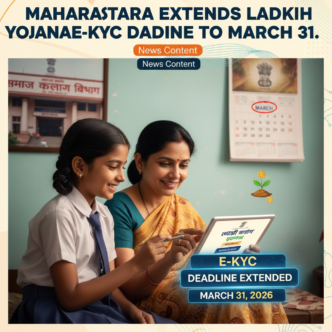
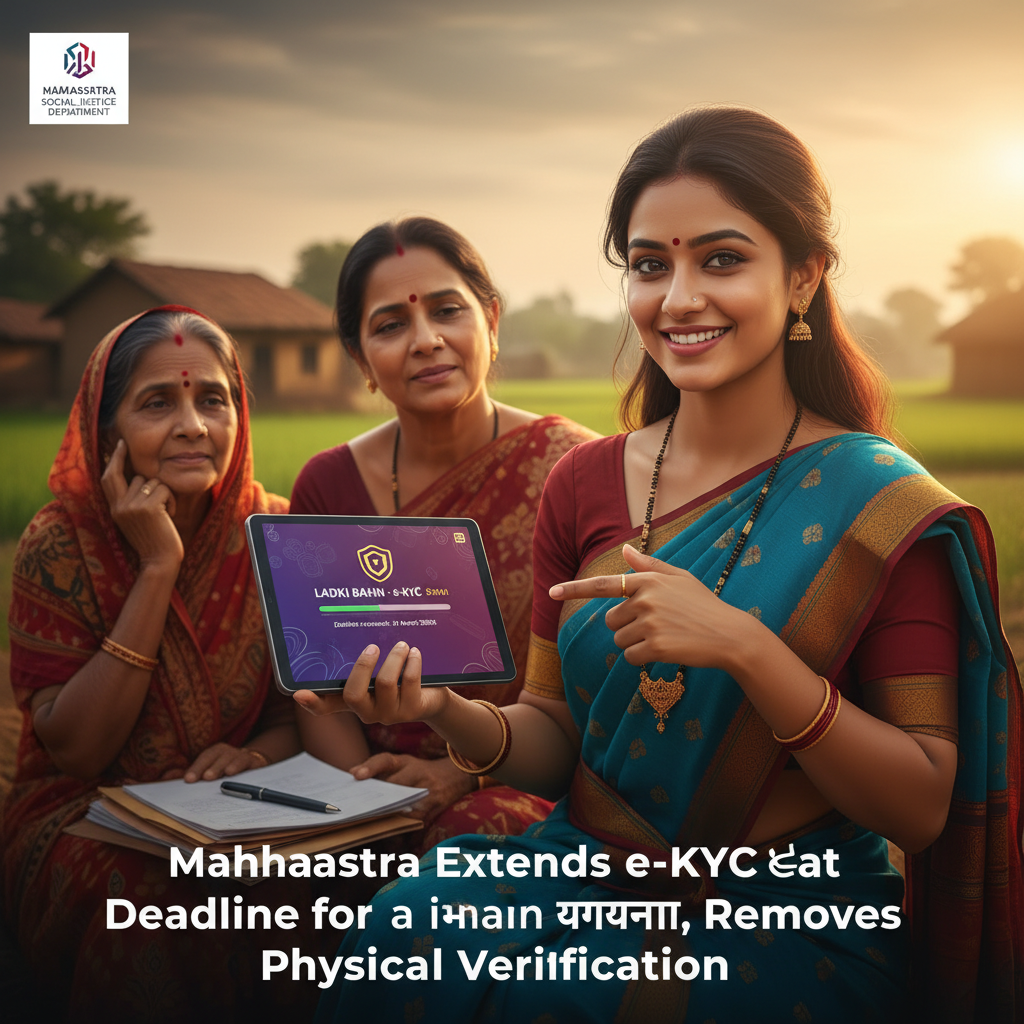
In a recent announcement, the state government confirmed that the deadline for completing e‑KYC under the Ladki Bahin Yojana has been extended to March 31, 2026. This extension aims to accommodate applicants who have faced delays due to technical glitches, insufficient documentation, or lack of awareness about the digital submission process. Moreover, the government has decided to completely discontinue the requirement for physical verification, thereby fully transitioning the scheme to an online framework. The decision was highlighted in a press release on the official Maharashtra government portal (Maharashtra Government Press Release) and has been widely covered by leading news outlets such as The Times of India and India Today.
Impact on Beneficiaries
The removal of physical verification is expected to significantly increase enrollment rates among marginalized women. Early estimates suggest that the relaxation of procedural barriers could boost the number of eligible beneficiaries by up to 25 % within the first quarter of the extended deadline. This surge is anticipated to have a ripple effect on community development, as increased financial support enables women to pursue higher education, start small enterprises, and improve household welfare. Case studies from districts like Solapur and Beed illustrate that families who previously hesitated due to travel costs are now enrolling their daughters in private schools, resulting in a measurable rise in female literacy rates.
How to Complete e‑KYC Online
To facilitate a smooth application experience, the government has outlined a step‑by‑step guide for completing e‑KYC:
- Visit the official portal: https://maharashtra.gov.in/ladki-bahin
- Register using your mobile number and create a secure password.
- Upload documents, including Aadhaar card, income certificate, and residence proof.
- Verify the uploaded documents through the built‑in verification tool.
- Submit the application and note the acknowledgment receipt.
Applicants are advised to double‑check the accuracy of the uploaded documents to avoid any delays in processing. In case of technical issues, a dedicated helpdesk is available at 1800‑123‑4567, and extensive FAQs can be accessed through the portal’s FAQ section.
Government’s Commitment to Digital Inclusion
The decision to abolish physical verification aligns with the broader vision of Digital India, which seeks to leverage technology for inclusive governance. By moving towards a fully digital ecosystem, the Maharashtra government aims to reduce bureaucratic red tape, minimize corruption, and ensure that welfare benefits reach the intended beneficiaries in a timely manner. This policy shift also underscores the importance of investing in digital infrastructure, especially in underserved regions. Recent investments in broadband connectivity under the Digital India initiative have expanded internet access to over 70 % of rural households, paving the way for greater Scheme awareness.
Challenges and Future Outlook
While the transition to digital verification offers numerous advantages, it also presents certain challenges. A segment of the population—particularly elderly women or those with limited digital literacy—may still encounter difficulties navigating the online portal. To address this, the government plans to establish community digital hubs and conduct awareness campaigns in rural areas. These initiatives will provide hands‑on assistance and training, ensuring that no eligible beneficiary is left behind due to technological barriers. Partnerships with local NGOs and self‑help groups are also being explored to conduct on‑the‑ground workshops, as highlighted in a recent report by the NGO Federation of India.
Conclusion
The extension of the Ladki Bahin Yojana e‑KYC deadline and the elimination of physical verification mark a progressive step toward streamlined and inclusive welfare delivery. By embracing digital solutions, the Maharashtra government not only enhances efficiency but also empowers women to achieve financial independence and social upliftment. Stakeholders are encouraged to spread awareness about the updated process, enabling eligible women across the state to reap the benefits of this transformative scheme. As the implementation matures, continuous monitoring and feedback mechanisms will be essential to fine‑tune the program and address emerging challenges, ensuring that the Ladki Bahin Yojana fulfills its promise of gender‑equitable development for years to come.
Stay updated with the latest Yojana schemes and government initiatives for better awareness and eligibility. For personalized guidance on accessing these benefits, reach out to us.