


Overview of Mukhyamantri Kayakalp Yojana
The Mukhyamantri Kayakalp Yojana is a flagship health‑infrastructure programme launched by the Madhya Pradesh government in 2022. Its primary aim is to upgrade the physical assets of all public health institutions—ranging from government hospitals, Primary Health Centres (PHCs), to Community Health Centres (CHCs)—so that they can deliver services comparable to private facilities. The scheme envisages a ₹2,800 crore investment over five years, targeting 1,200 health sites across the state. Key focus areas include:
- Renovation of building façades and expansion of wards.
- Procurement of state‑of‑the‑art medical equipment.
- Implementation of patient‑friendly amenities such as waiting lounges, digital kiosks, and enhanced sanitation.
- Capacity building for staff through specialised training modules.
The initiative is a direct response to the national push for universal health coverage, aligning with the Ayushman Bharat mission while adding a state‑specific layer of physical modernization. Eligibility for upgrades is determined by a scoring matrix that assesses existing infrastructure, patient load, and service gaps, ensuring that the most under‑performing facilities receive priority.
Rising Encroachment Threatens Key Healthcare Facilities
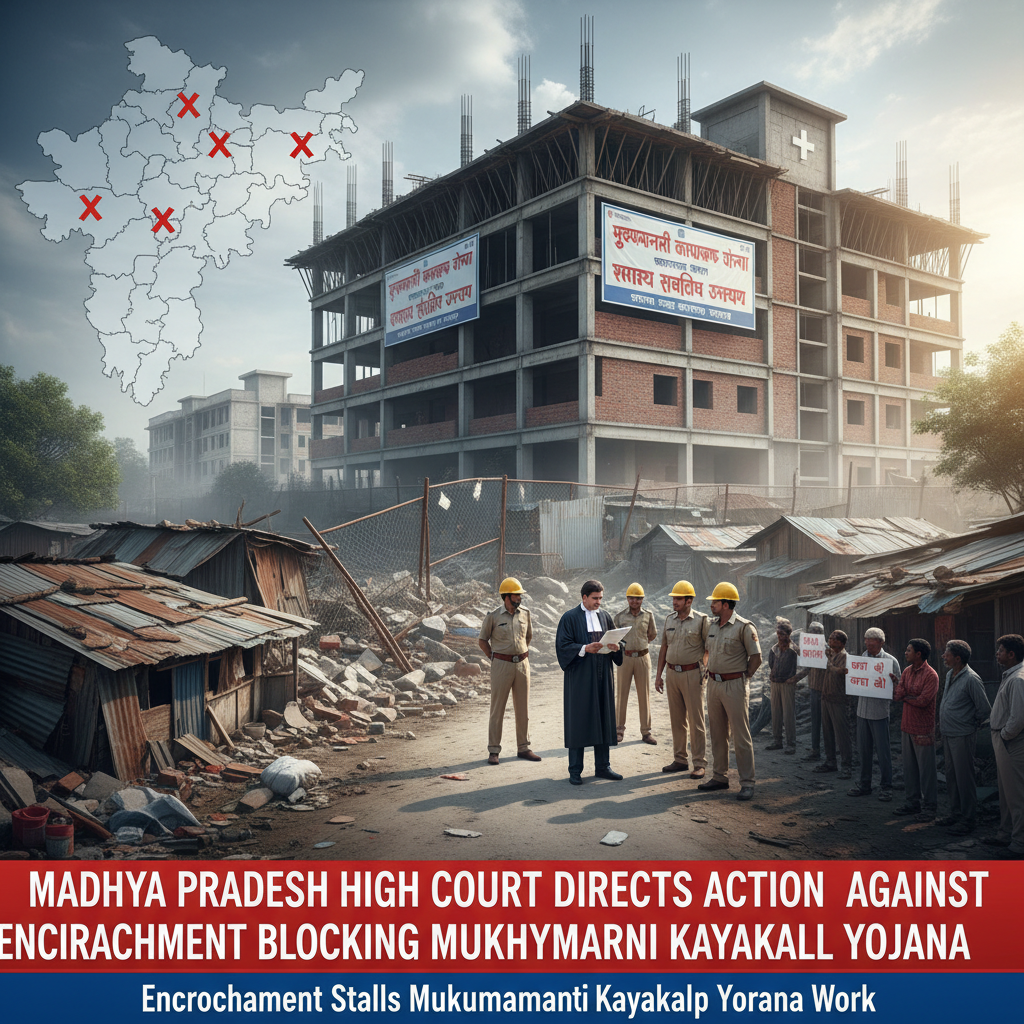
Recent field surveys have uncovered a disturbing pattern: many of the hospitals slated for Kayakalp upgrades are being illegally occupied by unauthorized structures. Encroachments are not limited to ad‑hoc shanties; they include: 
- Illegal stalls and vendor booths on hospital parking lots.
- Self‑built staff quarters and kitchen extensions that block expansion corridors.
- Peripheral constructions that encroach upon land earmarked for future diagnostic centres.
In some districts, the occupied area exceeds 15 % of the total site size, forcing renovation teams to redesign layouts and re‑allocate budgets. Municipal records reveal that over 85 illegal structures have been identified across 12 districts, many of which are rooted in informal settlements that have grown around urban peripheries in the last decade. These unauthorized occupations not only shrink usable floor space but also compromise ventilation, fire safety, and infection‑control standards—critical concerns for any health facility.
High Court Calls for Immediate Removal of Illicit Occupations
The Madhya Pradesh High Court intervened after a public‑interest petition highlighted the stalled progress at six major hospitals. In its landmark order dated 15 September 2024, the bench directed the health department and municipal bodies to:
- Immediately clear all encroached plots within a 30‑day window.
- Form a joint monitoring committee comprising officials from the health department, municipal corporation, and civil‑society representatives.
- Ensure that demolition actions comply with the Madhya Pradesh Municipalities Act and do not endanger patients or staff.
The judgment underscored that “delay in restoring public property directly impedes the right to health,” reinforcing the court’s authority to enforce compliance. This legal thrust has accelerated the administrative response, compelling the state to adopt a more decisive stance on land‑use violations.
How Encroachment Delays Expansions and Increases Costs
The ripple effects of illegal occupations are manifold:
- Extended project timelines: Each removal operation adds an average of 45 days to the construction schedule.
- Cost overruns: Redesigning layouts to accommodate lost space inflates budgets by up to 12 % per site.
- Reduced service capacity: Shrinking viable floor area limits the number of beds that can be added, adversely affecting patient throughput.
- Safety hazards: Blocked emergency exits and inadequate access routes increase the risk of accidents during emergencies.
- Legal disputes: Encroachers often lodge counter‑petitions, leading to protracted litigation that further stalls works.
These challenges threaten the timely delivery of critical upgrades such as new intensive‑care units and advanced diagnostic labs, which are essential for meeting the rising health demands of Madhya Pradesh’s 8 crore population.
State’s Clean‑Up Plan: Survey, Notices, Demolition, Monitoring
In direct response to the High Court’s directives, the health department unveiled a four‑phase clearance strategy:
- Comprehensive GIS Mapping: Using satellite imagery and ground‑truthing, officials have identified 1,023 parcels of institutional land, flagging 87 % as vulnerable to encroachment.
- Legal Notices to Encroachers: Written notices demanding voluntary vacating of premises were dispatched to 642 occupants, with a 15‑day compliance window.
- Systematic Demolition Drive: Municipal demolition squads, equipped with heavy‑machinery and security personnel, began removing illegal structures from the first 12 sites in early October 2024.
- Enforcement Collaboration with Police: Local law‑enforcement agencies were tasked with preventing retaliatory actions, ensuring the safety of both officials and displaced families.
To safeguard future expansions, the department is also exploring alternative plots in the vicinity of affected hospitals, ensuring that the overall footprint of each health institution can be enlarged without compromising service quality.
Voices from the Ground: Community, Encroachers, and Civil Society
Public sentiment reflects a complex mix of support and apprehension. Many residents welcome the removal of illegal stalls that previously clogged hospital access, viewing it as a step toward safer, cleaner healthcare environments. Conversely, some former encroachers have voiced concerns about sudden displacement, urging the government to provide temporary shelter or livelihood assistance. NGOs and local activist groups have stepped in to mediate dialogues, emphasizing that the broader public interest in a robust health system outweighs individual grievances. Recent community workshops, held in partnership with the civil‑society sector, have produced a charter of recommendations, including:
- Allocation of subsidised rental housing for displaced families.
- Skill‑development programmes to help affected individuals transition into alternative livelihoods.
- Establishment of a grievance redressal cell to address disputes in a transparent manner.
These outreach efforts aim to balance the imperatives of legal compliance with socio‑economic compassion.
Learning from the Past: Historical Patterns of Land Encroachment in Madhya Pradesh
Encroachment of government land is not a recent phenomenon in Madhya Pradesh. Historically, rapid urbanisation—particularly in districts like Indore, Bhopal, and Jabalpur—has led to informal settlements expanding onto public parcels. Over the past decade, high‑profile cases have emerged where schools, police stations, and even power sub‑stations were partially or fully occupied by unauthorized structures. These trends reflect deeper challenges:
- Inadequate municipal zoning regulations.
- Weak enforcement of land‑use policies.
- Poverty‑driven demand for affordable housing.
When critical health facilities are targeted, the impact reverberates beyond construction delays, affecting public trust in government institutions and perpetuating perceptions of administrative inefficiency. Addressing encroachment therefore requires a holistic approach that intertwines urban planning, socioeconomic support, and legal enforcement.
Legal Backing: Encroachment Laws and Court Orders
The legal framework governing unauthorized occupation of public property is anchored in several statutes:
- Madhya Pradesh Municipalities Act, 1961: Empowers municipal bodies to demolish illegal structures erected on government land without prior permission.
- Indian Penal Code, Section 441: Defines criminal trespass, providing a penal remedy for encroachment.
- Right to Fair Compensation and Transparency in Land Acquisition Act, 2013: Governs any compulsory acquisition of public land, mandating compensation and due‑process safeguards.
The High Court’s recent directives draw directly from these provisions, reinforcing that any delay in clearing encroachments can be challenged as a violation of statutory duties. Legal scholars note that strict adherence to these laws not only deters future violations but also fortifies the state’s position in subsequent litigation.
Socio‑Economic Ripple Effects of Delayed Health Infrastructure
When expansions are stalled, the downstream consequences affect the entire healthcare ecosystem. Delayed addition of new wards translates into longer waiting times for outpatient services, overcrowded emergency departments, and heightened reliance on private clinics—especially in rural belts where public options are limited. A study by the Madhya Pradesh Public Health Society projects that each month of postponement could increase outpatient backlogs by an estimated 3,200 patients, leading to a projected ₹150 crore rise in out‑of‑pocket health expenditures. Moreover, the prolonged ambiguity surrounding facility upgrades can erode confidence in public health institutions, potentially prompting skilled healthcare professionals to migrate toward private practice or overseas opportunities.
Benchmarking Success: How Other States Avoided Encroachment Pitfalls
Comparative analysis with similar schemes in other Indian states reveals valuable lessons. Kerala’s Ayushman Bharat Expansion incorporated mandatory pre‑project land‑clearance and GIS‑based boundary mapping, reducing encroachment incidents by 78 % during implementation. Rajasthan’s Su Swasthya Yojana established a rapid‑response demolition task force, cutting clearance time from six months to under two weeks. Key takeaways for Madhya Pradesh include:
- Integrating GIS mapping of health‑institution boundaries at the planning stage.
- Conducting early stakeholder workshops to sensitize local communities about the scheme’s benefits.
- Forming dedicated rapid‑response teams equipped for swift, lawful demolition.
- Embedding stricter penalty clauses in municipal bylaws to discourage illegal occupation.
Adopting these best practices can substantially mitigate the risk of future encroachment, ensuring smoother project execution.
Recommendations to Secure the Kayakalp Vision
To safeguard the long‑term success of the Mukhyamantri Kayakalp Yojana, experts propose a set of strategic interventions:
- GIS‑Enabled Monitoring: Deploy continuous GIS‑based surveillance to identify vulnerable land parcels in real time.
- Strict Penal Provisioning: Amend municipal codes to impose heavier fines and mandatory demolition timelines for encroachments.
- Early Risk Assessment: Integrate encroachment‑risk analysis into the feasibility studies of all health‑infrastructure projects.
- Transparent Communication: Maintain open channels with the public, courts, and civil‑society groups to build trust and pre‑empt conflicts.
Implementation of these measures will not only protect the physical assets earmarked for upgrade but also reinforce the broader vision of delivering patient‑centric, high‑quality healthcare across Madhya Pradesh.
Stay updated with the latest Yojana schemes and government initiatives for better awareness and eligibility. For personalized guidance on accessing these benefits, reach out to us.