



Introduction
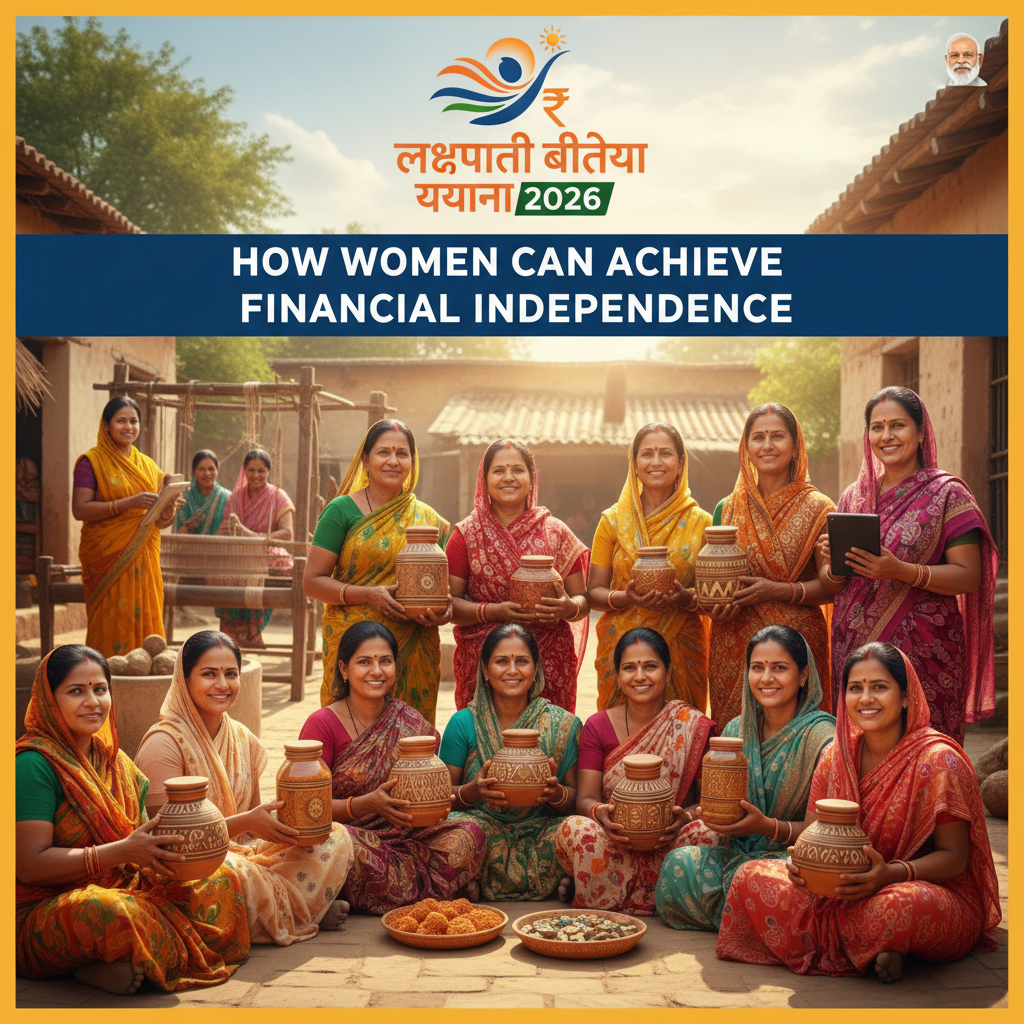
Prime Minister Narendra Modi’s government has launched a transformative livelihood programme called Lakhpati Bitiya Yojana, aimed at converting women’s self‑help groups (SHGs) into thriving micro‑enterprises. The initiative targets the empowerment of one hundred thousand women across rural India, enabling them to achieve an annual income of at least one lakh rupees by 2026. By intertwining skill development, micro‑credit, and market linkage, the scheme aspires to create a new class of “lakhpatis” who can drive inclusive growth and gender parity in the nation’s economy.
Background and Rationale
India’s rural landscape is dotted with millions of informal workers, a substantial proportion of whom are women engaged in handicrafts, agriculture, and petty trade. According to the Ministry of Rural Development, over 70 % of SHG members lack access to formal credit and structured training, limiting their capacity to scale operations. The 2023‑24 Economic Survey highlights a gender earnings gap of 34 %, underscoring the need for targeted interventions. Recognizing these disparities, the Ministry of Rural Development partnered with the Ministry of Women and Child Development to introduce Lakhpati Bitiya Yojana, positioning it as a catalyst for women’s economic inclusion and social upliftment.
For a broader understanding of women’s collective enterprises, see the Wikipedia entry on Self‑Help Groups, and the Microenterprise overview. 
Key Objectives and Benefits
The programme is anchored on four inter‑linked objectives that together form a holistic ecosystem for women entrepreneurs:
- Skill Enhancement: Deliver intensive training in high‑growth sectors such as agro‑processing, textile design, digital services, and renewable energy.
- Financial Inclusion: Provide seed funding, micro‑credit, and interest‑subvention through public sector banks and micro‑finance institutions.
- Market Convergence: Connect beneficiaries with e‑commerce platforms, retail chains, and export houses to ensure price discovery and order continuity.
- Impact Monitoring: Deploy a real‑time digital dashboard that records enrollment, income trajectories, and business sustainability metrics.
These pillars are designed to convert informal earnings into sustainable, scalable ventures, echoing the aspirations outlined in the Gender Equality discourse.
Implementation and Eligibility Framework
Eligibility is restricted to women who are active members of registered SHGs, Mahila Mandals, or Farmer Producer Companies, aged between 18 and 60, and who possess a viable micro‑enterprise with an annual turnover below ₹10 lakh. Priority is accorded to individuals from Scheduled Castes, Scheduled Tribes, and aspirational districts identified under the NITI Aayog’s composite index.
Phase 1 – Capacity Building: NGOs and training institutes conduct a 30‑day curriculum covering financial literacy, business planning, digital tools, and market research. Phase 2 – Financial Assistance: Selected groups receive seed capital of up to ₹5 lakh, released in tranches tied to milestone achievements such as product certification or market entry. Phase 3 – Market Linkage: Partnerships with major e‑commerce aggregators (e.g., Amazon Karigar, Flipkart Samarth) and national trade fairs facilitate order flow and brand visibility. A centralized monitoring unit leverages GIS mapping and analytics to track geographic spread and performance indicators.
Impact, Challenges and Future Outlook
Official projections estimate that Lakhpati Bitiya Yojana will lift 100 000 women into the lakhpati income bracket, creating roughly 300 000 indirect jobs in supply‑chain, logistics, and allied services. Early pilots in Madhya Pradesh and Odisha have already demonstrated measurable gains: a candle‑making unit in Bhopal achieved a monthly turnover of ₹12 lakh within six months, while an organic‑spice cooperative in Ganjam secured contracts with national retail chains, boosting household incomes by 45 %.
Implementation hurdles include limited digital literacy, inadequate rural infrastructure, and product‑category saturation. To mitigate these, the government will deploy mobile training units, subsidise transport for market visits, and sponsor innovation contests that encourage portfolio diversification and climate‑resilient practices.
Looking ahead, the Ministry plans to scale the model to additional states, integrate climate‑smart agriculture components, and expand digital payment platforms to enhance transaction transparency. Continuous beneficiary feedback loops will guide policy refinements, ensuring that Lakhpati Bitiya Yojana remains responsive to evolving socio‑economic dynamics.
Stay updated with the latest Yojana schemes and government initiatives for better awareness and eligibility. For personalized guidance on accessing these benefits, reach out to us.