


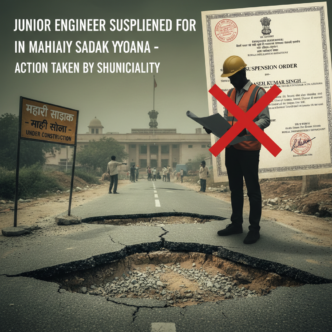

Overview of Mhari Sadak Yojana
The Mhari Sadak Yojana is a flagship rural road development programme launched by the Madhya Pradesh government in 2023 to upgrade and construct over 5,000 kilometres of gram panchayat‑level roads across 12 districts. The initiative seeks to improve last‑mile connectivity for farmers, school‑going children, and small‑scale entrepreneurs, thereby accelerating economic activity in remote areas. Funding is a mix of state budget allocations and central government grants under the Pradhan Mantri Gram Sadak Yojana (PMGSY) umbrella. Technical oversight is administered by the Rural Development Department, which conducts field inspections and coordinates with local municipalities to ensure alignment with national road‑building standards.
Key components of the scheme include the use of recycled aggregates, low‑emission construction equipment, and GIS‑based mapping of priority corridors. Community participation is encouraged through gram sabhas that identify problem stretches and provide feedback on design specifications. The programme also incorporates a digital monitoring dashboard that tracks progress, expenditure, and quality metrics in real time, aiming to enhance transparency and citizen trust.
Scope and Objectives
Under the broader vision of the Mhari Sadak Yojana, the target is to reduce average travel time on rural routes by at least 30 percent and to cut post‑harvest losses for agricultural produce by up to 15 percent. The scheme places particular emphasis on safety features such as proper drainage, signage, and pedestrian pathways. Environmental safeguards require that construction sites adopt soil conservation measures and limit deforestation. Eligibility criteria prioritize areas where the existing road condition is rated “poor” or “very poor” on the state’s infrastructure index, as identified through satellite imaging and citizen surveys. 
Objectives are measured through a set of performance indicators, including the number of roads completed, quality‑assurance test results, and beneficiary satisfaction scores collected via the state’s grievance portal. The government has pledged to publish quarterly progress reports to maintain public accountability and to enable civil society organizations to monitor implementation.
Details of the Incident
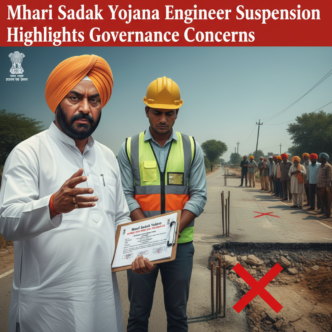
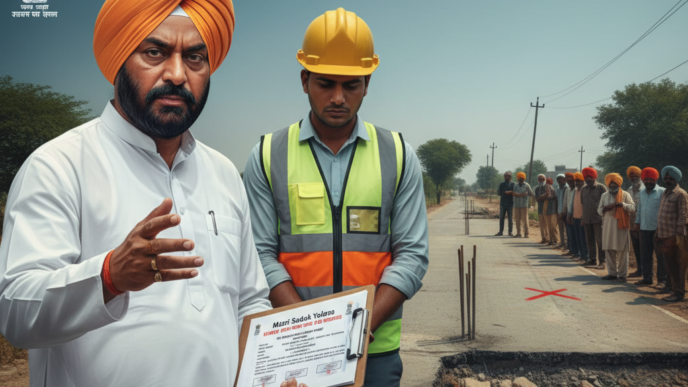
In February 2026, a junior engineer identified as Rajesh Kumar Singh was assigned to supervise a critical 2‑kilometre stretch of the Mhari Sadak Yojana in Shahabad Municipality. During routine field verification, it was discovered that the engineer had willfully ignored mandated quality‑control protocols, allowing sub‑standard pavement layers to be laid without adequate compaction. Within weeks, the newly surfaced road exhibited widespread cracking and water pooling, rendering it unsafe for vehicular and pedestrian traffic. The irregularities were first reported by a local resident through the Madhya Pradesh grievance portal, prompting an immediate administrative response.
The incident sparked a wave of public outcry on social media, with hashtags like #MhariSadakNegligence trending locally. Residents organized a protest march demanding swift disciplinary action, highlighting the tangible impact on daily commutes, school attendance, and market access for small traders.
Investigation Findings
An internal inquiry, jointly conducted by the Municipal Engineer’s Office and the Public Works Department, confirmed a series of violations of the scheme’s technical specifications. Findings revealed the use of inferior binding agents, insufficient curing periods, and the omission of mandatory compaction tests on three consecutive layers. Moreover, the junior engineer failed to record these deviations in the official project log, effectively concealing evidence of non‑compliance. The investigation report highlighted a pattern of bypassing quality‑assurance checkpoints to meet artificially compressed project timelines, suggesting deliberate negligence in the execution of the Mhari Sadak Yojana.
Key technical deficiencies identified include:
- Use of low‑grade bitumen with a penetration value below the prescribed 60 mm.
- Compaction density recorded at 92 percent instead of the required 96 percent.
- Absence of surface drainage gradients, leading to water accumulation.
- Failure to conduct post‑construction load‑bearing tests.
These lapses not only compromised structural integrity but also inflated projected maintenance costs by an estimated INR 2 crore over the next five years.
Disciplinary Action
Following submission of the investigation report to the District Collector’s office, a formal suspension order was issued against Rajesh Kumar Singh, effective immediately. The order cites “serious breach of professional ethics and statutory obligations” as grounds for suspension and mandates a departmental inquiry to explore additional penalties, which may include dismissal or fines. All ongoing road‑work assignments within Shahabad Municipality have been temporarily frozen, and a senior engineering officer has been appointed as interim overseer to review all pending project files.
The suspension is part of a broader effort to reinforce accountability under the Mhari Sadak Yojana. Officials emphasized that such punitive measures are intended to deter future lapses and to restore confidence among citizens and investors.
Reactions from Stakeholders
Local communities have expressed a mixture of relief and apprehension following the suspension. While many welcomed decisive action, several stakeholder groups called for systemic reforms to prevent recurrence. The Shahabad Traders Association urged the administration to adopt third‑party audits and install real‑time video surveillance on construction sites. Education sector representatives highlighted the continued disruption to student commutes and demanded expedited repair works.
Senior officials from the Rural Development Department reaffirmed their commitment to transparency, announcing plans to publish monthly progress dashboards and to empower citizen oversight committees to report irregularities directly to the state grievance redressal portal. They also pledged to conduct periodic capacity‑building workshops for engineering staff on quality‑control standards.
Impact on Citizens
The compromised road segment, once a vital corridor linking five villages to the nearest wholesale market, now experiences frequent closures due to potholes and drainage failures. Farmers report delayed dispatch of perishable produce, resulting in an estimated 8 percent increase in post‑harvest losses for the current season. Schoolchildren face longer travel times, with some reporting missed classes during heavy rains. Small‑scale entrepreneurs have voiced concerns over increased transport costs, which erode profit margins and discourage investment in peripheral markets.
These socio‑economic repercussions underscore the broader implications of infrastructural negligence on rural development. The incident has reignited calls for stringent quality assurance mechanisms to safeguard public investments and ensure that the benefits of the Mhari Sadak Yojana are fully realized by the intended beneficiaries.
Future Monitoring and Policy Reforms
In direct response to the episode of Mhari Sadak Yojana negligence, the state government announced a suite of policy reforms aimed at tightening oversight and enhancing transparency. Key measures include:
- Mandating third‑party validation of construction quality through accredited agencies.
- Introducing a digital checkpoint system that records real‑time progress, material usage, and compaction data.
- Establishing a whistle‑blower protection framework for engineering staff to report misconduct without fear of retaliation.
- Revising project timelines to incorporate built‑in quality‑assurance milestones, with stringent penalties for non‑compliance.
- Launching a public portal where citizens can view geo‑tagged images of road works, submit feedback, and track remedial actions.
The reforms are designed to create a resilient, accountable implementation model that delivers reliable rural connectivity while preserving the integrity of public funds. By integrating technology, community participation, and rigorous standards, the government aims to restore public trust in the Mhari Sadak Yojana and to set a benchmark for similar schemes across India.
Stay updated with the latest Yojana schemes and government initiatives for better awareness and eligibility. For personalized guidance on accessing these benefits, reach out to us.