


Introduction
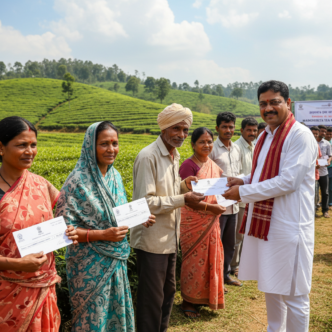
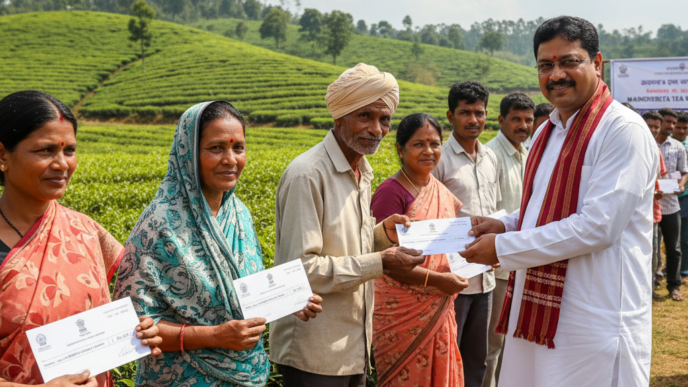
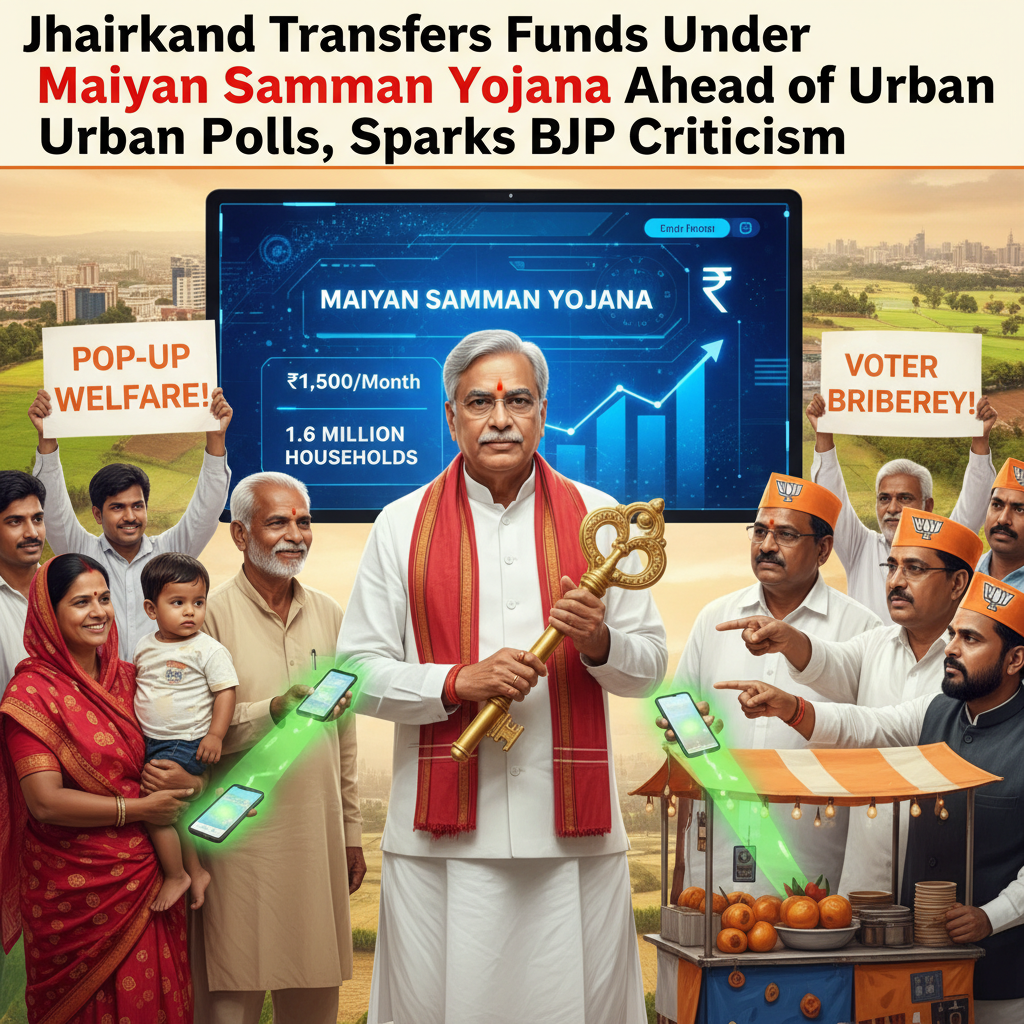
The Jharkhand government sparked a fresh wave of political debate on February 21, 2026 when it announced the release of funds under the Maiyan Samman Yojana just a day before the state’s urban local body elections were set to begin on February 22. The timing and the magnitude of the disbursement—approximately INR 250 crore earmarked for over 1.6 million households—have been seized upon by opposition parties as a textbook case of ‘pop‑up welfare’ aimed at swaying voters. The BJP has labeled the move a strategic ploy to cash in on electoral sentiment, while government officials defend the release as a routine welfare delivery.
Overview of Maiyan Samman Yojana
Launched in the fiscal year 2023‑24, the Maiyan Samman Yojana is a state‑run cash‑transfer programme designed to uplift families living below the poverty line (BPL) in Jharkhand. Eligible households receive a direct monthly assistance of INR 1,500, a figure intended to cover basic food, health and education expenses. According to the scheme’s official documentation, the primary goals are “poverty alleviation, enhanced food security, and fostering small‑scale entrepreneurship among marginalized communities.”
The implementation framework relies on a beneficiary identification matrix that cross‑references data from the National Food Security Act, the Socio‑Economic Caste Census, and state‑maintained welfare registries. Jharkhand’s Finance Department, in coordination with the Rural Development Department, oversees the disbursement through direct bank transfers to the beneficiaries’ accounts. 
Political Context and Timing
Sources within the state finance department revealed that the latest instalment was scheduled for release on February 21 to ensure that beneficiaries received the funds before the polling day on February 22. The proximity of the payment to the electoral calendar has not gone unnoticed by political analysts. According to senior BJP leader Ramesh Sinha, “The government’s decision to front‑load the disbursement is highly suspicious and signals a desperate attempt to engineer voter goodwill through a short‑term fiscal pop‑up.”
Conversely, officials from the ruling coalition argue that the scheme’s disbursement schedule is pre‑determined by the Rural Development Act of 2021, which mandates regular cash‑transfer cycles to guarantee uninterrupted support for the poorest. They maintain that the timing aligns with the programme’s pre‑existing calendar rather than any electoral calculation.
Statutory Framework and Funding Source
The legal backbone of the Maiyan Samman Yojana is the Jharkhand State Rural Development Act of 2021, which empowers the state government to allocate discretionary funds for poverty‑alleviation initiatives. The scheme draws its financial resources from a dual pool: a portion of the state’s annual budget earmarked for social welfare and matching grants from the central government’s Rural Livelihood Mission. In the latest tranche, the state released INR 250 crore, covering approximately 1.6 million households across urban and rural districts.
Officials highlighted that the funding allocation was vetted by the Finance Commission and approved during the state’s quarterly budget review. This ensures compliance with the Jharkhand Finance Department’s financial norms and transparency requirements, even though critics argue that such transparency is lacking in practice.
Reactions from Political Parties
BJP spokespersons have used strong language to condemn the move. In a press briefing, Ramesh Sinha remarked, “Deploying welfare funds as a last‑minute electoral tactic betrays the trust of citizens and undermines the very purpose of these schemes.” The party has called for an independent audit of the disbursement to verify whether the funds were indeed earmarked for pre‑scheduled distribution or were accelerated for political gain.
In contrast, leaders from the Jharkhand Mukti Morcha (JMM) and the Indian National Congress (INC) have defended the initiative. JMM’s welfare minister emphasized that the scheme “provides a lifeline to millions of families who otherwise would struggle to meet daily expenses,” while INC officials highlighted the long‑term developmental benefits of stable cash transfers for education and health outcomes.
Impact on Beneficiaries
Field reports from NGOs operating in districts such as Ranchi and Dhanbad paint a picture of tangible improvement among recipients. Social worker Priya Kumar noted that “the timely credit of INR 1,500 each month enables families to purchase essential items, pay school fees, and even invest in small income‑generating activities such as poultry farming or handicraft production.”
A recent survey conducted by the Jharkhand Rural Livelihoods Mission found that 68 % of beneficiaries reported using the funds for food security, 22 % for healthcare, and 10 % for micro‑enterprise ventures. Moreover, the scheme has contributed to a modest rise in school attendance among children in targeted households, a trend attributed to reduced economic pressure on families.
Broader Implications for Welfare Policy
Experts argue that the Maiyan Samman Yojana episode underscores a critical challenge facing Indian welfare policy: the potential misuse of fiscal tools for partisan advantage. Political economist Dr. Arvind Mehta remarked, “When welfare payments are timed to coincide with elections, they risk being perceived not as public goods but as campaign contributions, eroding public trust in state‑run programmes.”
To mitigate such concerns, policymakers have called for an independent monitoring mechanism that would track funding releases, verify beneficiary eligibility, and ensure that disbursements adhere strictly to predetermined schedules. proposals include establishing a transparent online dashboard that logs each transaction in real time and an audit panel comprising representatives from civil society and academia.
Conclusion
The controversy surrounding the recent fund transfer under the Maiyan Samman Yojana reveals the delicate interplay between welfare delivery and electoral politics in Jharkhand. While the scheme itself delivers meaningful financial relief to millions of vulnerable households, the manner and timing of its latest disbursement have ignited a debate about accountability, transparency, and the ethical boundaries of state‑driven fiscal interventions. As the state heads into the urban local body polls, the outcome of this political flashpoint may shape future approaches to welfare financing and influence how similar schemes are administered across India.
Stay updated with the latest Yojana schemes and government initiatives for better awareness and eligibility. For personalized guidance on accessing these benefits, reach out to us.