


Introduction
BusinessLine reported on 18 February 2026 that the Jammu and Kashmir administration, in partnership with the Ministry of Skill Development and Entrepreneurship, has launched a targeted skill development programme aimed at revitalising the Union Territory’s human capital. The timing is significant: the Indian government is placing renewed emphasis on youth empowerment, job creation and the conversion of demographic dividend into inclusive growth. This initiative arrives at a juncture when migration from rural pockets of Jammu and Kashmir to metropolitan centres has intensified, putting pressure on both regional economies and national labour markets. By analysing the early outcomes of the scheme, journalists can illustrate how coordinated public‑private interventions are reshaping employment prospects, encouraging entrepreneurship and reducing the economic drain associated with out‑migration. The programme not only promises to up‑skill thousands of young people but also to anchor economic activity within the valley, fostering a more resilient, diversified and future‑ready workforce.
Scheme Overview
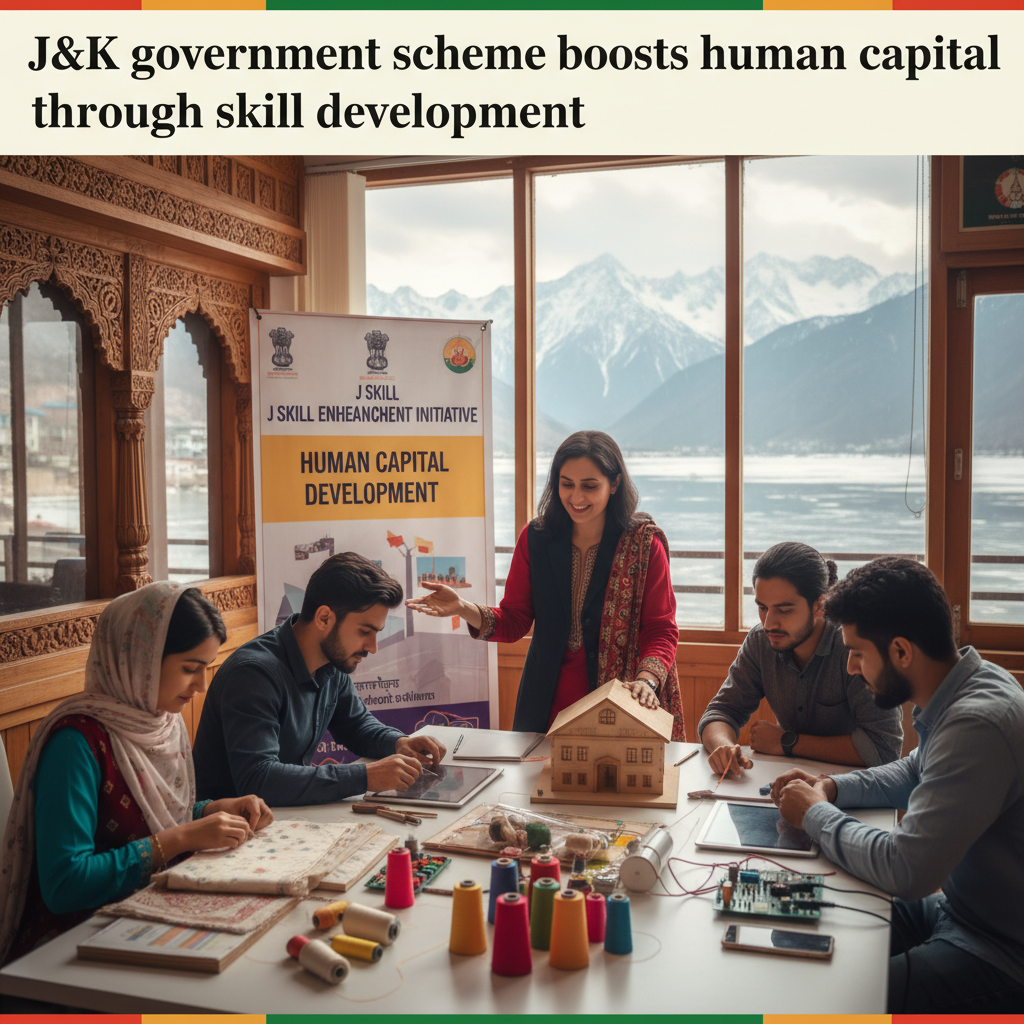
The initiative, officially titled the Jammu and Kashmir Skill Enhancement Initiative (JKSEI), is designed to close the skill gap in high‑growth sectors identified by the state’s economic roadmap. Targeted sectors include tourism and hospitality, traditional handicrafts, information technology, and renewable energy. Eligibility criteria are deliberately inclusive: unemployed youth aged 18 to 35 who have completed at least secondary education are encouraged to apply, with special provisions for women, persons with disabilities and residents of remote districts. The programme runs on a blended financing model that combines centrally‑sponsored funds, state budget allocations and private sector contributions, ensuring fiscal sustainability while allowing flexibility in resource deployment. Training is delivered through a network of state‑run training centres, polytechnic institutes and selected private partners, blending classroom instruction with hands‑on industry internships that last six to twelve months. Upon successful completion, participants receive a vocational diploma that is fully recognised under the National Skill Qualification Framework (NSQF), making their certification portable across India.
- Targeted sectors: tourism, hospitality, handicrafts, information technology, renewable energy
- Training duration: six to twelve months, inclusive of a mandatory industry internship
- Certification: vocational diploma aligned with the Skill India framework
- Funding model: blended central‑state financial support with private sector co‑investment
Economic Impact
Early impact assessments released by the State Skill Development Agency indicate that more than 70 percent of graduates secure employment within six months of certification, a figure that surpasses the national average for similar programmes. Success stories are emerging from districts once plagued by seasonal agricultural dependence: former farm labourers in Pulwama are now certified tour guides, digital marketing assistants in Srinagar’s growing e‑commerce ecosystem, and technicians maintaining solar micro‑grids in far‑flung villages. These placements translate into higher disposable incomes, spurring increased consumer spending that lifts local gross domestic product (GDP) figures by an estimated 1.2 percent in pilot districts. Moreover, the scheme has catalyzed a wave of micro‑enterprise creation; alumni are launching boutique travel agencies, artisanal handicraft cooperatives and renewable‑energy service firms that address niche market gaps. Policy analysts view this ripple effect as a critical step toward diversifying an economy traditionally anchored in tourism and agriculture, reducing reliance on external remittances and fostering self‑sufficiency. 
Institutional Framework and Challenges
Implementation is overseen by the State Skill Development Agency (SSDA), which operates under the Department of Planning and Development. The SSDA is responsible for curriculum design, trainer accreditation and the enforcement of quality‑assurance protocols that align with national standards. Strategic partnerships with industry associations—such as the Hotel and Restaurant Association of India and the Confederation of Indian Industry—ensure that course content remains responsive to evolving market demands, while regular stakeholder consultations create feedback loops for continuous improvement. Financial oversight is administered by the Finance Department, which tracks fund utilisation through a transparent digital ledger accessible to all stakeholders, thereby enhancing accountability. Monitoring and evaluation are carried out by an independent research firm that conducts baseline surveys, mid‑term reviews and impact assessments using standardized metrics such as employment duration, wage progression and skill retention rates.
Despite its promising trajectory, the programme faces several logistical and socio‑cultural hurdles. Geographic remoteness in many parts of the union territory hampers access to training centres, prompting the SSDA to deploy mobile training units equipped with portable laboratories and satellite internet hotspots. Connectivity constraints are being mitigated through satellite‑based e‑learning platforms that allow remote learners to engage with course material without reliance on terrestrial broadband. Gender inclusion remains a priority; women currently represent only a modest share of enrolments, so targeted outreach campaigns, scholarship schemes and safe‑housing arrangements have been introduced to boost female participation. Cultural attitudes that sometimes de‑value vocational training also contribute to early dropout rates, leading the agency to engage community leaders, religious organisations and local influencers in awareness workshops that highlight the long‑term career prospects of skill‑based occupations.
- Geographic remoteness: mobile training units and satellite e‑learning address access issues
- Gender inclusion: scholarships and outreach to increase female enrolment
- Cultural perception: community engagement to shift attitudes toward vocational education
Future Outlook and Policy Integration
Looking ahead, the Jammu and Kashmir government plans to scale the model to other underserved regions of the Union Territory and eventually to other states grappling with similar youth‑employment challenges. Expansion strategies include increasing the number of training hubs, introducing short‑term micro‑credential courses for up‑skilling existing workers and fostering joint ventures with private‑sector innovators in emerging fields such as artificial intelligence and green construction. A key focus will be the development of robust data‑analytics capabilities to track long‑term labour‑market outcomes, enabling policymakers to fine‑tune interventions based on evidence and to demonstrate the programme’s contribution to broader national objectives such as the Prime Minister’s Youth Employment Scheme and the Atmanirbhar Bharat agenda. Alignment with the Ministry of Skill Development and Entrepreneurship’s “Skill India” mission will also be deepened, ensuring that the state’s skilling success becomes a replicable ecosystem where vocational training, entrepreneurship and economic diversification co‑evolve. This forward‑looking vision positions Jammu and Kashmir as a laboratory for inclusive growth, offering a template for other regions seeking to harness their human capital for sustainable development.
Stay updated with the latest Yojana schemes and government initiatives for better awareness and eligibility. For personalized guidance on accessing these benefits, reach out to us.