


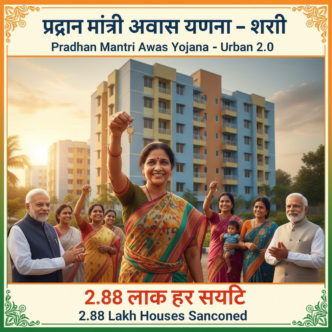
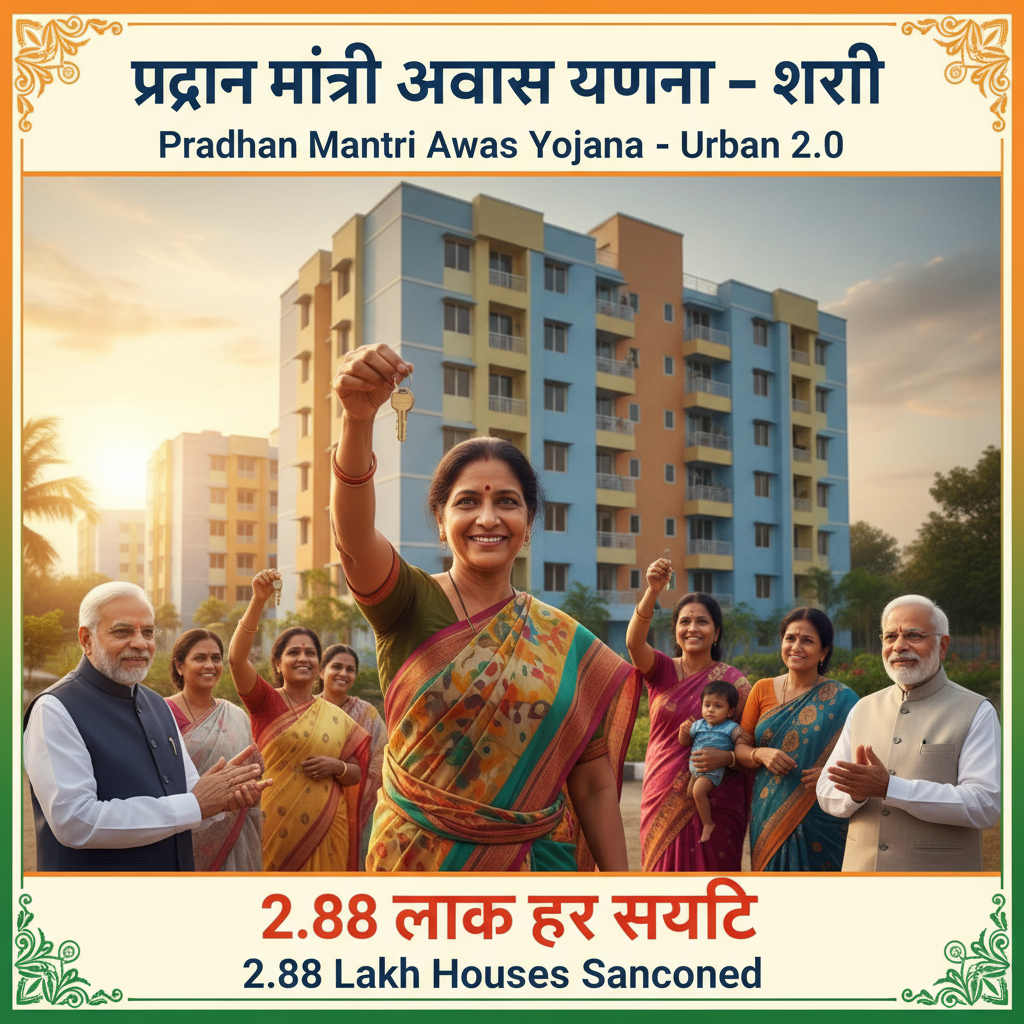
Government sanctions 2.88 lakh houses under PMAY‑Urban 2.0
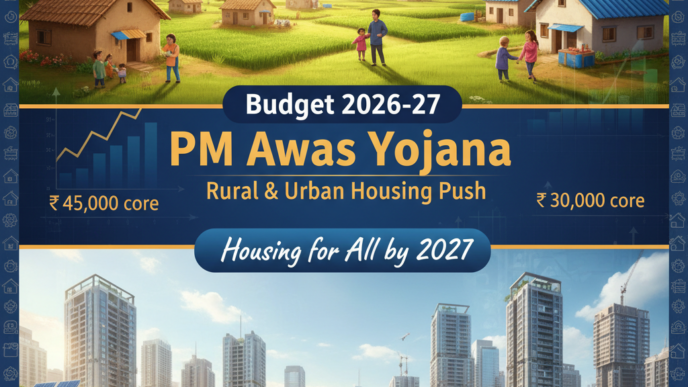
In a decisive move to accelerate affordable housing, the Ministry of Housing and Urban Affairs (MoHUA) has sanctioned 2.88 lakh houses under the Pradhan Mantri Awas Yojana – Urban 2.0 (PMAY‑Urban 2.0). This tranche marks the latest rollout of the refreshed urban housing initiative that seeks to deliver pucca homes to low‑income urban families by 2024‑25. The sanctioning underscores the government’s resolve to meet the “Housing for All” target while integrating technology, data‑driven beneficiary identification, and streamlined financing mechanisms to ensure faster delivery and greater transparency.
What is Pradhan Mantri Awas Yojana – Urban 2.0
Pradhan Mantri Awas Yojana – Urban 2.0 is the upgraded version of the original PMAY‑Urban launched in 2015. While the first phase aimed to provide housing for every urban household by 2022, rapid urbanisation highlighted gaps in financing, quality assurance, and sustainability. Consequently, Urban 2.0 was introduced in 2023, expanding the scope to cover tier‑2 and tier‑3 cities, incorporating green building standards, and sharpening the eligibility framework. The scheme now blends cash subsidies, interest subvention on home loans, and targeted allocation for slum dwellers, women‑headed households, and persons with disabilities. For a deeper dive, refer to the comprehensive overview on Wikipedia.
Eligibility, Benefits and Subsidy Details
The scheme adopts a data‑driven approach to identify beneficiaries through socio‑economic surveys conducted in partnership with state authorities. Households earning up to ₹6 lakh per annum, residing in slums or lacking basic amenities, qualify for consideration. Priority is given to: 
- Economically Weaker Sections (EWS)
- Low‑income families
- Women‑headed households
- Senior citizens and persons with disabilities
Eligible families receive a direct cash subsidy of up to ₹2.67 lakh for homes measuring up to 60 sq m. The subsidy is transferred directly to the beneficiary’s bank account, bypassing intermediaries and ensuring transparency. In addition, the scheme offers interest subvention on home loans, reducing the effective borrowing cost. State governments may also provide supplementary grants, further lowering the financial burden on applicants.
Implementation Framework and Role of State Governments
Implementation of PMAY‑Urban 2.0 relies heavily on an ecosystem of State Housing Boards, Urban Development Authorities, and Municipal Corporations. These bodies are responsible for beneficiary verification, land acquisition, and coordination with private developers or public sector undertakings. A typical workflow involves:
- Conducting household surveys and validating eligibility.
- Identifying suitable plots or redevelopment sites.
- Securing clearances and fast‑track approvals.
- Allocating funds in milestone‑based releases.
- Monitoring construction progress through an online dashboard.
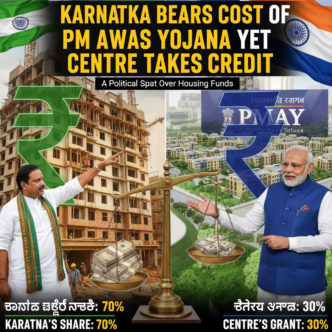
The central government provides 60 % of the financial assistance, while the remaining 40 % is sourced from state or Union Territory contributions, ensuring shared ownership of the initiative.
Technology Integration, Monitoring Dashboard and Socio‑Economic Impact
Transparency is a cornerstone of Urban 2.0, achieved through an online real‑time dashboard that tracks project milestones, fund releases, and beneficiary details. Advanced analytics and GIS mapping are used to oversee geographic distribution, ensuring equitable allocation across regions. The dashboard also flags delays, enabling rapid corrective action.
The socio‑economic impact of sanctioning over 2.88 lakh houses is projected to be substantial. Improved housing conditions lead to better health outcomes, increased school attendance, and higher productivity among adults. Moreover, ancillary sectors such as construction materials, engineering, logistics, and renewable energy are expected to generate millions of jobs, reinforcing economic resilience. Pilot projects in cities like Ahmedabad and Bengaluru illustrate how integrating affordable housing with public transport can reduce commute times and foster inclusive urban growth.
Challenges, Future Roadmap and Outlook
Despite its ambitious targets, PMAY‑Urban 2.0 faces practical challenges, notably land availability, bureaucratic delays, and maintaining construction quality. To mitigate these, the Ministry has instituted fast‑track clearances, streamlined approval processes, and mandated third‑party quality audits. Continuous stakeholder engagement, grievance redressal mechanisms, and feedback loops are also in place to address bottlenecks promptly.
Looking ahead, the roadmap emphasizes sustainability by promoting eco‑friendly building materials, green certifications, and renewable energy integration within households. Expansion plans aim to incorporate additional states and Union Territories, with special focus on migrant workers and informal sector employees. By coupling robust financing, cutting‑edge technology, and multi‑level stakeholder collaboration, PMAY‑Urban 2.0 is poised to transform urban landscapes and fulfill the promise of “Housing for All” across India.
Stay updated with the latest Yojana schemes and government initiatives for better awareness and eligibility. For personalized guidance on accessing these benefits, reach out to us.