


What is PM Surya Ghar Yojana?
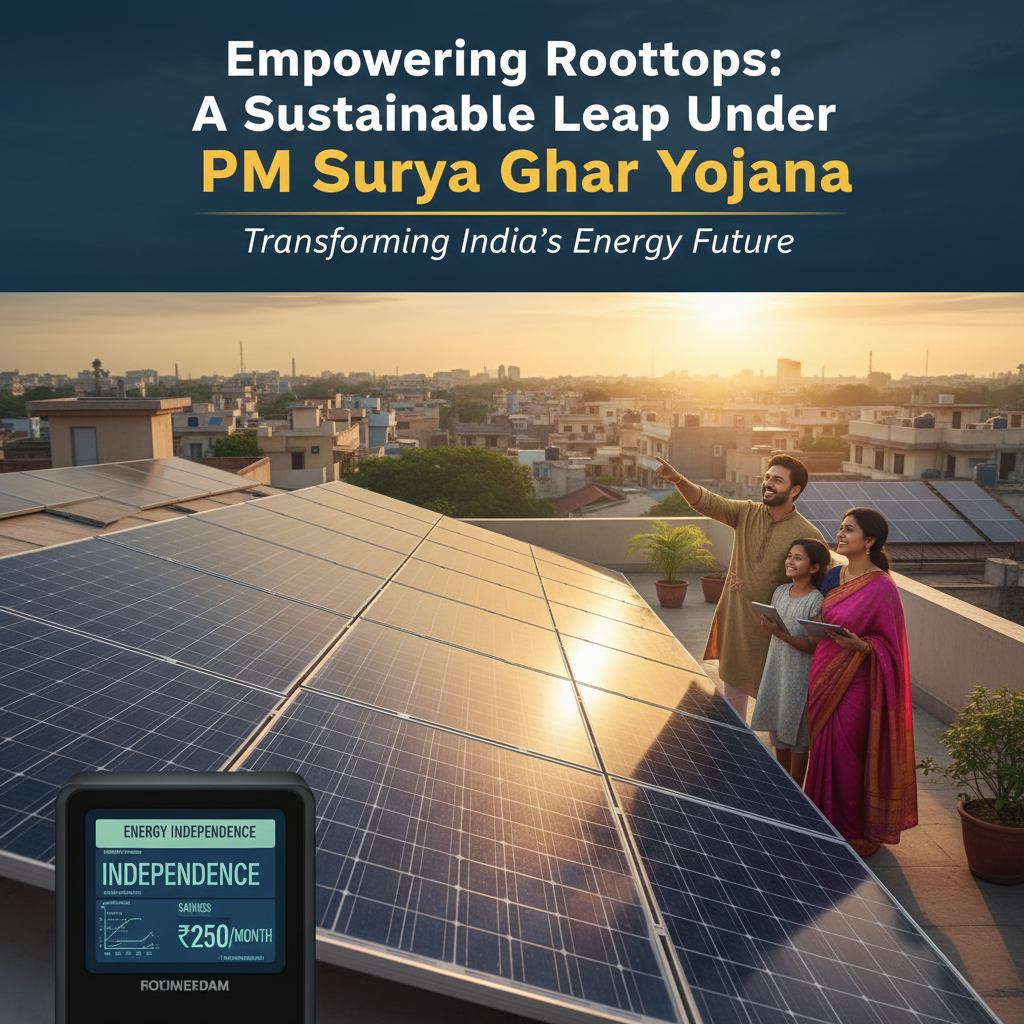
The Pradhan Mantri Surya Ghar Yojana was launched in February 2024 as a flagship programme of the Ministry of New and Renewable Energy (MNRE) to fast‑track rooftop solar adoption across India. The scheme provides a blend of financial subsidies, streamlined permitting and net‑metering arrangements that enable households, educational institutions and commercial entities to install photovoltaic (PV) panels on their roofs. By decentralising power generation, the initiative aims to turn every eligible roof into a clean‑energy hub, reduce reliance on grid electricity and help India meet its renewable‑energy targets. For detailed policy documents, see the official MNRE portal and the Wikipedia overview of rooftop solar.
Objectives and Vision
The Surya Ghar Yojana rests on three strategic pillars. First, it seeks to lift the share of solar in India’s electricity mix from the current 12 % to over 30 % by 2030, thereby curbing carbon emissions from coal‑fired plants. Second, it targets the installation of at least 10 million rooftop systems by the end of the decade, covering both densely populated urban locales and remote rural hamlets. Third, the scheme envisions energy independence for citizens — lowering monthly electricity bills, generating a steady revenue stream from surplus power sold back to the grid, and creating a skilled workforce in solar installation and maintenance. These goals align with the broader National Solar Mission and reinforce India’s commitment to climate resilience and sustainable development.
- Boost solar’s contribution to the national energy mix to >30 % by 2030.
- Deploy 10 million rooftop PV systems by 2030.
- Provide households with reduced electricity costs and revenue from surplus power.
- Foster job creation in the solar installation and maintenance sector.
Financial Incentives and Support Mechanisms
One of the most compelling features of the Yojana is its generous financial package. Residential applicants can receive a subsidy of up to 40 % of the total project cost, while projects located in hilly or remote districts qualify for a 50 % subsidy. Eligible beneficiaries also gain access to low‑interest loans through the Small Industries Development Bank of India (SIDBI) and other designated lenders. Under a net‑metering framework, any excess electricity generated can be exported to the grid, with the utility crediting the consumer’s bill accordingly, thus creating a recurring income source. Additional incentives include capital‑expenditure tax exemptions and fast‑track clearance via a single‑window online portal, which reduces bureaucratic delays. For more on subsidy structures, refer to the government factsheet. 
- Subsidy of up to 40 % for general‑category households.
- Up to 50 % subsidy for installations in identified difficult zones.
- Net‑metering allows sale of surplus electricity back to the grid.
- Preferential loan rates through SIDBI and partner banks.
- Tax exemptions on capital expenditure.
Implementation Framework and Challenges
Execution of the scheme involves a coordinated, multi‑level approach. At the national level, MNRE formulates policy, monitors progress through a real‑time dashboard, and sets quality standards for certified installers vetted by the National Solar Certification Board. State renewable‑energy agencies identify eligible households, process applications and conduct technical assessments. Certified installers then carry out the installations, followed by periodic site inspections and performance analytics to ensure systems meet efficiency benchmarks. Despite the streamlined process, several challenges persist: high upfront capital outlays, limited awareness in remote areas, and a shortage of skilled technicians. To mitigate these, the government has rolled out an extensive awareness campaign in partnership with NGOs and panchayats, launched capacity‑building programmes to train local installers, and introduced innovative financing models such as pay‑as‑you‑go schemes and solar leasing. Continuous policy refinements based on stakeholder feedback are essential for sustaining momentum.
- Central oversight via MNRE’s performance dashboard.
- State agencies handle beneficiary selection and technical vetting.
- Certified installers ensure compliance with quality standards.
- Awareness drives target rural and semi‑urban communities.
- Capacity‑building creates a pipeline of skilled solar technicians.
- Pay‑as‑you‑go and leasing options reduce initial cost barriers.
Impact and Future Outlook
Early results from pilot districts illustrate the scheme’s tangible benefits. In rural Rajasthan, families that previously relied on diesel generators now enjoy uninterrupted power, cutting diesel expenditures by up to 60 %. Urban adopters in Delhi and Bengaluru report average monthly savings of INR 2,500 on electricity bills, leading to a payback period of three to four years for many systems. Beyond cost savings, the reduction in kerosene and charcoal usage improves indoor air quality, particularly in off‑grid villages. The programme has also spurred micro‑enterprises focused on solar maintenance, with over 15,000 such businesses created to date, driving local economic development. Looking ahead, the Ministry plans to integrate the Yojana with the upcoming Green Energy Corridor, expand battery‑storage incentives for night‑time usage, and deepen digital platform integration to simplify application and monitoring processes. Ongoing performance monitoring will inform future policy tweaks, ensuring the scheme remains aligned with technological advances and market dynamics. Ultimately, PM Surya Ghar Yojana aspires to transform every Indian roof into a clean‑energy generator, fostering a resilient and sustainable energy future.
Stay updated with the latest Yojana schemes and government initiatives for better awareness and eligibility. For personalized guidance on accessing these benefits, reach out to us.