


Overview
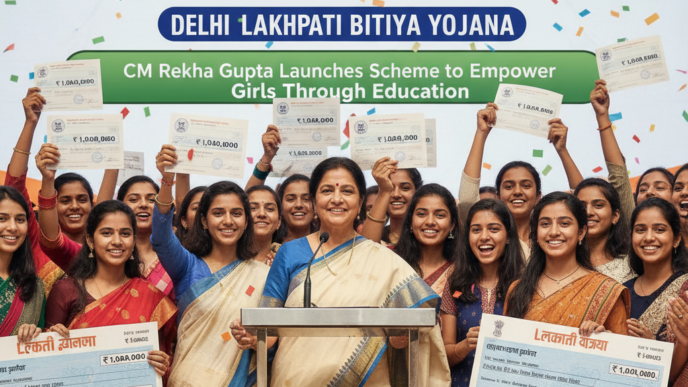
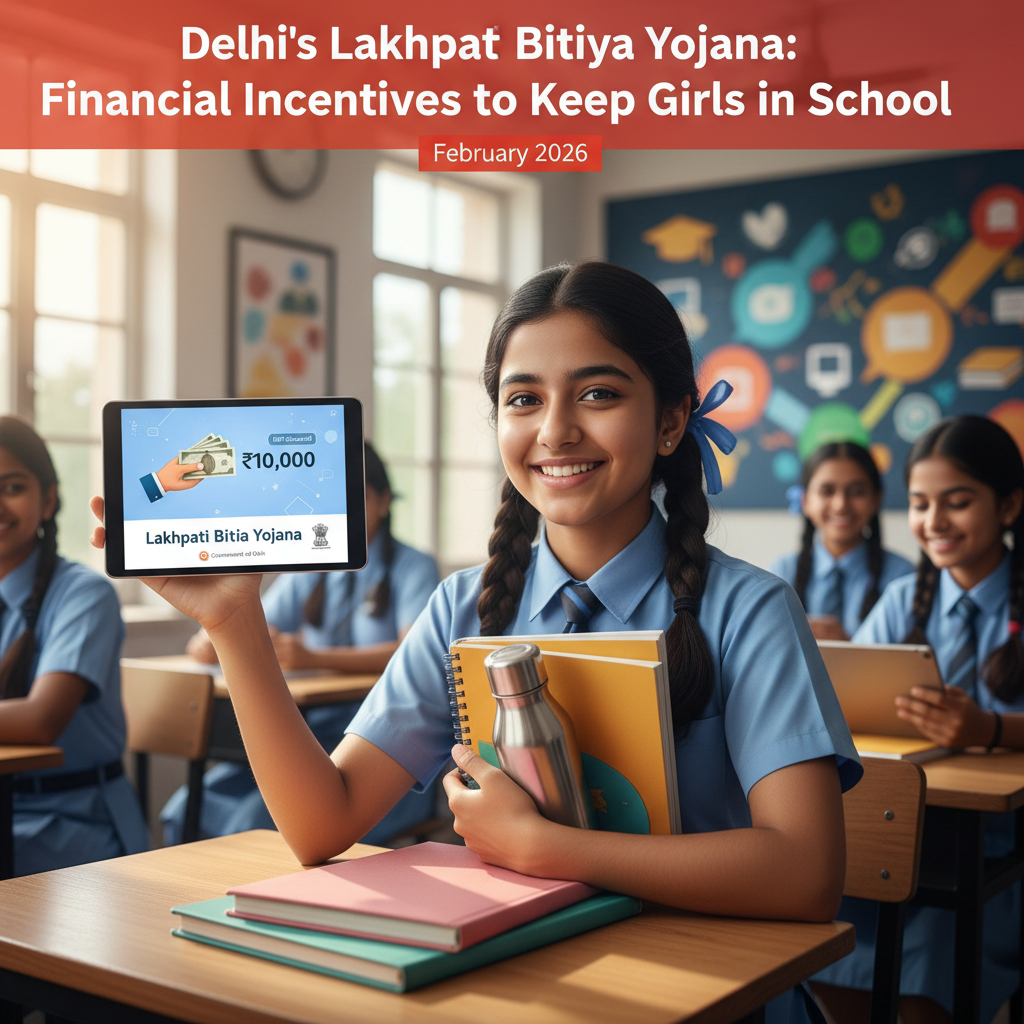
Delhi’s Lakhpati Bitiya Yojana was announced by the Delhi Cabinet in February 2026 as a flagship welfare programme aimed at reversing the alarming dropout rates among girl students from economically disadvantaged families. By offering a direct cash transfer of Rs 10,000 per academic year, the scheme seeks to remove the financial barrier that often forces families to withdraw their daughters from school for domestic work, seasonal labour, or early marriage. The initiative aligns with national imperatives to achieve the Sustainable Development Goal 4 on quality education and gender equity, and it builds on the momentum of existing state‑level incentive schemes such as the “Beti Bachao, Beti Padhao” programme.
According to the official release, the disbursement will be made through the State Bank of India’s Direct Benefit Transfer (DBT) platform, ensuring that funds reach beneficiaries’ bank accounts within 48 hours of eligibility verification. The Delhi government estimates that the scheme will initially benefit around 1.5 lakh girls across the National Capital Territory’s twelve districts, representing a significant step toward inclusive education in one of India’s most densely populated metros.
Eligibility and Objectives
The eligibility framework is deliberately narrow to target the most vulnerable households while promoting gender‑justice outcomes. A girl must be a resident of Delhi, enrolled in a government‑run or government‑aided school from class 9 to 12, and belong to a family whose annual income does not exceed Rs 4 lakh. Preference is given to students from Scheduled Castes, Scheduled Tribes, and Other Backward Classes, ensuring that historically marginalised communities receive priority access. Applicants must submit a verified income certificate, school enrolment proof, and a recent photograph to the Directorate of Education, which cross‑checks the data against the Aadhaar‑linked Socio‑Economic Caste Census before sanctioning the benefit. 
The broader objectives of the Lakhpati Bitiya Yojana extend beyond monetary support. By incentivising school attendance, the scheme aims to:
- Reduce dropout rates among girls in secondary education.
- Mitigate child labour and early marriage in low‑income households.
- Encourage community‑wide awareness of the value of girls’ education.
- Strengthen Delhi’s human‑capital pipeline for a future skilled workforce.
These goals are reinforced through linkages with the national “Beti Bachao, Beti Padhao” campaign, creating a synergistic effect that amplifies outreach and advocacy.
Financial Incentive and Disbursement
At the heart of the programme lies a structured incentive package. Each eligible girl receives a fixed annual amount of Rs 10,000, released in two equal instalments of Rs 5,000:
- The first instalment is credited at the beginning of the fiscal year, coinciding with the admission season.
- The second instalment is disbursed after the mid‑term examination results are announced, contingent on continued enrolment.
In addition to the annual cash component, the scheme provides a one‑time grant of Rs 2,500 for the purchase of school uniforms and stationery, thereby easing the ancillary costs that often deter families from keeping their daughters in school. The incentive structure is reviewed annually, with the possibility of incremental increases based on fiscal performance and impact assessments.
Payments are processed through the SBI DBT platform, which automatically debits the government’s treasury account and credits the beneficiary’s linked bank account. This digital workflow reduces processing latency from weeks to days, minimizes leakages, and provides real‑time audit trails for compliance officers.
Implementation, Coverage and Outreach
The rollout of the Lakhpati Bitiya Yojana is a multi‑agency effort coordinated by the Delhi Directorate of Education in partnership with the Department of Social Welfare and the State Bank of India’s DBT infrastructure. School authorities maintain a dynamic beneficiary list, conduct periodic verification of enrolment status, and flag any discrepancies for immediate remedial action. Independent monitoring committees comprising teachers, community leaders, and parent representatives undertake quarterly audits to ensure transparency and accountability.
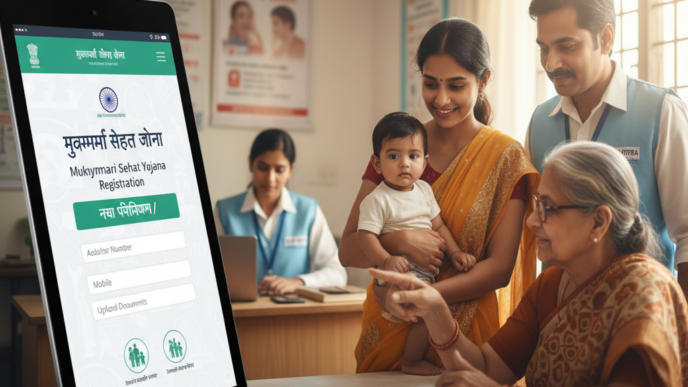
Initial coverage targets 1.5 lakh eligible girls across Delhi’s twelve districts, with a special focus on slum clusters, rural peripheries, and urban villages where poverty rates are highest. To maximise penetration, the government has launched a door‑to‑door awareness campaign in collaboration with NGOs, civil‑society organisations, and local panchayats. Mobile applications have been deployed to guide families through the application process, upload required documents, and track payment status in real time. The outreach strategy also leverages radio jingles, social‑media teasers, and community‑level meetings to demystify the scheme and encourage enrolment.
Linkages with the existing “Beti Bachao, Beti Padhao” initiative ensure that beneficiaries receive additional mentorship and safety support, while a dedicated helpline assists families with document verification and grievance redressal. For more details on the broader educational landscape in Delhi, refer to the Education in Delhi Wikipedia page.
Impact, Challenges and Future Outlook
Policy analysts project that the Lakhpati Bitiya Yojana could lift school retention rates among girl students by up to 12 percent within the first two years of implementation. Early pilot data from selected districts indicate a measurable decline in child‑labour incidents and a modest reduction in early marriage rates among beneficiary households. Moreover, the additional funding for uniforms and stationery has been linked to higher attendance percentages, as families no longer view education as a prohibitive financial burden.
Despite its promise, the scheme faces several implementation challenges. Accurate identification of low‑income families remains problematic in informal settlements where documentary proof may be lacking; to address this, the government plans to utilise Aadhaar‑linked data from the Socio‑Economic Caste Census combined with community‑based verification drives. Fiscal sustainability is another concern, as the programme requires a dedicated budgetary line that must be protected from macro‑economic fluctuations. Ensuring timely disbursement also depends on robust IT infrastructure, prompting the administration to upgrade servers and fortify cybersecurity measures.
Looking ahead, the Delhi government envisions the programme as a replicable model for other Indian states seeking to harness direct cash incentives for gender‑equitable education. Future refinements may expand the age bracket to include college‑going women, integrate vocational skill‑development modules, and publish an open‑access data repository for independent impact evaluation. If scaled successfully, the Lakhpati Bitiya Yojana could become a cornerstone of Delhi’s strategy to achieve the Sustainable Development Goal of inclusive and equitable quality education, while also serving as a blueprint for national‑level policy replication.
Stay updated with the latest Yojana schemes and government initiatives for better awareness and eligibility. For personalized guidance on accessing these benefits, reach out to us.