


Introduction
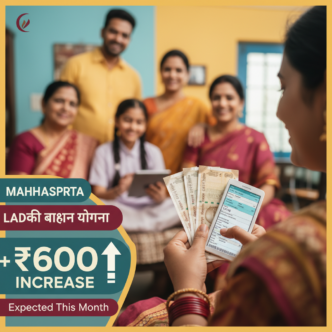
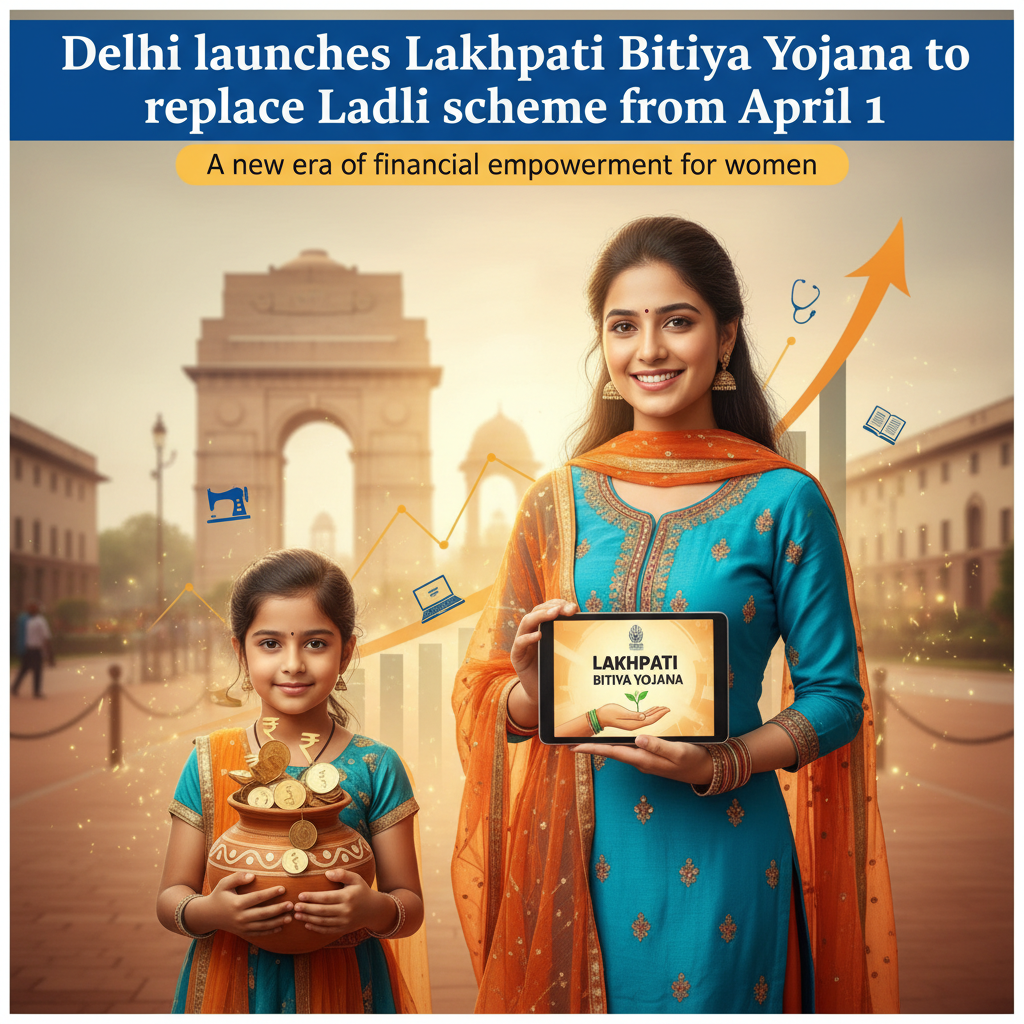
The Delhi government has announced that the Lakhpati Bitiya Yojana will officially launch on 1 April 2026, ushering in a new era of financial empowerment for women across the National Capital Territory. This initiative replaces the earlier Ladli scheme, which provided a one‑time grant of Rs 21,000 to eligible girl children from economically disadvantaged families. Under the new scheme, beneficiaries can receive up to Rs 100,000 in three staggered installments, a substantial increase designed to foster greater economic self‑reliance and to stimulate investments in education, health and small‑scale entrepreneurship. By providing a more sizable and structured cash transfer, the administration aims to break poverty cycles and to encourage women to become active contributors to Delhi’s growing economy.
Eligibility Criteria
To qualify for the Lakhpati Bitiya Yojana, a household must first be classified as “Below Poverty Line” (BPL) by the Delhi Social Welfare Department. The programme is specifically targeted at female residents who are either married adults, widows, divorced women, or single mothers. In addition, daughters of eligible families who are pursuing higher education or vocational training are also covered. Applicants must submit verified proof of income, residence and identity, and they must not be simultaneously receiving any overlapping cash‑transfer benefits from central or state schemes such as the Pradhan Mantri Kisan Samman Nidhi or other welfare programmes. The application process mandates the uploading of documents through an official online portal, after which a verification officer conducts a field check to confirm eligibility before releasing the first installment.
Financial Structure
The financial assistance under the Lakhpati Bitiya Yojana is disbursed in three equal installments over a two‑year period. The first tranche, amounting to roughly Rs 33,333, is released immediately after the beneficiary’s eligibility is confirmed. The second installment follows six months later, contingent upon continued compliance with scheme conditions such as school attendance or adherence to a skill‑development plan. The final tranche is paid after twelve months, provided the beneficiary can demonstrate productive use of the funds—whether for schooling, health expenses, or the launch of a micro‑enterprise. This staggered disbursement is intended to curb misuse, promote prudent financial planning and ensure a sustained source of support rather than a one‑off cash gift. 
Implementation Mechanism
Implementation of the Lakhpati Bitiya Yojana will be overseen by the Delhi Social Welfare Department in collaboration with district offices and community‑based organisations. A dedicated online portal, accessible via desktop and mobile devices, will allow applicants to submit documents electronically, track the status of their applications and receive real‑time notifications about each disbursement. Field officers will conduct periodic verification visits to confirm that the funds are being utilised for approved purposes such as tuition fees, vocational training or the procurement of raw materials for small businesses. The portal also integrates with the Delhi Social Welfare Department’s existing database, ensuring that data on beneficiaries is aggregated for transparent reporting.
Expected Socio‑Economic Impact
Stakeholders anticipate that the Lakhpati Bitiya Yojana will generate a multiplier effect across Delhi’s economy. By injecting up to Rs 100,000 into eligible households, the scheme is expected to boost consumer spending, support the growth of micro‑enterprises and improve health and education outcomes for women and girls. Independent research conducted by the Centre for Budget and Governance Accountability suggests that comparable cash‑transfer programmes can lift families out of poverty cycles and significantly increase girls’ school enrolment rates. Moreover, the emphasis on financial independence is viewed as a decisive step toward gender equity, empowering women to make decisions about their own economic futures and to participate more actively in the labour market.
Comparison with Ladli Scheme
The Ladli scheme, introduced in the early 2000s, was one of Delhi’s first targeted welfare initiatives for women. While it provided a fixed grant of Rs 21,000, its coverage was limited, its administration suffered from delays, and its impact was modest. In contrast, the Lakhpati Bitiya Yojana expands the beneficiary base, triples the financial assistance, and incorporates a robust monitoring framework that includes real‑time tracking and periodic audits. Critics of the earlier scheme pointed out a lack of transparency and administrative bottlenecks, issues that the new programme expressly addresses through streamlined online applications, automated verification and an open data portal that publishes aggregated performance metrics.
Stakeholder Reactions
Political leaders from across the spectrum have hailed the launch of the Lakhpati Bitiya Yojana as a landmark achievement in Delhi’s social welfare agenda. Women’s rights activists have praised the initiative for its focus on empowerment and financial autonomy, while economists have expressed cautious optimism, noting that cash transfers alone must be paired with complementary measures such as access to credit, skill‑development programmes and market linkages to achieve sustainable outcomes. Civil society organisations have called for extensive awareness campaigns to ensure that eligible families, especially those in informal settlements, are informed about the scheme’s provisions and the steps required to apply.
Monitoring and Evaluation
The Delhi government has announced a comprehensive monitoring and evaluation framework to assess the impact of the Lakhpati Bitiya Yojana. Key performance indicators include the total number of beneficiaries enrolled, the aggregate amount disbursed, school attendance rates among girl children, and the growth of women‑owned micro‑enterprises. Independent auditors will conduct periodic audits, and an open data portal will publish aggregated statistics to ensure transparency and accountability. The government also plans to commission impact assessments every six months, allowing policymakers to refine the scheme based on empirical evidence and to scale successful interventions to other vulnerable groups.
Challenges and Future Outlook
Despite its ambitious goals, the Lakhpati Bitiya Yojana faces several implementation challenges. Ensuring that assistance reaches the intended beneficiaries without leakage remains a critical concern, particularly in densely populated informal settlements where verification can be complex. There is also a need to build capacity among field officers and community partners for effective monitoring and to create sustained awareness campaigns that reach marginalized households. Looking ahead, policymakers aim to refine the programme based on feedback, potentially expanding eligibility to include additional categories of vulnerable populations such as single fathers caring for female dependents or women engaged in unpaid caregiving roles. The ultimate vision is to embed cash‑transfer support within a broader ecosystem of financial inclusion, education and entrepreneurship that can transform the economic landscape for women in Delhi.
Stay updated with the latest Yojana schemes and government initiatives for better awareness and eligibility. For personalized guidance on accessing these benefits, reach out to us.