


Overview of Lakhpati Bitiya Yojana
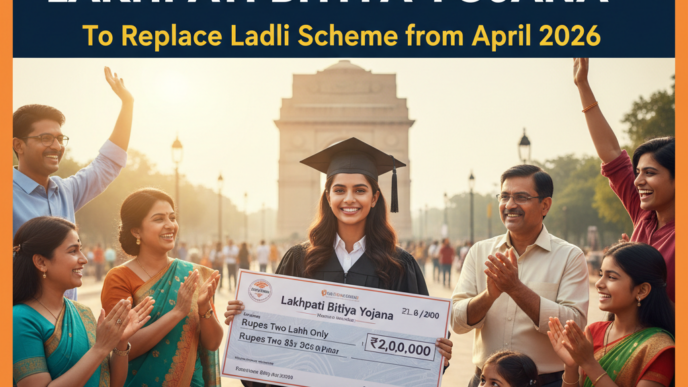
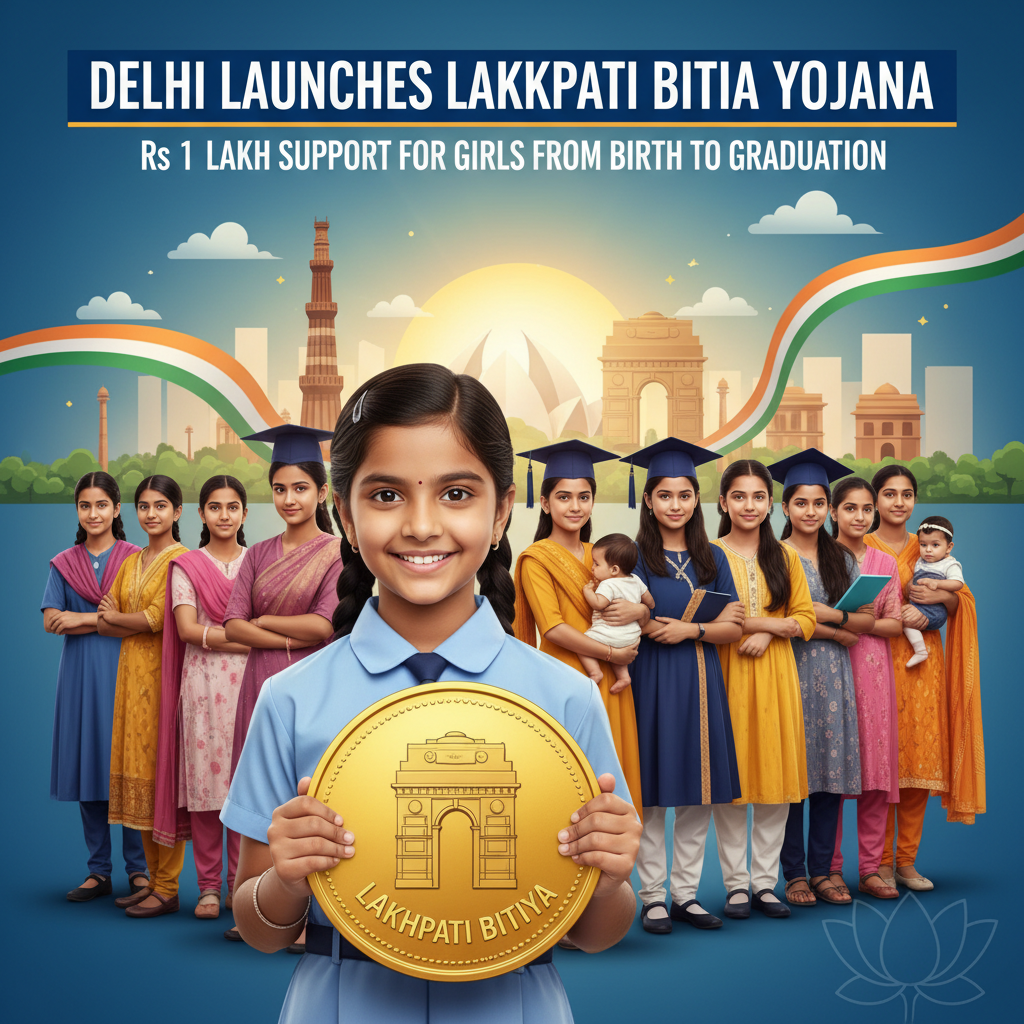
In a landmark move aimed at reshaping gender equity in education, the Delhi government has launched the Lakhpati Bitiya Yojana, a financial assistance scheme that promises a lump‑sum of Rs 1 lakh to every girl child from the moment of her birth until she completes her graduation. Announced by Chief Minister Arvind Kejriwal on 12 February 2024, the initiative is being hailed as one of the most comprehensive girl‑centric welfare programmes in India. By linking direct cash transfers to educational milestones, the scheme seeks to eliminate monetary barriers that have historically forced many families to discontinue girls’ schooling, thereby fostering a culture where female education is viewed as a long‑term investment rather than a temporary expense.
Key Objectives and Eligibility Criteria
The primary goal of the Lakhpati Bitiya Yojana is to ensure that financial constraints do not impede a girl’s educational journey. To achieve this, the scheme outlines several clear objectives:
- Provide sustained financial support throughout a girl’s academic tenure, covering expenses from early schooling to higher education.
- Reduce dropout rates among female students, especially in under‑privileged and marginalised communities.
- Encourage families to invest in their daughters’ higher education by offering a predictable, sizable cash incentive.
- Promote gender‑balanced socio‑economic development across the capital.
Eligibility is strictly defined to ensure that resources reach the intended beneficiaries. A girl must be a resident of Delhi, with her birth registration recorded in the city’s civil records. The family’s annual income must fall below the threshold set by the Delhi Social Welfare Department, which currently targets households earning less than Rs 6 lakh per annum. Additionally, the beneficiary must enrol in an accredited educational institution and maintain a minimum attendance of 75 % throughout her course. Families are required to submit birth certificates, income proof, and academic records via the Delhi government’s scholarship portal to initiate the disbursement process. 
Implementation Mechanism and Disbursement
Transparency and efficiency are at the core of the scheme’s implementation. The Delhi Finance Department, in partnership with the Department of Women and Child Development, has designed a three‑stage payment workflow. The first tranche of Rs 10,000 is transferred to the parents’ bank account immediately after the child’s birth registration. A second installment of Rs 30,000 is released upon the girl’s successful completion of secondary education (Class 12). The final and largest payment of Rs 60,000 is disbursed after the beneficiary graduates from a recognized university or college, provided she has maintained the required attendance and academic standing.
To streamline verification, the programme integrates with the Aadhaar‑linked beneficiary database, employing biometric authentication at each milestone to prevent duplicate claims. The Delhi government has also launched a real‑time monitoring dashboard that tracks fund flows, ensuring that every rupee reaches the intended recipient. In case of discrepancies, a dedicated grievance redressal cell will address complaints within 48 hours, guaranteeing swift resolution and maintaining public trust.
For families unfamiliar with the digital process, the scheme leverages existing community centres and Anganwadi workers to disseminate information and assist with paperwork. This multi‑channel outreach aims to maximise awareness, particularly in densely populated slum clusters where digital literacy may be limited.
Expected Impact and Comparison with Similar Initiatives
Early impact assessments released by the Delhi Planning Department project a potential 15 % increase in the enrollment of girl students in higher education over the next five years if the scheme is fully implemented. By providing a financial safety net that spans the entire educational trajectory, the Lakhpati Bitiya Yojana is expected to shift cultural attitudes that traditionally prioritise boys’ education, thereby contributing to a long‑term reduction in gender‑based disparities.
Moreover, analysts suggest that the scheme could play a pivotal role in curbing child marriage rates. With a concrete financial incentive tied to continued schooling, families may be less inclined to marry off daughters prematurely, especially in communities where economic security is a primary concern. The programme’s holistic approach also aligns with broader sustainable development goals (SDGs) related to gender equality and quality education.
When compared with other state‑level initiatives, the Lakhpati Bitiya Yojana stands out for its comprehensive, lump‑sum assistance model. Unlike the Kanyashree Prakalpa in West Bengal, which offers incremental payments at specific ages, or the Ladli Scheme in Haryana, which focuses mainly on marriageable age incentives, Delhi’s programme spans the full educational pipeline from birth to graduation. This continuity is designed to provide sustained motivation rather than a one‑time boost. For a deeper understanding of comparable schemes, see the Kanyashree Prakalpa Wikipedia page and the Ladli Scheme entry.
Challenges, Community Reception and Future Outlook
While the vision behind the Lakhpati Bitiya Yojana is ambitious, its execution faces several logistical hurdles. Accurate beneficiary identification is critical; erroneous entries could lead to duplicate disbursements or exclusion of eligible families. To mitigate this, the government plans to utilise the Aadhaar‑linked database combined with biometric verification at each payout stage, significantly reducing the risk of fraud. Additionally, ensuring that all eligible girls are enrolled in schools with stable attendance records will require continuous monitoring and coordination with local education authorities.
Civil society organisations have largely welcomed the initiative, praising it as a progressive step toward women’s financial empowerment. Groups such as the UN Women India have highlighted the scheme’s potential to transform societal perceptions of girl children. Educational institutions, including Delhi University and several private colleges, have pledged to collaborate on awareness campaigns, helping to disseminate information to grassroots communities.
Looking ahead, the Delhi government has announced plans for an annual review of the scheme’s outcomes. Based on these evaluations, there are intentions to expand coverage to additional districts within the capital and to integrate supplementary benefits such as mentorship programmes, skill‑development workshops, and career counselling services. If successful, the Lakhpati Bitiya Yojana could serve as a replicable model for other Indian states seeking to uplift girl children through targeted financial assistance linked to education.
Stay updated with the latest Yojana schemes and government initiatives for better awareness and eligibility. For personalized guidance on accessing these benefits, reach out to us.